0
0

MOSCOW, Feb 6: Pakistan and Russia stressed the need for continuous sincere efforts by the parties concerned of South Asia to create conditions for resuming the dialogue between Pakistan and India in order to resolve all outstanding issues between them on the basis of equity and justice.
In a joint statement issued on the eve of the departure of President Pervez Musharraf after his three-day visit to Russian Federation, Moscow appreciated the withdrawal of Pakistani and Indian troops from the border to peacetime locations.
Moscow also welcomed the fulfilment by Pakistan and India of their obligations to exchange the lists of nuclear facilities within the framework of the 1988 bilateral agreement on the prohibition of attack against nuclear installations and facilities of each other.
The first ever document of its kind to be issued jointly by the two countries discussed almost all the bilateral, regional and international problems and condemned terrorism in all its forms and manifestations.
According to the joint statement, the two agreed that a comprehensive approach was needed to combat terrorism and “this should include firm measures against manifestations of ethnic and religious extremism, trafficking of illicit nuclear materials and drugs as well as trans-national organized crime.”
Such measures, the statement continued, should also be directed against those states, organizations and individuals who indulge in terrorism or support, finance and encourage terrorism or offer them shelter or refuge.
Pakistan and Russia declared their interest in establishing constructive interaction in fighting international terrorism in all its forms and manifestations.
The establishment of a Pakistan-Russia Joint Working Group on Counter-terrorism and Other Challenges to International Security, whose first meeting was held in Moscow in December, 2002, was noted with satisfaction.
To remove the existing impediments to the development of cooperation between Pakistan and Russian organizations it was agreed to work towards the prompt settlement of the issues of: Pakistani debt restructuring, settlement of financial obligations, promotion of inter-bank relations, establishment of most-favoured-nation status in trade and investments.
It was decided that the Pakistan-Russia Intergovernmental Commission on Trade, Economic and Scientific and Technological Cooperation will start its activities with the expected expansion of trade and economic interaction between the two countries.
The successful launch of the “Badr-2” satellite of Pakistan with the use of a Russian launch vehicle was cited as an example of fruitful cooperation between Pakistan and Russia in using space technologies for peaceful purposes. The two sides affirmed their desire to further develop cooperation in this sphere.
Pakistan and Russia stressed the importance of further intensifying mutually beneficial cooperation, especially through close economic interaction and augmentation of their bilateral trade. Cooperation in such matters as energy, metallurgy, telecommunications and several infrastructure development projects were identified as promising areas of cooperation.
The two sides expressed satisfaction on the signing in November 2002 of the MoU on cooperation between the ministry of petroleum and natural resources of Pakistan and Russian energy giant, Gazprom.
Russia and Pakistan recognized the importance of developing contacts in the field of culture, science and education.
Pakistan and Russia reaffirmed their intention to cooperate closely in bilateral and international forums on strategic stability. The inaugural meeting of the Pakistan-Russia Consultative Group on Strategic Stability in Moscow in January, 2003, was, therefore, considered to be of particular significance.
The two sides also agreed on the need to sign, at the earliest, a treaty on mutual legal assistance in criminal matters and a treaty on mutual assistance and legal relations in civil and trade matters.
During comprehensive discussion on Afghanistan, Pakistan and Russia expressed the hope that the transitional administration of Afghanistan would succeed in restoring peace, reviving the economic and social infrastructure in order to promote growth and prosperity.
They stressed their common interest in the reintegration of Afghanistan into the international community as a united, sovereign, stable, predictable and peaceful state, living in harmony with its neighbours.
The central coordinating role of the United Nations and its Security Council in this process was emphasized.
Russia strongly supported the adoption in Kabul on Dec 22, 2002, of the Declaration on Good-Neighbourly Relations by representatives of the states adjacent to Afghanistan, including Pakistan.
The two countries expressed particular concern on the increased production of drugs in Afghanistan and their illegal traffic to the adjacent countries and other regions.
In this connection, they underlined the need for the formulation and implementation of preventive measures as well as the provision of funds for the crop substitution under the auspices of the United Nations and its specialized agencies, especially the United Nations Drug Control Programme (UNDCP).
Pakistan welcomed Russia’s voluntary contribution of 0.5 million US dollars to the UNDCP and expressed its readiness to expand bilateral and multilateral interaction in this area.
The two sides reaffirmed that the security and stability in central Asia was vital for both Pakistan and Russia. They supported the efforts of the Central Asian states to further strengthen their democratic foundations.
The two expressed concern on the developments in the Middle East. They strongly condemned all acts of violence in the region and supported the early resumption of a Palestinian-Israeli dialogue as there was no alternative to a peace process.
Both sides confirmed the inviolability of the international political and legal instruments for a peaceful settlement, namely, UN Security Council Resolutions 242, 338 and 1397, the Madrid Principles, “Land for Peace” formula, existing agreements and arrangements as well as the Arab peace initiative adopted at the Beirut Summit of the Arab League in March 2002.
The two sides stressed the increasing significance of the Asia Pacific region and underlined the importance of their bilateral and multilateral relations with countries of the region for the benefit of international stability and security.
They also stressed the need to move towards a just and equitable global political and economic order based on the sovereign equity of all states, democratic values, supremacy of the UN Charter and international law.
The two sides emphasized the importance of consistent implementation of counter-terrorism decisions of the UN Security Council, in particular, resolution 1373. They also favoured a harmonization and adoption by the UN of the draft International Convention for the Suppression of Acts of Nuclear Terrorism and the draft of comprehensive convention against international terrorism, and in this regard, both sides stressed the importance of an agreed definition of terrorism.
Pakistan and Russia appealed for an early settlement of the problems arising from the nuclear programme of the Democratic Peoples’ Republic of Korea (DPRK) in a peaceful way, in cooperation with neighbouring countries as well as parties concerned including a constructive dialogue between the USA and the DPRK.
The two sides resolutely opposed unilateral use or threat of use of force in violation of the UN Charter and interference in the internal affairs of other states. It was stressed that comprehensive settlement of the situation around Iraq should be achieved through political and diplomatic efforts, in strict compliance with the recognized norms of international law and under the auspices of the UN. The need for further intensive consultations with the Iraqi leadership in order to encourage its cooperation with the United Nations was emphasized.
Pakistan welcomed the signing by Russia and the USA of the Treaty on Strategic Offensive Weapons Reductions. The two sides confirmed their commitment to promoting disarmament and non-proliferation and the further strengthening of national export control system.
The two sides agreed that keeping space free from weapons and prevention of arms race in space were essential for strengthening strategic stability.
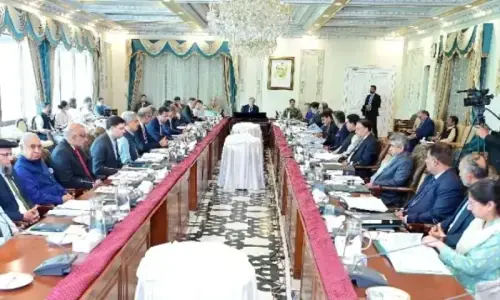
According to the joint statement, substantive negotiations between Mr Vladimir Putin and Gen Pervez Musharraf took place. The President of Pakistan also met GN Selezniov, Chairman of the State Duma of the Federal Assembly of Russia, and I.S. Ivanov, Minister of Foreign Affairs of the Russian Federation.