0
0

Removal of Afghan displaced persons from their main settlement in I-11 has always been a challenge for the Capital Development Authority (CDA).
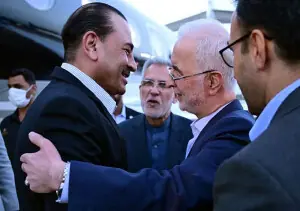
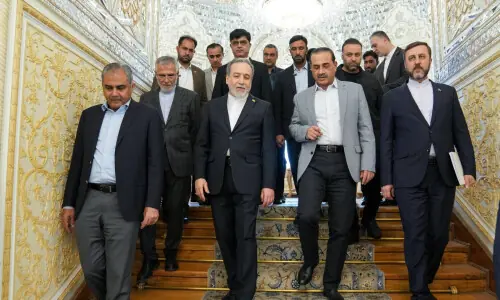
It has been learnt that during the current visit of Afghan President Hamid Karzai to Islamabad for trilateral summit-- Pakistan, Iran and Afghanistan-- on peace and stability in Afghanistan, the issue of repatriation of refugees also came up. However, the Afghan delegation linked the repatriation of around 2.5 million refugees to restoration of peace there.
“We took up the issue of Afghan refugees with Afghan delegation but it was of the view that these refugees could not be repatriated unless the situation in the war-torn country gets normal,” said Presidential spokesman Farhatullah Babar.
Ill-planned Afghan Basti in Sector I-11 has been a question mark on the city managers’ performance since its establishment in early 80s, although they made many abortive attempts to shift it to some other place away from the main city area.
The shanty settlement on already allotted 200 plus residential plots in sector I-11 has become a source of concerns for the city developers and for the police but people living in the vicinity term it a blessing for them.
“Afghan Katchi Abadi provides us house maids,” said a Bank Manager Tanveer Malik who lives close to Afghan Basti.
He said people residing in sector I-10 and other areas in the vicinity had no problem with Afghans.
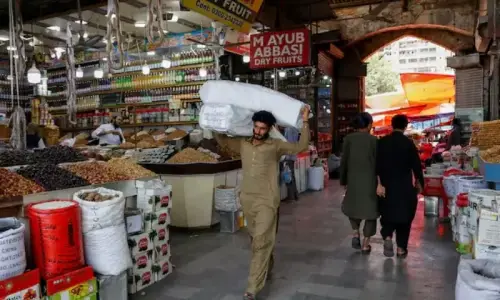
Old and young from the Afghan Basti also do cheap labour in Fruit and Vegetable Market in I-11.
“Most of Afghanis with wheel barrow are available for shifting fruits and vegetables within the market,” said a fruits dealer Mian Anwar.
The Capital Development Authority (CDA) and the local administration, in collaboration with the office of the United Nations High Commissioner for Refugees (UNHCR), have started a fresh survey to ascertain the exact number of the Afghan population in these areas.
Deputy Commissioner Amir Ali Ahmed said every year some Afghan families choose to avail the UNHCR financial support for `voluntary` repatriation. However, somehow most of them return to Islamabad again, he added.
A survey conducted last year in I-11 sector had found 287 Afghan families living in the main and largest Afghan Basti.
It may be noted that the Supreme Court had asked the civic agency to get vacated 20,000 acres of state land from adverse possession in various parts of the city. However, reclaiming the land occupied by the Afghanis has always been a very difficult task for the CDA.
The removal of Afghan settlement from the sector has become imperative especially after announcement of compensation for the villagers of Bokhra and Sorain villages in October 2010 for the development of the two new residential sectors.
The Afghan refugees started arriving in the capital after the invasion of their country in 1979 by the then USSR. Soon a large shanty town appeared in the area which became a big refugee camp known as Afghan Basti.
The situation became frustrating for people who had purchased plots in these sectors through public auction as well as those who were allotted plots under various government schemes, including 850 employees of the CDA itself who were given residential plots in the sectors in 1979.
“We always try to shift Afghans to outside the city area but it cannot possible without the help of the local administration and the UNHCR,” said a senior official of the CDA’s enforcement directorate.
But one has to realise that repatriation of Afghan refugees will not be as easy for Afghans themselves because they have adjusted themselves in Pakistans society and many of them doing respectable businesses.
“It is very difficult for any one to send all Afghans back to their country as their generation have grown up here and have almost become a part of our society,” said a senior office-bearer of Islamabad Citizens’ Committee Sufi Khalil.
On the other hand Islamabad police squarely lay blame for different crimes in Islamabad on Afghan refugees.
Once Afghan Basti used to be called a ‘den of criminals’ and police were of the view that after committing crime the culprits got refuge in the Basti and because of impending international criticism and reaction of UNHCR no action could be taken against them.
“Recently we have arrested five gangs of criminals of Afghans from Margalla Hills and recovered arms. They were also found involved in various crimes in the federal capital,” said Inspector Naeem Ahmed of Islamabad Police.