0
0

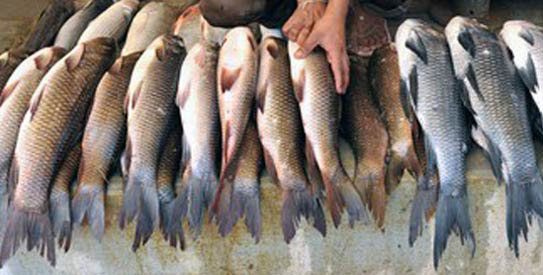
KARACHI: The quality of fish being sold in the market and on roadsides is highly questionable considering the fact that fish needs to be kept at a minimum of five degree centigrade at all times to preserve its freshness while there is no mechanism at the Karachi harbour to maintain the cold chain.
Also, there are no quality checks on the ice factories currently meeting the fisheries’ requirements. The unhygienic water and old methods being used for preparing and transporting the ice add to fish contamination, conversations with experts and a visit to the harbour have revealed.
According to the experts, the provision of good quality ice at the harbour, handling of fish and its preservation on and off the vessel have been a major obstacle in controlling the quality of fish and, subsequently, getting a good price for the catch. And, though, the fish is kept in the ice on the vessel, the cold chain breaks once the stock is brought to the harbour and sold.
Right now, 95 per cent of the ice demand for fisheries is met by supplies from more than 200 factories spread across the city, including areas such as Korangi, Landhi, New Karachi, Sohrab Goth, Qasba Colony and Bhains Colony. Transportation of ice from these areas to harbour also adds to fish cost and contamination.
“Fish flesh is soft and need quick preservation. Fish spoilage begins if the catch is not kept under five degrees centigrade for more than 20 minutes. Once the spoilage starts, it doesn’t stop even if the temperature is lowered,” said Mohammad Moazzam Khan, a former head of the marine fisheries department currently working as a consultant with the Worldwide Fund for Nature (WWF).
According to Mr Khan, although different methods are used for preserving fish, chilling is the easiest and inexpensive method. However, it is the second largest expenditure after the fuel cost for a fishing trip.
The use of chilling techniques, such as the ice, is the best preservative method for tropical waters, he said, adding that the ice needs of the Karachi harbour were so high in the peak season that it even got ice from Balochistan districts.
Pointing out concerns of the European Union, he said that an EU team visited the harbour in the late 1990s and also inspected ice factories.
“Not a single factory was found to be following routine hygiene standards and the situation hasn’t changed. Apart from the contaminated water used in the factories, the iron boxes used for making ice also add to contamination as they get rusted with time,” he said.
He also stressed the need to keep the duration of a fishing trip not more than 10 days as it would lower the quality of the fish.
Ice requirement at harbour A visit to the harbour showed that it had only one small flake ice plant of 20-tonne capacity operated by a private party.
The crushed ice, according to fishermen, is used by buyers to preserve the catch.
The catch is, then, unloaded with the help of buckets and collected on the ground. The fish remains without ice for many hours till it is sorted out and sent to the harbour market and sold.
The daily average ice requirement at the harbour, fisheries official said, is of 700 tonnes. They also explained that about 300 boats had been modified that meant that they now had proper insulated fish holds.
Although experts favour the use of flake ice for fish preservation as it reduces chances of damage to the fish, fishermen prefer to use block ice on the vessel, assuming that it melts more slowly than flake ice. Experts, however, argue that there is no significant difference in their melting.
Speaking to Dawn, Nisar Mohammad, an ice dealer at the harbour and owner of a fishing vessel, said that the increase in electricity charges had also incredibly increased the cost of production and, subsequently, the price of ice.
“The major reason why people are reluctant to change is the fact that the entire business at the harbour is being run on credit and the income is far less than expenses. If we start following the EU standards, our expenses would further increase,” he said, adding that the situation might improve if the government provided fishermen with subsidised fuel.
Fisheries Cooperative Society Employees’ Union general secretary Saeed Baloch also spoke of the same concerns.
He said: “Fuel and ice prices are skyrocketing while the catch has shrunk and fishermen have to stay at sea for a longer period that means more fuel consumption.
“Fishermen, boat owners and common consumers — all are suffering. Since boat owners buy fuel and ice from a third party, the commodities are 10 to 20 per cent costlier,” he said.
Replying to Dawn’s queries, Abdul Ghani Jokhio, the managing director of the Karachi Fish Harbour Authority (KFHA), said that inspection of ice factories was not KFHA mandate and might be a job of the city administration’s department related to quality control.
“The fishermen’s mindset is a major hindrance to improvement. We realise the significance of ice in fisheries and are planning to install a flake ice plant in two to three months that would meet 60 per cent needs of the harbour,” he said.
Giving details of the harbour master plan, he said the establishment of ice factories and a reverse osmosis plant were also a part of it. The government had concluded the boat modification project, but fishermen, who realised the importance of the project, were now themselves requesting for help to get their boats modified, he added.
“We are also planning to specify limits for boat manufacturing. No permission is now being given for the manufacturing of wooden fishing vessels and plans are in the offing to allow production of fibre boats only,” he said.