



 0
0

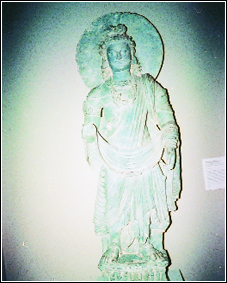 KARACHI, Sept 8: Antiquities, which are a rare and precious part of our cultural heritage, keep getting smuggled out of the country by unscrupulous elements in collusion with minions of the agencies responsible to preserve and protect these treasures.
Visitors to different world famous museums and art galleries would not be surprised to find antiquities from the ancient Gandhara and Moenjodaro cultures. However, under the terms of a Unesco convention, it is within the rights of the country from where the antiquities had been smuggled to invoke the provisions of the convention to ask for their return from the government concerned.
This was stated by former Director General of Archeology, government of Pakistan, Shaikh Khurshid Hasan.
He referred to his last visit to the US in May 2001, where at the Metropolitan Museum of Art, New York, he was surprised to notice a rare piece of Gandhara sculpture portraying a standing Bodhisattva Maitraya. According to the descriptive label affixed to it, the place of origin of the object is Swat. It was purchased in 1991.
Mr Hasan pointed out that there is a complete ban on the export of antiquities, stated in section (26) of the Antiquities Act, 1975. The movement of antiquities within certain notified areas in Pakistan is also prohibited, vide section (27) of the said act. Further, check posts established by law enforcement agencies at various places in the country are required to keep a vigilant eye on the movement of antiquities, in addition to their normal duties. Despite all this, he added, trafficking in antiquities is going on unabated.
He said that some years back, a unique stone sculpture representing Uma Maheshwar — reported to have been discovered from Dargai (NWFP) — was taken out clandestinely from Pakistan. It appeared for sale at a well known auction house in London, from where it was purchased by the Smithsonian Institute, Washington (US) for its Sackler Art Gallery.
Recalling the Unesco convention on the means of prohibiting and preventing the illicit import, export and transfer of ownership of cultural property (1970), the state parties to the convention are required to undertake necessary measures to prevent museums within their territories from acquiring cultural property which has either illegally been exported or stolen from museums.
The state party whose cultural property has been illegally acquired by the museum of another state party can ask for its return in terms of Article (7) of the said convention. The govt and ministry of culture will be within their rights to invoke the provisions of the aforesaid convention and ask for the sculpture’s return.





























