



 0
0

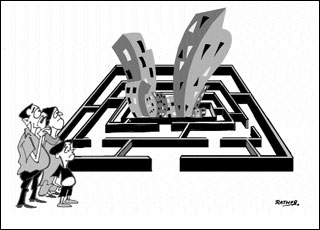 THE GOVERNMENT is keen to provide housing, a basic need to its people, with its National Housing Policy 2001, carrying the objectives: (1) to accelerate housing activity and contribute towards employment generation and economic development; (2) to facilitate provision of housing inputs including land, finance, building materials, institutional and legal framework; (3) to analyse poverty and the forces generating ever-increasing slums and Katchi Abadis, including the political, the socio-economic, the bureaucratic and the environmental forces; (4) to promote ways and means for housing development by enhancing the affordability, the saving capacity, the human tendencies and the potentials; (5) to provide safeguards against the malpractice, the bureaucratic inefficiencies, the institutional weaknesses and the mafia assaults and; (6) to develop the indigenous and cost-effective approaches, particularly for the low-income groups. To realize these objections, implementation of certain measures is important.
Housing situation, backlog and future targets: According to the 1998 Population and Housing Census in Pakistan, there were over 19.3 million housing units, of which 67.7 per cent were in rural and 32.3 per cent in urban areas, accommodating a total population of 131.5 million. Of the total houses, nearly 15.6 million (80.8 per cent) were owned, 1.7 million (9.0 per cent) rented, and 2.0 million (10.2 per cent) rent-free. The percentage of the owned housing units were higher in the rural areas as compared to the urban areas. However, the percentage of rented houses was significantly higher at 23.2 per cent in the urban as compared to only 2.3 per cent in the rural areas.
On the basis of the World Bank’s recommended occupancy rates of 6 persons per house, the total number of required housing units in the country would be roughly 24.3 million by the end of June, 2002, based on the population of 146 million at present. Every year, 0.3 million new houses are added to the existing stock by the public and the private sectors. On the other hand, 10 per cent houses of the total supply are depleted/destroyed/ demolished every year, decreasing the available units to 20 million, leaving a backlog of 4.3 million units. In order to make up for the backlog and meet the shortfall in next 20 years, the government estimates that the overall housing production has to be raised to 500,000 units per annum from the present 300,000.
An increase to 500,000 units annually, offers big opportunities to the HBFC, the commercial banks and other financiers. Assuming the self-finance to cover around 50 per cent housing units each year, around 250,000 would require loan assistance from the HBFC and other institutions. The total annual cost will be around Rs50 billion, on the basis of Rs0.2 million average loan per housing unit, of which Rs20 billion (40 per cent) shall be met through loans, and the rest by the owners, themselves. Some construction industry experts value the annual housing market at Rs15 million. Moreover, major repairs or replacement of mud houses with concrete construction, loan needs may further increase. Different assumptions will give lower or higher funding estimate, but it is certain that as the funding needs for new houses are pretty high, there exist opportunities for financiers. This paper attempts to review difficulties in the way of smooth construction of houses, and offers suggestions to accelerate the financing of construction activities.
Government action for creating conducive environment: The federal government has already referred the policy to the concerned organizations and the provincial governments for implementation. The provincial governments have set up committees under their respective Chief Secretaries to monitor progress on the implementation process. Initially, it was slow due to the devolution of power, but now it has geared up. To meet the annual target of 500,000 new houses, action on priority basis is required in the following areas:
a. Local governments should identify state and other lands in, and around urban and rural settlements at reasonable rates.
b. The government should allocate funding for infrastructure, amenities and other developments and to direct, for the provision of trunk infrastructure, utilities like Wapda, the PTCL, the SNGPL, the SSGCL, the KESC, etc.
c. The government needs to reduce stamp duties and registration fees.
d. The foreclosure laws may be reviewed and improved for earlier relief to the creditors. At present it is cumbersome and lengthy.
e. Rationalization and reduction of duties and taxes on major materials should be reduced for making the construction more affordable.
f. The government should standardize and approve, for each category of plot and location, up to five designs. At present it is a big irritant and causes delays. It should be decided that in case the standardized designs were used, there should no need for formal approval of the construction plan/designs. The house builder should simply inform the civic authorities of the design thus selected. g. The provincial governments should consider granting proprietary rights to individuals and families residing in houses constructed on Shamlat and state land.
h. The dwellers of Katchi Abadis should be given ownership rights and must be required to construct houses as per approved plans after the payment of cost of land and other related charges.
i. The government should review rent laws. Non-payment of rent by the tenant should result into his ejection from the rented houses. At present the process is cumbersome and the landlords may have to fight the legal battle for years.
Financing for construction: The government and the State Bank of Pakistan have a big role to play. The following measures may be considered in this regard:
a. The HBFC, with a view to become customer-friendly, should revise its loaning procedures, guidelines and formats of different documents. It should also train and motivate its personnel for customer service.
b. The HBFC determines the construction cost of a house and the monthly rental value. There are chances the investment could be shown low and the monthly rent at higher level. Both these measures are liable to put the owner at disadvantage vis-a-vis the HBFC when it comes to determining the investment of each party and the share in the monthly rent. There is a cause of concern over fixing customer’s upper age limit for funding at 55 years, and the collection of future instalment cheques by the HBFC. These and similar other practices may be changed for transparency and fairness.
c. The existing level of loan by the HBFC is stated to be around Rs1.2 billion, which will increase to Rs7 billion in five years. With an average of Rs200,000 loan per housing unit, it is estimated 6,000 new applicants are being handled each year. In five years’ time, this would grow to 35,000 applicants, annually. The corporation will have to undergo major restructuring to be able to handle this workload.
d. The HBFC could be on the privatization list like the other DFIs. In view of the type of financing, it would be better if its operations are unbundled on provincial basis, by incorporating four successor companies. The provincial government might retain the majority ownership, but the management control may be given to private sector. This may bring a sea of change in the efficiency and the financing of the housing construction.
e. In view of the high target for next 20 years, the government should consider measures to enhance the availability of finance on easier terms to larger number of customers. The SBP should instruct the banks and the DFIs to make minimum 5 per cent of total annual loans to the housing sector. This will open new opportunities. f. The SBP should allocate separate credit lines to the HBFC for the bulk financing and for individual house owners. It may also consider such credit lines to commercial banks, from its own resources, or credit lines obtained for the purpose for multilateral agencies. In each case, the margin allowed to the HBFC or the commercial banks and the DFIs should be commensurate with the credit risk profile of the Pakistani customers. The existing SBP practice of 1.5 to 2 per cent margin is not adequate and may not promote housing construction.
g. Lending on merit. The borrowers have to be credit worthy with the capacity to repay on time. The government and the SBP may emphasize compliance with the prescribed lending guidelines. Foreclosure is good as a threat to defaulters but is not an effective tool for effecting full recovery. Capacity for good loaning has to be developed in lending institutions.
Need to encourage new financiers: The backlog and the new needs may not be adequately tackled through traditional methods. Other appropriate methods need to be explored. The following are few options:
a. Private individuals as investors (not the usual builders) should be encouraged to build small houses and rent out the same for regular income. This can be a big source for housing finance throughout Pakistan, provided these individuals are assured that the Rent Laws will be changed so that the tenants in rent-default are thrown out if they miss maximum three months’ rent. Tax concessions may also be allowed to these small financiers. Mark-up rate on such loans may be brought in line with the net return to investors received from the National Saving Schemes. These measures are expected to give a boost to the construction business.
b. The government and the SBP should consider subsidized micro loaning facilities for rural areas through institutions like the micro-finance banks, the Khushhali Bank, Zakat funds, etc. These steps may bring more benefit to Sindh and Balochistan, where the situation is quite alarming.
c. Employees of the Old-Age Benefits Institution, the Workers Welfare Fund and other similar funds should consider making investment in housing schemes, as per prescribed procedures. The houses so constructed could be given in a transparent and fair manner.
d. The industries producing construction materials should diversify to housing construction, initially for their workers and later for the public. They should go for deferred payment, say for 5-10 years. This will increase the industrial activity.
Other issues: a. Normally, defaulters deserve no sympathy. However, when it comes to house loan defaulters, one has to be more considerate. The government and the SBP should explore certain insurance or guarantee programmes to save the defaulter from being thrown out on streets.
b. The HBFC housing finance is said to be on the partnership basis with private investors as joint owners. As time passes, the loan gets reduced and so does the monthly rent that is collected in lieu of the interest by the bank. In case of default for say about one year, the bank may allow the defaulter enough time to improve his/her finances to start repayment. To the extent the bank has not been paid, it may increase its share in total investment. In foreclosure, the banks may consider some relief to the families, which do not have any other shelter.
c. The builders and small investors: The builders play an important role in housing construction. They need to be encouraged and allowed to make fair return on their investment. However, it is said that some of them do not stick to the delivery schedule or the agreed cost. The construction quality is poor as compared to the one shown in the brochures, at the time of bookings. The house owners are obliged to incur substantial extra cost for final finishing or electricity wirings, pipe fittings, etc,. The government, the SECP and the SBP should consider steps to end such exploitations. Independent agencies may be appointed to monitor the contract compliance by the builders.




























