0
0

KARACHI, June 29: Speakers at a seminar here on Saturday said though there were various laws against child labour in the country, more than 3.3 million children were working in different fields.
At the seminar on Child Labour, organized jointly by the National Institute of Labour Administration and Training (NILAT) and the National Progressive Workers Federation, at the NILAT headquarters, they said it was a complicated issue and unless the government, NGOs, etc. worked together, the problem could not be controlled effectively.
They said government officials put the number of child labour at 3.3 million, but surveys conducted NGOs, including the Human Rights Commission of Pakistan and Unicef, put the number of working children between 8 and 12 million — with nearly half of them below 10 years of age.
Referring to various laws and international conventions signed by the government to control the problem, they said these laws had not been significantly successful in controlling the problem. Unless the society’s attitude towards the issue changed, it could not be controlled effectively.
They said poverty and population explosion were among the major causes of child labour. They said the prevailing economic recession and a rapid increase in population meant that there were more workers for few jobs. Because of this situation workers were becoming increasing vulnerable to exploitation.
“The policy of Western countries which threaten to ban import of goods from developing countries that they think are produced by using child labour, is proving counter-productive. This threat is resulting in increasing poverty in the Third World,” the speakers said.
They suggested that a comprehensive policy be formulated and education be provided to the children who were withdrawn from jobs, and more employment opportunities be created for their parents to enable them to educate their children.
They said children also worked in the agricultural sector, but since there entire families worked together children were safer. However, children working in the industrial or informal sectors were more vulnerable to exploitation.
“First, children working in hazardous trades be withdrawn immediately. Then child workers from other trades be withdrawn,” they suggested.
The speakers said the majority of child labour was employed in the informal sector, and in those organizations either trade union was non-existent or was very weak.
They urged trade unions to play their role in identifying the organizations which employed children and resist it. In this way children would be saved from working in hazardous trades and their parents would get more job opportunities.
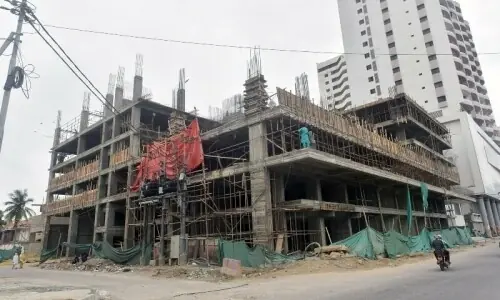
They said children worked mostly in glass industry, bangle factories, brick kilns, precious stone polishing, construction, mining and quarrying, ginning factories, transport, fishing, automobile workshops, hotels and restaurants, carpet weaving, manufacturing of surgical instruments and sports goods and as domestic servants.
They said the government and the International Labour Organization had set up various centres throughout the country — five of them in Sindh at Karachi, Hyderabad, Thatta, Mirpurkhas and Shikarpur.
Each centre was providing education to 60 children who had been withdrawn from hazardous trades. These children were being paid Rs5 a day besides free education material, and their parents were given Rs250 a month, as incentive.
Syed Hakim Ali Shah Bokhari, Aijaz K. Shaikh, Shoukat Ali, Sartaj Nadeem, Malik Rafiq, M. K. Azmati, Dr Sarosh Salman, S. G. Hasan, Noorul Hadi and others also spoke.