0
0

WASHINGTON, March 2: Saying that the US-Pakistan relationship may have a bumpy road ahead, a leading think-tank here believes that Washington will need to find the right balance between encouraging Gen Pervez Musharraf’s “best instincts” and pressing firmly for full implementation of the anti-terrorist agenda.
In this month’s issue of its journal, South Asia Monitor, the Centre for Strategic and International Studies, points to two issues that can potentially deal a setback to US-Pakistani ties: Kashmir and Afghanistan.
It says current massive Indian and Pakistani troop deployments mean that the situation can escalate very fast. “Ending Pakistan-based support for the armed militancy in Kashmir is ultimately key to reducing this danger. This will be a more painful process for Musharraf than confronting the militants domestically, but in practice de-linking these theatres of operation may have become impossible. The limits of Pakistan’s new policy towards the militants and towards Kashmir will not be clear until winter ends and the passes into Kashmir open.”
The US may have adopted a more active diplomatic posture in mediating between Pakistan and India than it has taken in the past, the journal says, and this decision reflects in part a judgment that India is ready to accept a discreet American role given the vast improvement in New Delhi’s relations with Washington.
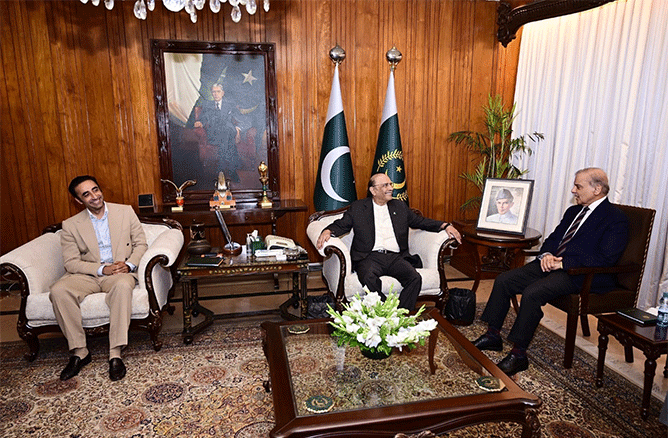
Reviewing Gen Musharraf’s visit to Washington last month, the journal said the US was making a major effort to shore up Pakistan economically and to give the general the running room to implement a difficult political agenda. “The breadth of Washington’s desire to engage with Pakistan was clearly on display, with military cooperation, commercial engagement, and foreign assistance in the spotlight. Musharraf’s vision of a model Islamic democratic state that promotes peace within the region was very appealing. More discreetly, however, the US government also emphasized that the new relationship with Washington depended on Musharraf’s following through on his domestic agenda.”
Referring to the general’s intention to hold elections in October, the journal’s write-up, authored by Ambassador Teresita C. Schaffer and Richa Gulati, says the pledge was well received here, although restoring elected government has a lower priority for the Bush administration than it had for the Clinton administration. It reports the perception in Pakistan that the country’s intelligence services are “busy ensuring that candidates acceptable to Musharraf’s government band together in one party” and believes that elections in such conditions will “revive only a stunted political process,” with the chronic weakness of Pakistan’s political institutions remaining a problem.