0
0

ISLAMABAD, Oct 19: The World Trade Organization (WTO) regime will have a potential impact on the economy with definite job losses in textile and clothing sectors.
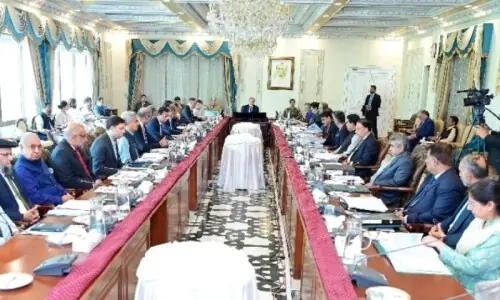
Government officials, representatives of trade unions and labour-related development sector organizations at a workshop here on Tuesday discussed this concern and demanded that policy- makers, legislatures and industrialists place barriers on possible post-quota threats.
The workshop, titled "Textile and clothing sector workers in the post-quota era", was jointly organized by the Sustainable Development Policy Institute and Fredrich Ebert Stiftung, says a statement.
Trade unions and NGOs' representatives committed to forming a task force on Agreement on Trade and Clothing (ATC) and build networks with similar organizations in and outside Pakistan.
They urged the government to implement the existing labour laws and bring them in conformity with the ratified International Labour Organization (ILO) conventions.
They further demanded that coherent industrial policy be developed with the participation of all stakeholders, including small and medium enterprises.
The participants said workers be provided facilities, both to families as well as to female and male bachelors, get duty free access to Pakistani garments to markets of the developed countries in bilateral trade agreements and organize a tripartite labour conference focusing ATC issues.
Employers were asked to ensure implementation of existing labour laws, including legal working time for all employed workers and contract labourers, respecting their freedom of association and collective bargaining.
Azam Mohammad from the ministry of commerce said there would be definite job losses after the post-quota era and this concern must be addressed immediately. He said the government was empowered to raise the tariffs under the WTO regime if they feared threats to any industry.
Textile Commissioner Idrees Ahmed admitted that without inclusion of representatives of labour unions and other civil society organizations, the recommendations would be baseless. "There is an immediate need to amend and rationalise labour laws to facilitate labours and industry owners," he added.
Joint Secretary ministry of labour Ata Mohammad Raja said after implementing the WTO laws, labourers in the ready-made garment sector would suffer the most.
"Notwithstanding a long established and confident textile industry in Pakistan, we can not and should not rule out the possibility of uncompetitive units being closed down which may result in job losses for workers, including female workers," he observed.