0
0

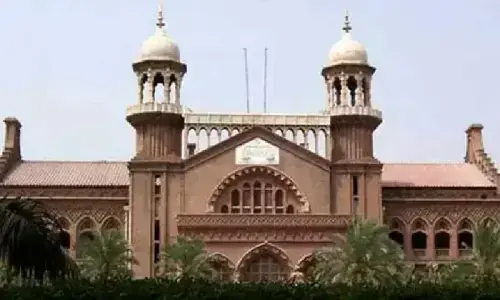
ISLAMABAD, April 6: The Supreme Court was told on Wednesday that the Muttahida Majlis-i-Amal (MMA) had not been sincere in talks with the government; otherwise it would have insisted on strict adherence to Article 43 of the Constitution to force President Pervez Musharraf not to hold dual office. Instead, the MMA had agreed to the insertion of Article 63 (1-d) through the 17th Amendment after getting something in the bargain, claimed Awami Himayat Tehrik Party chairman Moulvi Iqbal Haider while arguing before a five-member bench hearing constitutional petitions challenging the 17th Amendment and the dual office of President Musharraf.
Parliament adopted the ?President to Hold Another Office Bill 2004,? through a simple majority to defeat the condition of the president laying off his military uniform after December 31, 2004.
Mr Haider said the MMA had befooled the nation by claiming that it had managed to put a condition requiring the president not to keep the post of army chief after a certain date. In fact, the MMA was in total agreement with the government, under some bargain, in tabling the dual office bill to allow the president to keep two offices, he added.
The bench asked the petitioner to submit written arguments along with relevant material.
When asked by the bench if the president had not promised to the nation to lay off his uniform after Dec 31, 2004, Iqbal Haider said the president had not betrayed, but when the MMA violated its pledge, Gen Musharraf decided to keep his uniform beyond 2004.
?President?s pledge was in fact a political promise and not a holy scripture,? he said, but agreed that the commitment made during government-MMA negotiations was in writing.
However, the chief justice observed that since the government-MMA agreement was not before the court and the petitioner was not privy to that document, he was not qualified to speak about this.
Justice Faqir Khokhar observed that the agreement was not a constitutional document, but a political one between two political forces.
About the oath to defend the Constitution, which army officers take before joining the armed forces, Iqbal Haider said president?s oath had substituted the earlier oath Gen Musharraf had taken as commissioned officer.
Iqbal Haider said that despite raising an outcry, parliamentarians endorsed the Legal Framework Order (LFO) the moment they had taken oath as member of the National Assembly.
Earlier, Advocate A. K. Dogar of the Pakistan Lawyers Forum (PLF), who has challenged the vires of the 17th Amendment, the dual office of the president and the LFO, concluded his arguments. He deplored that even after the passage of 17th Amendment, the president had failed to relinquish power in favour of the prime minister.
The five-member SC bench, especially constituted to hear a total of seven constitutional petitions together, comprises Chief Justice of Pakistan Justice Nazim Hussain Siddiqui, Justice Iftikhar Mohammad Chaudhry, Justice Javed Iqbal, Justice Abdul Hameed Dogar and Justice Faqir Mohammad Khokhar.
Parliament adopted the ?President to Hold Another Office Bill 2004,? through a simple majority to defeat the condition of the president laying off his military uniform after December 31, 2004.
Mr Haider said the MMA had befooled the nation by claiming that it had managed to put a condition requiring the president not to keep the post of army chief after a certain date. In fact, the MMA was in total agreement with the government, under some bargain, in tabling the dual office bill to allow the president to keep two offices, he added.
The bench asked the petitioner to submit written arguments along with relevant material.
When asked by the bench if the president had not promised to the nation to lay off his uniform after Dec 31, 2004, Iqbal Haider said the president had not betrayed, but when the MMA violated its pledge, Gen Musharraf decided to keep his uniform beyond 2004.
?President?s pledge was in fact a political promise and not a holy scripture,? he said, but agreed that the commitment made during government-MMA negotiations was in writing.
However, the chief justice observed that since the government-MMA agreement was not before the court and the petitioner was not privy to that document, he was not qualified to speak about this.
Justice Faqir Khokhar observed that the agreement was not a constitutional document, but a political one between two political forces.
About the oath to defend the Constitution, which army officers take before joining the armed forces, Iqbal Haider said president?s oath had substituted the earlier oath Gen Musharraf had taken as commissioned officer.
Iqbal Haider said that despite raising an outcry, parliamentarians endorsed the Legal Framework Order (LFO) the moment they had taken oath as member of the National Assembly.
Earlier, Advocate A. K. Dogar of the Pakistan Lawyers Forum (PLF), who has challenged the vires of the 17th Amendment, the dual office of the president and the LFO, concluded his arguments. He deplored that even after the passage of 17th Amendment, the president had failed to relinquish power in favour of the prime minister.
The five-member SC bench, especially constituted to hear a total of seven constitutional petitions together, comprises Chief Justice of Pakistan Justice Nazim Hussain Siddiqui, Justice Iftikhar Mohammad Chaudhry, Justice Javed Iqbal, Justice Abdul Hameed Dogar and Justice Faqir Mohammad Khokhar.