0
0

LAHORE, July 20: Textile millers on Tuesday warned that the losses being incurred by them as a result of the crisis unleashed by the falling cotton prices will cause liquidity crunch for them and force most mills to default on their bank loans "if it is not handled prudently and timely".
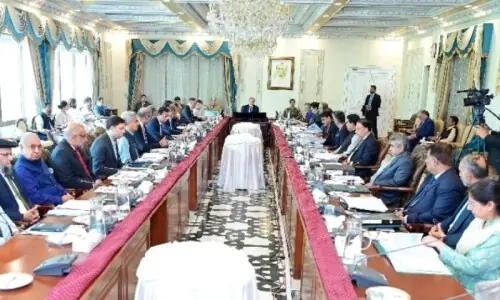
"The crisis (kicked by a steep fall in the international rates of cotton) will last for three-four months. But if a timely remedy is not found right away, it may leave long lasting impact on the textile exports from the country," All Pakistan Textile Mills Association (Aptma) chairman Waqar Monnoo told this reporter after chairing a meeting of the millers.
"We are still of the view that we should not seek any crutches from the government. But we feel that the government intervention for stabilizing the market and for providing some breathing space is essential because of severity of the unprecedented crisis," he said.
Aptma has also decided to send SOS letters to Finance Minister Shaukat Aziz and Commerce Minister Humayun Akhtar Khan to apprise them of the "unusual problem".
"We are also trying to seek an audience with Mr Aziz," said the Aptma chairman, adding spinners carried cotton stocks procured at high average price of Rs3200 per maund as compared to the current rate range between Rs2400 and Rs2600 a maund in the international and local markets. The yarn and fabric prices are also said to be continuously declining.
"As a result of this situation, the industry has accumulated yarn stocks, affecting the liquidity of the mills already facing closures," Mr Monnoo said. Another issue which came under discussion at the Aptma meeting related to reduction in duty drawbacks of polyester-based textile products from July 1, which is stated to be creating "problems of viability of exports" already booked.
The Aptma chief said the government had agreed with Aptma back in 2002 that the duty drawbacks on locally manufactured polyester staple fibre would continue on "deemed import basis" to zero rate exports till tariff of the PTA was rationalized. "But the duty drawbacks are now based on duties and taxes paid on the PTA only from July 1, which is contrary to the agreement," he said.
He said based on prevailing international fibre prices at $1.1 per kg duty drawbacks were to be revised upward from Rs9.87 a kilo to Rs12.86. Instead, the rate has been reduced to Rs4.62 a kilo on 100 per cent polyester fibre yarn. "The existing situation may cause export loss of $2-3 billion this year if it was not remedied immediately," said Mr Monnoo.