



 0
0

 MOST of our high profile finance ministers were urbanites. Ghulam Mohammad, Chaudhry Mohammad Ali, Mohammad Shoaib, Dr Mubashir Hasan, Ghulam Ishaq Khan, Mehbubul Haq, Sartaz Aziz, Ishaq Dar, Shaukat Aziz and now Shaukat Tarin have had no or very little exposure to rural life and its economy.
Only Yaseen Watto and Rana Hanif were perhaps real ruralites. Of course, the first two and Ishaq had rural backgrounds but their training had turned them into Shehri babus..
And those who ruled the country for more than half of its life too had very little exposure to the rural life. Ayub Khan, Yahya Khan, Ziaul Haq and Musharraf were all city boys mentally. Among the prime ministers except for Bhutto and Junejo most were from the cities. That is why Junejo appointed Watto as his finance minister and Bhutto despite having Mubashir as his finance minister had initiated a number of fundamental policy reforms in the agriculture sector which were later continued under Rana Hanif.
The purpose of recalling the names of these high profile finance ministers and past rulers, both elected and non-elected and their backgrounds is to show that one of the major reasons for the country’s consistent failure to make the most of our comparative advantage was the criminal neglect of the agriculture sector by our official policy makers because of their inbuilt biases against rural Pakistan and their overwhelming focus on the needs and demands of cities and towns.
President Zardari and Prime Minister Yousuf Raza Gilani are both from rural Pakistan. But by appointing Shaukat Tarin, a city man as the finance minister the, two have signalled that they too have no intention of distancing official policy making from the age-old tradition of keeping agriculture lower down on the list of priorities.
No doubt, it was during General Ayub’s rule that Pakistan initiated the construction of the country’s biggest irrigation project (Tarbela dam), but it was also during this period that Pakistan became a net importer of food from being a net exporter. It does sound like a cliché today when one hears that this part of what was British India was known as the granary of the subcontinent before independence, but that is what it was even during the first decade of independence.
It was only after we had started receiving food consignments from the US under the PL480 arrangement that the granary started turning into a basket. For the military regime the PL480 wheat was something like a god sent gift. It would sell the ‘donated’ wheat in the open market at prices much lower than the domestic cost of growing the commodity and use the proceeds to finance the federal budgets facing large deficits because of expanding defence expenditure and disappearing tax culture.
Also the urban based middlemen had started squeezing the farmers, paying them next to nothing for their produce and that too in instalments and selling their goods in urban market at exorbitant prices. Meanwhile, because of failure of a government which needed the political support of feudal aristocracy to rationalise land holdings, the culture of absentee landlordism flourished again to the detriment of the sector. The incentive to cultivate food crops was killed decisively in the decade of 1960s.
Pakistan had inherited one of the world’s best irrigation systems to which was added supplies from the Tarbela dam as well. But the continued neglect of the successive governments to manage and maintain the canals and channels resulted in massive wastages which according to one rough estimate was as much as 50 per cent of the total irrigation water supply.
The sector continued to be treated in a step-motherly fashion by successive governments. None bothered to keep a close eye on the expanding gaps in supply and demand being caused by population explosion on the one hand and increasing losses of cultivable land on the other because of water logging. And no one bothered to introduce new technologies being used the world over to increase per acre yield with the minimum application of irrigation water.
To cut the sorry story short, the official policy makers in their undergraduate attempts to industrialise the country had ended up putting the cart before the horse which resulted in agriculture becoming the weakest sector of the economy while the industrialisation efforts could not go beyond the sugar and cement stage. Despite all this we still became one of the leading producers of cotton in the world and some rank us as the fifth largest milk producers. But neither could we use the comparative advantage we had in cotton to take the lead in the export market in high value addition products nor could we become net exporters of cattle and milk and milk products.
If only our policy makers had put enough emphasis on agro industries and promoted high value addition in textiles and not wasted their time, energy and resources in turning Pakistan into an import substitution country, we could have avoided some of the economic disasters we have been frequently confronted with all these years. We wanted to manufacture everything from cars to white goods without having any iron ore, a proper economically viable steel mill or basic chemical industry. We had no comparative advantage for pursuing these dreams. But we kept running after them while consigning agriculture, our main asset to limbo.
In the last eight years we went chasing another wild dream—the services sector—by neglecting the real economy. The banks and the stock markets cornered most of the national resources and attempted to create consumer economy in a country where the middle classes are handful and those living under the poverty line estimated to be almost 40 per cent of the population never ever had contacts either with the banks or stock exchanges.
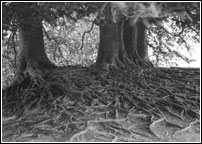
So, let us go back to the beginning. Let us go back to our roots. That is from where we could reinvent our economy on sound footings. Let us divert our resources, financial, technical and personnel towards rural Pakistan. Let us cultivate a new economic paradigm based essentially on agriculture and agro based industries. Let this sector lead our export efforts. And for goods for producing which we have no comparative advantage, let us go and get them from the best sources.




























