0
0

ISLAMABAD, Aug 21: The government is still indecisive about the locations for establishment of Reconstruction Opportunity Zones (ROZs) to house export-oriented industries for duty free export to markets in US, Dawn has learnt.
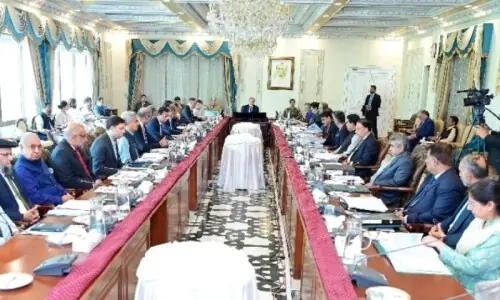
The new government held the first ever high-level meeting headed by NWFP Chief Minister Ameer Haider Khan Hoti. It was also attended by Governor NWFP Owais Ahmad Ghani, besides federal and provincial ministers and senior officials.
The ROZs bill has already been placed before the US Senate and House of Representatives and has been referred to the Ways and Means Committee for vetting. It is hoped that the legislation would be passed in near future.
A source privy to the meeting told Dawn on Thursday that the participants mostly ministers were pole apart on the identification of places for ROZs, as they were interested to include their own constituencies in the proposed plan.
Chief Minister Hoti told the meeting that the facility was to generate employment opportunities in tribal areas at the most or closer to these areas. “We have to consider only those areas in the first phase, which are ready for investment and already having all infrastructure facilities,” he said, adding: “I want those places where I can start economic activities tomorrow,” the chief minister replied to a question of one of the participants.
The source quoted Minister for State and Frontier Region Najmuddin Khan to have proposed to include the provincial administered tribal areas in the proposed plan. These include Lower and Upper Dir, Swat, Buner, and Chitral.
Mr Khan was also of the opinion that these areas were turning fast into safe heavens for Taliban insurgents, who are employing jobless people from the area. The concept of the ROZs was to create employment opportunities by encouraging industrialisation in the terrorist-prone areas.
The entire textile products have not been included in the proposed ROZs for export to USA, which constitutes more than 60 per cent of Pakistan’s total exports to USA. The share of food products is around 12 per cent, petroleum 6 per cent, leather 6 per cent, chemicals 4 per cent, engineering around 2 per cent.
According to the initial findings of an official report, products, that have high tariff incentives, include textiles, apparels, leather and some gems and jewellery products.
On existing export profile to US, top 41 selling textile and clothing items and 30 non-textile items have been identified.
Under the proposed plan, industrial estates for ROZs were divided into three categories. In the category ‘A’ for products