0
0

NEW YORK, Dec 15: Syed Sharifuddin Pirzada, renowned lawyer and perennial trouble-shooter for most military dictators from Ayub Khan to Pervez Musharraf, has said both civilian and military leaders have acted like despots and were corrupt.
In an extensive interview with the New York Times on Saturday, Mr Pirzada rhetorically asked: “What has the civilian rule contributed to Pakistan?”, and then answered with the note of a practised cynic: “The trouble is the people of Pakistan. They were merely spectators. Half the time there has been military rule, and half civilian rule. Both were alike in despotism and corruption.”
He dismissed lawyers’ movement for restoration of democracy with disdain and said: “They were acting as politicians.”
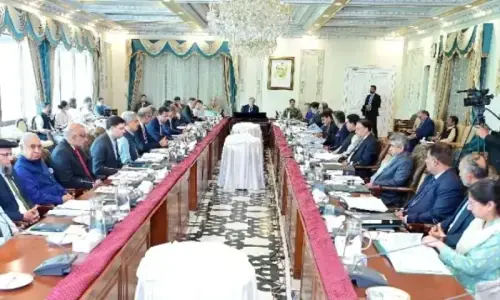
Mr Pirzada told the newspaper that when asked by President Pervez Musharraf for help when he decided he would get rid of a Supreme Court that was threatening to derail his re-election for a second term, he delivered. He met President Musharraf and his cabinet on Nov 2, the day before the emergency was imposed.
The emergency decree to replace the Constitution had already been dusted off. Mr Pirzada made some final touches on the document, which was familiar to him: he had composed it for Gen Mohammad Zia-ul-Haq, who seized power in 1977. “They always keep things ready,” he said of his handiwork.
The emergency order that Mr Pirzada wrote was lifted on Saturday. But at the same time a new raft of provisions devised to enhance Mr Musharraf’s presidential powers, particularly over the courts, was enacted without parliament’s assent. “Why should we wait for parliament?” Mr Pirzada said.
To those who complain that he has perverted the course of democracy in Pakistan by easing the path of military dictators — first Gen Mohammad Ayub Khan in 1958, then Gen Agha Mohammad Yahya Khan in 1969, followed by Gen Zia, and now Mr Musharraf — Mr Pirzada said he was just a lawyer for hire available to anyone who wanted his services.
He said he even helped opposition leaders Benazir Bhutto and Nawaz Sharif on several cases when they were prime ministers.