0
0

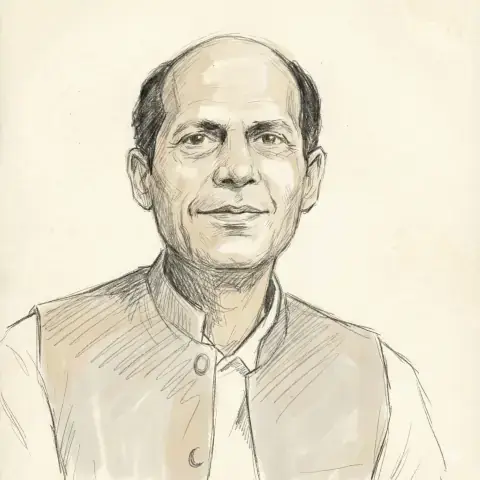
ISLAMABAD, Nov 20: Faiz Ahmed Faiz was a poet of revolution and love and his deft handling of the two made him great.
These views were expressed by speakers at a “Faiz Ahmad Faiz national literary conference” organised by the Pakistan Academy of Letters here on Tuesday.
They called Faiz the voice of the suffering humanity of all times and said he was acknowledged long ago as the greatest Urdu poet after Mirza Ghalib and Allama Iqbal. Even those who were critical of his progressive social and political beliefs could not deny him that position.
They said he had realised at an early age that it was the content and not the form which was basic in the art of poetry, that originality had little to do with formal experimentation and was primarily a matter of a profound understanding of human existence in its totality and wholeness.
They said he was concerned, above all, with the experience of the individual human soul in the long and arduous journey of revolutionary struggle.
Prof Khwaja Masud presided over the conference while Munno Bhai and Rahat Saeed were the chief guests.
Prof Masud said Faiz was the voice of the deprived people groping in the dark in search of light.
He said when beauty conveys a message, ethics merges with aesthetics and art becomes inseparable from politics, as it does for Faiz, in whose work poetry fuses with revolution. Faiz knows how to create images that are the essential beauty of time. His art is a weapon in the revolutionary struggle of the masses even though, paradoxically, he is the most lyrical of the Urdu poets. His lyricism is as much the story of his life as the chronicle of our tormented times.
Munno Bhai said Faiz was a very loving and large-hearted person and did not speak against his opponents. He was a charming poet with a melodious tone. He always composed poetry which was harmonious with his times and conditions.
Munno Bhai said that poetry of Faiz renewed the traditional romantic imagery of Urdu poetry and gained a huge popularity.
Rahat Saeed of Irtiqa Institute of Social Sciences said the strength of Faiz’s poetry was due to his thought and path, which he gathered from the people. He is still alive because of his thoughts and poetry. Those who opposed Faiz are now acknowledging him as a great poet. The love that Faiz received from the people is unequalled by any poet.
Pakistan Academy of Letters chairman Iftikhar Arif said, “though it has been two decades since Faiz left us but it seems that he is more loved, strengthened and becoming popular and relevant than before. The amount of written material on Faiz, after Iqbal, is distinct and different in every respect.”
Prof Ahmed Javed said Faiz’s poetry can be viewed at three ends: the representative of his age, the promotion of peace and democracy and his poetry. He was the champion of peace, democracy and justice. His poetry is a true reflection of the incidents and conditions of his time.
Dr Najiba Arif said Faiz’s poetry offers such similes that create vibrations in the latent chords of heart, such images that lift the thoughts to great heights, such arguments that endows the aims with a certain glory and those interpretations of dreams that give directions to life.
“Faiz combined themes of love and beauty. His thought-provoking poetry has provided insight into what is right in life”, she observed.
Harris Khaleeque in his essay said, Faiz encouraged the use and promotion of regional languages of country in education and literary expression.
Dr Shaheen Mufti and Dr Muhammad Ali Siddiqui also spoke at the occasion.