0
0

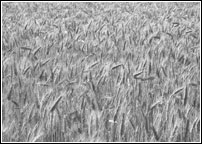 THE federal government is yet to announce wheat support price for the next season. The Punjab government has recommended Rs515 per 40 kg and the Ministry of Food, Agriculture and Livestock (Minfal) has proposed Rs500 per 40 kg.
The Agriculture Price Commission has also submitted its point of view on wheat support price. The support price of wheat before the start of sowing season will not only affect acreage but also per acre yield. For instance, when the government increased support price of wheat from Rs300 to Rs350 during 2003-04, area under wheat crop increased from eight million hectares in 2002-03 to 8.2 million hectares in 2003-04.
A few months back, the Punjab Agriculture Department unveiled wheat production strategy for the province. Its salient features included use of quality seed with recommended quantity, timely sowing and judicious use of water at critical stages of crop growth including tillering, booting, flowering and milking to optimise per hectare yield.
Punjab’s share in national wheat production is greater than any of the other three provinces, but the wheat statistics reveal no increase in yield for the last seven years. For instance, per hectare average wheat yield in 1999-00 was 2,667 kg per hectare that reduced to 2,665 kg in 2000-01, a decrease of 6.5 per cent. The average per hectare wheat yield further dipped to 2,392 kg per hectare for the next season, a shortfall of 10 per cent.
Nevertheless there was a bit increase in average yield in 2004-05 and it stood at 2,659 kg per hectare. Therefore, policy measures are important in increasing per hectare wheat yield in the province.
For the ensuing Rabi season, the government has fixed a target of 24 million tons. To achieve the increased target, it is imperative to increase cultivated area under wheat and per hectare yield too. About 5-10 per cent additional land can be brought under wheat cultivation if sugar millers start crushing on time in October. The ideal time for wheat cultivation starts in early November.
The additional land from sugarcane crop will help the government achieve a bumper wheat crop. If the wheat price is fixed as high as Rs500 per 40 kg or beyond, the farmers may go for wheat instead of sugarcane on large scale. That is the reason that sugar millers wish to keep the wheat price around Rs450 per 40 kg while the government agencies including the provincial price commissions, Ministry of Food, Agriculture and Livestock (Minfal) and the Federal Agriculture Price Commission want it at least Rs500.
In case wheat price is kept below Rs500, the country might not be able to achieve the target of 24 million tons because the price for maize has already gone up from Rs350 to Rs550 per maund in last one year which is higher than the wheat price. The national average yield of maize is 30 maunds per acre and wheat 27 maunds. At Rs550 per maund, maize provides around Rs17, 000 per acre and wheat at Rs425, last year’s price, around Rs11, 500. To add to this, maize is a four-month crop whereas wheat a six-month crop. Further, maize provides fodder for livestock. Keeping wheat price lower compared to maize will reduce area under wheat.
Managing water resources will also help increase wheat area in different ecological zones. A couple of weeks back, the Indus River System Authority evaluated a shortage of irrigation water for the forthcoming Rabi season. The representative of the Punjab Irrigation Department anticipated 20-25 per cent water shortage during the Rabi 2007-08. This necessitates planning canal water distribution in an efficient manner to avert the adverse effects of water shortage on wheat. In the backdrop of anticipated water shortage, wheat production target is bound to suffer and farmer income will also face a set back.
It is encouraging that the Punjab government has provided incentives in the form of tractors to the wheat-growers for showing record per hectare wheat yield in the past. This practice will encourage the growers to increase area under wheat as well as to endeavour toward achieving record per hectare yield.
Besides, the government should organise training programmes in all parts of the country on disbursement and utilisation of agricultural credit to create awareness among the farming community. Though there is an appreciable increase in the flow of credit in the agriculture sector during the last couple of years, yet the disbursement is insufficient than the requirements of the farming community.
Second important factor that can be helpful in realising 24 million tons wheat target is to increase per hectare yield through efficient crop and soil management practices. Increasing per hectare yield is also the only viable option in the presence of dwindling land and water resources.
The trouble with our agriculture is the lack of creativity in research due to which there is no improvement in potential yield of wheat cultivars for the last decade. The researchers have not been able to introduce any high- yielding wheat cultivar and the growers are bound to cultivate wheat cultivars introduced in the early nineties. This calls for viable research programme to meet the needs of the farming community.
To reduce burden on wheat growers, it is necessary to reduce prices of inputs such as seed, irrigation, fertilisers, weedicides etc. The price per bag of urea fertiliser is Rs658 in Pakistan while it is available at Rs540 in India. Similarly, electricity is being provided to farmers in India at Rs0.6 per unit while here at Rs3.28 per unit. Moreover, tractors, pesticides and seeds are far cheaper in India compared to Pakistan.
Quality seed is the primary input to obtain higher wheat yield. The Punjab Agriculture Department has fixed target for use of quality seed at 1.25 million bags out of which 0.46 million bags will be provided through the Punjab Seed Corporation and 0.78 million bags will be made available by using seed graders by the agriculture extension wing. Wheat seed exchange programme will also be launched during the ensuing Rabi season for the first time to provide quality and certified wheat seeds to the farmers.
Under this programme, the farmers can exchange graded seed with certified seed for which the difference of cost would be born by district governments. The Punjab Seed Corporation would provide 120,000 bags of 100 kg wheat seeds for this exchange programme during the Rabi season. The weedicides will be applied on 70 per cent on the total area under wheat for effective weed control and to enhance wheat production programme. All these measures are inevitable to obtain self-sufficiency in wheat and to prevent import of the commodity.