0
0

LONDON, Oct 8: The Guardian in its editorial on Monday painted a dismal picture of post-presidential election scene in Pakistan and said that the constitutional and political crisis consuming the country had not ended. “It has prolonged it, as Pakistan enters a period of limbo, which will only end when the Supreme Court rules on his (Musharraf) eligibility to stand in the first place. This could take from 10 days to three weeks, and in that time anything could happen.”
Pointing to the depleted electoral college because of mass walkouts and last-minute resignations, the newspaper said the majority with which Gen Musharraf claimed he has won was no more than 55 per cent.
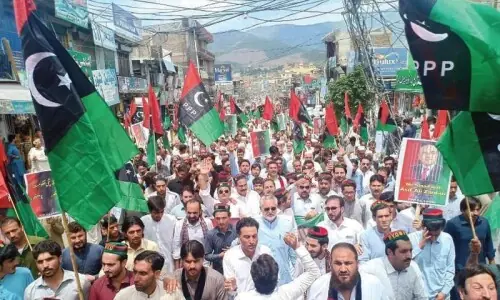
“Opposition parties said the vote was illegitimate, but they too have been damaged politically. The general has largely defanged them, either by cracking down on them (as he did when the former prime minister Nawaz Sharif attempted to return to the country) or by buying them off. Benazir Bhutto, former prime minister and leader of the largest opposition party, is hard put to describe the immunity from prosecution that she and her followers secured as a process of political reconciliation.”
According to the Guardian editorial, the so-called national reconciliation ordinance was selective, and it too would be tested before the Supreme Court. Ms Bhutto can return to Pakistan, but she has failed so far to secure the other two items on her agenda – to overturn a ban on anyone serving as prime minister three times and to strip the president of the right to sack his prime minister. The editorial said the loser in all this was democracy.
“Pakistan is not Rwanda after the genocide. It has courts, lawyers, laws and a burgeoning media. One of the reasons why the country has been in such uproar is because, almost for the first time in its 60-year history, every undemocratic manoeuvre has been magnified through the lens of the television camera. What viewers need is not the unsavoury spectacle of an army chief buying out the political class, but leaders prepared to maintain the rule of law. This is not a pious hope, but a practical necessity. The transition from military dictatorship to civilian government will not happen without it.”