0
0

LAHORE, Sept 24: A portion of Jahangir quadrangle in Lahore Fort collapsed on Monday evening.
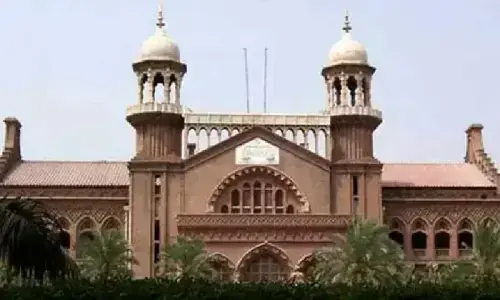
A source in the archaeology department told Dawn that recent rains had triggered the collapse of the north-eastern turret (Burj) of Jahangir quadrangle, which was already in a state of disrepair.
“Fortunately the fort timing was over when the structure grounded,” he said.
The source said cracks in the turret might have developed a few years ago, but the authorities concerned could not detect them. “Had the authorities paid a proper attention to it and carried out timely repair, the turret might have been saved,” he said.
Punjab Archaeology Department Director-General Shahbaz Khan confirmed the incident, saying he was going to the fort to ascertain the exact cause of the turret collapse.
He said the department had initiated the restoration of the fort last year with a financial assistance of Rs300 million allocated by the Punjab government. He said during one year, the department had completed the restoration of Royal Kitchens and Havelis of Kharak Singh and Mai Jinda.
There is evidence that a mud fort was in existence in 1021 AD. Mughal Emperor Akbar demolished the old mud fort and constructed most of the modern fort in 1566.
The fort is a showcase of Mughal architecture and served as a garden palace for all the great Mughal emperors. The sculptured elements of the Akbar period found in Jahangir’s quadrangle are unique. Emperor Jahangir extended the gardens and constructed the palaces — Jahangir quadranqle (1605-28). The most experienced artisans were brought in after the completion of Fatehpur Sikri. Shah Jehan added Diwan-i-Khas, Moti Masjid (Pearl Mosque), his sleeping chambers and Shish Mahal.
Situated in the northwest corner of the fort, Shish Mahal is one of the unique and most profusely decorated places of the Mughal period. —Zulqernain Tahir