0
0

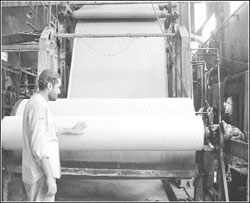 GUJRANWALA: As we see packing all around us on everyday items such as chocolate bars and potato chips, the city has attracted the newfound industry and is on its way to become the industry leader. What makes Gujranwala an attractive city for the paper industry is the easy availability of cheap raw material and increasing demand of packaging paper.
Gujranwala paper industry meets 50 per cent demand of the city and 15 per cent of the whole country, Dawn has learnt.
The promising aspect of the industry is that the demand of the paper is increasing by 15 per cent annually because of more demand of fruit-packaging in paper-boxes in Swat and Mangora. Earlier, fruit was packed in wooden boxes.
In the last three years, the number of factories has increased from three to seven, daily production from 60 tonnes to 200 tonnes and jobs from 500 to 2,000. The industry uses locally-manufactured units.
More than 4,000 junk material pickers and 200 scrap dealers provide raw material to the industry, while husk, which is used as fuel, is obtained from rice growers.
Safdar Ali, manager of a paper mills, told Dawn that Gujranwala units could not produce high quality papers because of outdated machinery and the lack of heavy investment in the industry.
Chaudhry Asim Anees, the owner of a papers and boards mills, says three years ago the government abolished excise duty on the industry which helped it grow but it imposed one per cent excise duty on the industry recently and increased power tariff by 10 per cent which would hamper its growth.
He said that one month ago the city district government had passed a resolution of levying tax worth Rs25,000 on each paper mill which could increase the cost of production.
He said local industrialists were hesitant about buying the latest machinery for a high quality paper production because of monopoly of two Lahore mills which had very expensive setups and stronghold on quality-conscious niches of Pakistan. But efforts were on to install latest machinery to get substantial market share of quality-conscious niches and in the next five years the local industry would give tough time to big national units.
He demanded that the government should abolish excise duty and fixed annual tax being levied by the local government.