0
0

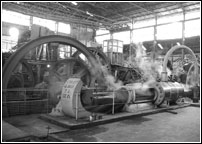 THE sugar industry is the second largest with a six per cent weight in the large-scale manufacturing industry, and plays an important role in the national economy.
This industry is facing a predicament for the last six years due to on-going internal disputes . Its predicament can be gauged by the fact that despite being the fifth largest country as regards area under sugarcane cultivation, we are the 11th in production and 60th in yield.
Sugar yield is four tons per hectare as compared to a potential of 10.5 tons. Though the area under sugarcane production has increased rapidly than any other major crop, we have become an importer of sugar over the years. Sugarcane production achieved a landmark of over 55 million tons in 1998-99, after which it declined. But in 2003-04 an output of 53.4 million tons was harvested. In financial year 2006, production again declined to its lowest in the decade, to an estimated 40.95 million tons which was almost 16 per cent lower than previous year’s production. This had an adverse impact on the availability of sugar in the country.
The reason behind the shortfall in sugarcane production was the abolition of zones. The concept of zones worked satisfactorily in the past — barring a few political and government interventions. The system was most suited for millers and other stakeholders, including cane growers, financial institutions and tractors. However, the mill-owners in Punjab were raising hue and cry that they were unable to purchase good quality sugarcane from Sindh due to regulation of zoning
Sugarcane production in the past decade declined due to unfavourable weather conditions and the disputes going on in the industry. The politicians, who enjoy power as sugarcane growers, are resisting efforts to increase output, fearing that the increase in output will lead to decline in prices. The result is that, over the last many years, millers are forced to pay higher price for sugarcane as compared to the official support price.
Area under sugarcane also declined during 2004-05, denoting a drop of almost 10 per cent from the previous year. It was only 966,000 hectares. Production per hectare also dropped by two per cent to 48.88 tons the same year. However, if we take a look at the figures for the over all decade, the yield improved but by very small percentages, from 47.78 ton/hectare in 1998-99 to 48.88 ton/hectare in 2004-05.
Domestic demand of sugar cannot be fulfilled due to severe shortage of raw material. The mill-owners do not have enough sugarcane. In 2004-05, the crop production was below expectations, showing a negative growth rate of 12.2 per cent. Only in Sindh, the yield had dropped from 62.96 tons/hectare in 1998-99 to 43.54 tons/hectare in 2004-05.
The sugar industry, like other industries, is hit by lack of research and use of defective varieties of seeds. Rapid and unplanned increase in sugarcane acreage in unsuitable areas has also added to the problem.
With the emergence of middlemen in the industry during the last four to five years, growers are facing problems, as they are not getting payments. This leads to an increasing sense of insecurity among the growers, as they are unable to buy inputs for the next growing season. As a result, they are shifting from sugarcane to cotton, which is feared will further reduce the supply of raw material to sugar mills.
There is also water scarcity. Sugarcane crop needs plenty of water which the farmers cannot provide and hence they are shifting to sunflower which does not need much water.
In the years when production of sugar exceeded the domestic demand, the export of sugar was allowed to Afghanistan and other neighbouring countries. Some of the mills are still exporting sugar to Afghanistan causing an increased shortage of sugar within the country. The government is yet to ban its export.
Despite shortcomings, Pakistan still has some strong factors favouring the industry. There is an extensive area under sugarcane cultivation -- almost 966,400 hectares. As the factories are located near farms, transportation charges are low.
The by-products of sugar both baggase and molasses are used to produce other items that can be sold or used. Ethanol is produced from molasses that is used as fuel in the industry itself. In future, ethanol from molasses is expected to be used as fuel for cars. Most of the molasses are exported to earn foreign exchange. Nevertheless, the climatic condition in Sindh and Punjab is favourable for the production of sugarcane crop.
The sugar industry involves contract-based labour, which is comparatively expensive and is usually untrained. Most of the mills are under-utilised. The utilisation percentage of sugar mills in 2004-05 was 67.95. (Source: PSMA Annual Report 2004-05)
Another typical problem common to all industries is the poor infrastructure, undeveloped roads, power shortage, lack of sophisticated markets. All these contribute to weaknesses of the industry.
The sugar industry is also suffering from financial crisis, with many mills lacking sufficient liquidity, as 90 per cent of the cost is variable. This provides no scope for economies of scales. Pay roll costs are one of the biggest problems..
There exist a lot of opportunities to further develop the industry.. Several secondary industries can be developed such as baggase to make pulp for paper and animal feed. Molasses can be exported after value-addition. The mud produced during the process of production can be used to make fertilisers using the EM technology.
After the enforcement of WTO policies and followed internationally, subsidies have been removed. Due to the removal of subsidies, hundreds of sugar mills in the EU have been shut down creating sugar shortage. Due to production shortage Indian sugar export has also declined. Pakistan is lucky to have gained entry into several markets, notably the EU. By enhancing its sugar production, Pakistan can export its commodity to these markets.
A trend of merger of small industries with larger one has started lately for the consolidation of the industry. Smaller and inefficient units are being picked up by larger ones. There is a great opportunity of joint ventures for the training and production of industrial alcohol as well as carrying out research into various production processes and facilities. The introduction of fuel for cars can further support this plan.
Sugar prices have declined in international market from $400 to less than $200 (about Rs10,500 per ton) where as domestic production cost is of about Rs20,000 per ton including tax (about Rs2000 per ton). Sugarcane prices in Pakistan are the highest in the world while yield per hectare is the lowest. Export is possible only through a heavy subsidy without any relevance to or comparison with domestic prices. The sugar industry faces a potent threat as local production is costlier than production in foreign countries.
The national sugar industry holds capacity of producing six million plus tons of sugar per season without fresh dose of fixed capital outlay. It’s performance can be much better if improved varieties of sugarcane can be developed through research and development. The dormant area of R and D deserves to be activated. Sugarcane crop size, with about one million hectares conventionally being brought under the crop, can be increased significantly, enabling utilisation of sugarcane processing capacity possessed by the industry.
Among about 16 major sugarcane growing countries globally, Pakistan ranks fifth in terms of area, 15th by yield and 12th by recovery, which means potentials of yield and recovery could be raised and achieved corresponding with the position of area.
The objectives stated above can be achieved by evolving precise policy parameters, creating efficient implementation mechanism and pursuing by careful monitoring. Shortfall or surplus sugar production can be clearly identified prior to processing campaign of sugarcane commences in each season. If shortage is seen, import of refined sugar be restrained by replacing it with timely import of raw sugar, as it has multiple cost and economic advantages. Precise volume of shortfall can be assessed in consultation with the sugar industry, enabling identifiable volume and setting orderly time sequence for import. This is important to protect sugar economy besides prevent foreign exchange expenditure.
There is an urgent need to examine the economics of sugar industry. While there is an urgent need to increase production of sugarcane, it is also evident that some of the units are not economically viable. They have been just adding losses to their balance sheet. Therefore, an option to explore is the liquidation of such units without further delay. It is suggested that financial institutions should take the hit by liquidating these units. They should write-off those amounts, which are not recoverable and transfer management of persistently sick sugar mills to new sponsors. The purpose of such write-offs is to make debt servicing sustainable. l.
It is high time to streamline this industry on modern lines to create jobs for the youths in the rural areas at their doorstep. Unfortunately, there is no consistency in government’s policies.