



 0
0

 THE searing summer heat of May makes it one of the worst months to be in India. Thousands of affluent Indians are able to escape the harrowing summer days by jetting off to Europe, the US or the Far East.
A large number of middle-class Indians head for the hill stations, but many of these once salubrious colonial haunts for the ‘Burra sahibs’ have – because of global warming, deforestation, or rampant and unplanned urbanisation, take your pick – become as warm and crowded as the towns in the plains.
Of course, millions of Indians also head for their hometowns from cities like Mumbai, Delhi, Bangalore and Kolkata, but most of non-metro India lives in the past, facing acute shortages of power, water, housing, roads, and even telecommunications connectivity. A visit to non-metro India – which a respected editor had once described as ‘Bharat’ (‘We live in India, they live in Bharat’) – could be an eye-opener.
Unfortunately, despite the economic reforms and opening up of most sectors for foreign investments, the economy of shortages continues to haunt India. And except for a handful of cities – or rather select locations within cities – the rest of the country suffers from shortages.
Mumbai is one of the few cities not facing daily power-cuts, but the eastern suburbs of the metropolis do not enjoy such luxuries. Even the satellite city across the harbour – Navi Mumbai, which is being showcased by the state government as a city of the future – experiences rampant power cuts.
And just 50 km out of Mumbai, it is an ocean of darkness in most parts of Maharashtra, which once prided itself on being one of India’s most progressive states, both economically and industrially.
The concept of ‘haves’ – those enjoying an uninterrupted flow of services including power, water and telecommunications, drainage facilities, and wide roads – and the ‘have-nots’ in urban India is widening by the day.
In south Mumbai localities like Malabar Hill and Nariman Point – where most of the ministers have their sprawling bungalows – there are no power-cuts, and water shortages are unheard of. About 60 km away in Kalyan (or Ulhasnagar, Ambernath, Panvel, or any of the scores of extended suburbs) citizens live in a different world and in a different century.
In Delhi’s Lutyen’s Bungalow zone – where all the grand bungalows of ministers, bureaucrats, lawmakers and the elite are located – power-cuts and other shortages are unheard of. But a few kilometers away, you’ll find an acute scarcity of services and commodities that most people in the privileged localities take for granted.
Worse, even in the new satellite towns of the National Capital Region (NCR), places like Gurgaon and Noida, there are massive power and water shortages. A real estate boom in Gurgaon has transformed this city into an El Dorado, with tens of thousands of people buying swanky apartments, row houses and villas – ranging from Rs2.5 million to Rs25 million, unaffordable to a majority of Indians.
But today, most office buildings, gated-communities, self-contained townships and apartment complexes have to invest in expensive diesel generating cities, water filtration plants and the like to ensure that the residents and office workers do not face crippling shortages.
The situation is no different in other parts of India. In most state capitals, posh areas that are home to politicians, bureaucrats and businessmen are provided all the necessary services. But in the rest of the city – and the state – service providers simply give up, unable to ensure uninterrupted flow of power or water.
In Chennai, the older and developed parts of the city have piped water flowing in round-the-clock. But a large number of residents in the suburbs have to depend on tankers, as inefficient – and often corrupt – administrations are unable to provide such basic necessities.
Many of the water tankers are operated by local politicians and bureaucrats who have a vested interest in ensuring that citizens don’t get piped water. Even the poor are forced to pay exorbitantly – not just for drinking water, but even for water for other purposes – to the tanker operators, and politicians do not oppose this system.
However, the moment somebody speaks of ‘privatising’ the water supply system to ensure equitable and efficient distribution of the resource, or metering the existing network, and charging users for the service, there is a hue and cry and all political parties get worked up and rush to ‘defend’ the poor.
Strangely, the nexus between local politicians and tanker operators in many Indian cities is scarcely ever mentioned in public or in the media. In states like Maharashtra, tanker operators constitute a powerful lobby, and have vital links to politicians. During times of scarcity, governments and municipal corporations spend billions of rupees in hiring the tankers and directing them to supply water to distant villages and towns.
But in the absence of a system of accountability, much of the water does not reach the intended beneficiaries, and the transporters and suppliers make a pile of cash, living off the misery of the poor.
Unfortunately, since these are not issues (or ‘breaking news’) that would attract dozens of television networks, politicians do not raise the matter in parliament or in the state assemblies. However, when a Bollywood actress confronts racist remarks in a puerile and inane television reality show in London, even ministers have the time to debate the matter and provide sound bytes to breathless television channels.
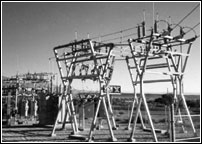
India’s energy crisis is worsening, and the vast majority of citizens have to live through harrowing summer days in the absence of electricity. Last week, KPMG, a leading consultancy, released a report – India Energy Outlook 2007 – portraying a grim scenario for the country.
The report notes that the power and upstream energy sectors – coal, oil and gas – need investments of nearly $150 billion over the next five years. Much of the money has to come from international companies, but the government’s dilly-dallying over reforms in recent years has turned off several major global players.
The federal government pushes for reforms, but lawmakers in Delhi – and state governments – ensure that they are stalled. Earlier this month, a government note directed the power ministry to ensure that all states open up the distribution sector. The government has been pushing for the unbundling of state electricity boards (SEBs), inefficient – and in many cases corrupt – monopolies owned by various governments.
States like Maharashtra have already unbundled their unwieldy boards into three units – generation, transmission and distribution companies. The federal government now wants states to even go in for privatisation of electricity distribution, which could then attract large investors.
Power sector reforms, which were first initiated in 1991, have stalled in India for a variety of reasons, including opposition from politicians, trade unions and other vested interests. The central government has also been experimenting with various concepts. It introduced the now derided system of providing counter-guarantees, which was a huge failure.
It has now introduced concepts like ultra mega power plants and merchant power plants, but the response has so far been lukewarm. Worse, both central and state clearances for major projects are slow to come by, which puts off potential investors.
State governments are also reluctant to pay the right price to generating companies. In Maharashtra, for instance, the state government is reluctant to pay more than Rs3.5 per unit of power to private generators, but at times of scarcity does not mind paying Rs8 to other state governments.
Delays in issuing clearances – environmental and other related ones – also lead to private firms dumping the projects at the preliminary stage itself. Two other problems that confront independent power producers are corruption – with rent seeking politicians and bureaucrats harassing them at every stage – and the criminal ‘theft’ of power, which is dismissed as ‘transmission loss.’
Unless these problems are solved at the state level, India’s energy sector will continue to remain crippled because of the enormous shortages, slowing down economic growth.





























