0
0

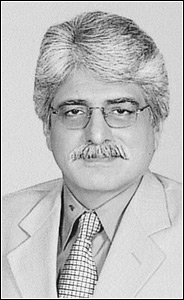 ISLAMABAD: Prices in Pakistan cannot be controlled due to the worldwide oil price phenomenon but these prices, especially that of wheat flour, sugar, milk etc were much lower in the country than those of the neighbouring countries, including India, said Prime Minister's Adviser on Finance Dr Salman Shah.
"Yes to some extent the government could ensure price stability but one has to take into account the increasing oil price phenomenon in the international market, which is a matter of concern for every nation," he added.
In an interview with Dawn, he said that inflation has always been a very important issue for the government as it concerned the common man and that his ministry remained in touch with the central bank throughout the year to ensure price stability across the country.
Dr Salman shared with Dawn an official summary that talked about price comparison of Pakistan with India, Bangladesh, Sri Lanka, United Arab Emirates (UAE), Saudi Arabia, Iran, Afghanistan and China.
Talking about India, the adviser on finance said that except for mutton and beef, the prices of all essential items, including wheat flour, nasoor pulse, moong pulse, mash washed, gram washed, farm chicken, eggs, red chillies (powdered), garlic, diesel, petrol (super/Octane 90), kerosene oil and cement were low in Islamabad than New Delhi.
He said prices of most of the consumer items were still below than those of many South Asian and gulf countries.
Here are some of the questions and answers of the interview with Dr Shah.
Q. From an average Pakistani perspective do you agree that prices of essentials (wheat flour, ghee, sugar, rice, milk), utilities (electricity and gas), transport, medicines and housing (value of land, construction and rent) are high and increasing at a rate much higher than the capacity of the people to increase their earnings.
A. I do not have to tell you that the oil prices in the international market have changed the dynamics of every thing. Therefore, I would not like to unnecessary defend the government by saying that every thing was okay and that increased prices did not hurt the common man in the country.
It was the time when there was no much importance given to palm oil but ever since it was being used as bi-diesel, its prices have gone up from $400 to $650. Earlier, palm oil was mostly used as ghee but now the situation was different and this has affected the international oil prices.
But I can tell you that core inflation was down at 5.5pc but whenever there was oil price increase in the international market, this core inflation created problems. There has been some active hold on oil prices in the country due to which inflation remained under control to some extent.
In April 2005, food inflation had gone down by 15 per cent across the country, which has now further come down to 8 per cent. There is going to be a bumper wheat crop this year and it will certainly help reduce or bring stability in the food prices.
But the overall inflation target of 6.5 per cent set for 2006-07 was unlikely to be achieved and it would be around 7 per cent. For next year, we are proposing 6 per cent inflation target.
Q. In a free market environment interplay of demand and supply determine prices. In stable economies these movements are within a narrow band. In Pakistan prices have risen drastically in sectors except for telecommunication where the quality of service is improving and call rates have actually come down. Why is that?
A. Our major emphasis and effort is to keep the prices in check by continuously improving the supply side and it was evident, particularly in the case of cement prices, which had been brought down from Rs340 per bag to Rs240 per bag.
Likewise, the government decided to immediately import sugar when its prices were not being reduced by the sugar mills. And the timely import of sugar helped reduce and stabilise sugar prices in the country. Now sugar is being sold at the utility stories at the rate of Rs26-27 per kg.
The government also allowed the import of wheat, pulses, meat and vegetables with view to ensure improved and smooth demand and supply situation. One of the reasons to experience increase in inflation was floods in Sindh due to which many crops were destroyed and at times it became difficult to ensure better supply side situation. However, this supply side is improving.
About the prices of electricity, gas etc different regulatory authorities were ensuring price stability to avoid unfair price phenomenon.
Q. There is an impression that government covers up for cartel makers. Many cabinet members are said to be protecting people involved in capital and com-modity market manipulations. Why the NAB investigations against market manipulators were dropped.
A. Pakistan is a globalise economy and as such it cannot operate in isolation. When the international oil prices increased from $20 per barrel to $80 barrel, it created problems for all the countries and Pakistan was not an exception.
I have told you that when sugar prices were increased in the domestic market, the government instantly allowed its import and at times duty on it was also lowered or removed. The objective was to benefit the consumers. Unless you are an oil producing country, you cannot escape pain and hard time that is given by oil price increases.
Under these circumstances, it becomes difficult to control prices. In real estate market, speculators thrive due to huge demand for property especially by overseas Pakistanis. They want to buy property in Pakistan, particularly after Sept 11, 2001 terrorist attacks in the United States.
It is not illegal to speculate and the solution lies in increasing the demand for housing. Look at Islamabad where the government has opened many new sectors with a view to reduce or stabilise real estate prices. Then there is a construction boom, which is helping to provide more and more jobs to the people.
Q. What steps are you taking to bring houses within the reach of an average Pakistani?
A. Unfortunately, people made their investment mostly in real estate and stock market after 9/11, although there were other sectors, which could provide ample business opportunities.