0
0

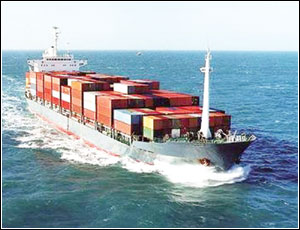 A LEAP in exports from $16.5 billion last year to $40-45 billion by 2013 would be a big jump. But it would be achievable only with better strategy and aggressive efforts.
While during the last seven years the export rose from $7.8 billion to $16.5 billion (110 per cent) as the prime minister claims, then the new target is achievable and can become a reality, says Commerce Minister Humayun Akhtar. At present export is growing at the rate of only four per cent.
But almost tripling the exports target would certainly demand far greater ingenuity, wider imagination and aggressive efforts on a sustained and escalating basis.
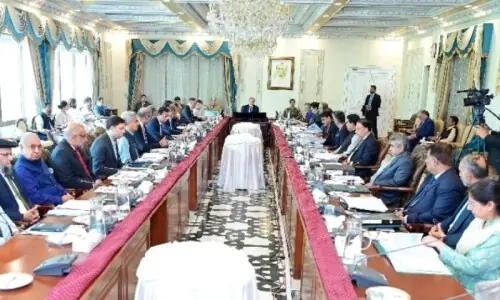
Prime Minister Shaukat Aziz approved the export plan presented by Deputy Chairman of the Planning Commission Dr Akram Sheikh, who had worked hard on it with inputs from the relevant ministries including those of commerce, industry and textiles.
With the end of the textile quota system and increased globalisation of economy with new players like Vietnam and Cambodia entering the export arena vigorously, the global economic paradigm for a textile-exporting country like Pakistan has to be changed to keep pace with the developments.
The government is trying to enter the Free Trade Agreements with major and minor countries. It has signed FTA deal with China which offers great opportunities to Pakistan exports. A similar deal is being negotiated with the US, the European Union and the Gulf Cooperation Council. It has already signed an FTA with Sri Lanka which has become operational. Negotiations for such a deal are also going on with Bangladesh, Nepal, Malaysia and Jordan.
These agreements would open up vast markets with large demands, particularly in China. Pakistan should have surplus to meet their needs. If that is not done, goods from other countries with no or nominal tariff would flood our markets, as Chinese goods are doing at highly competitive prices. So we have to defend our own markets through open market mechanism and try to export more and more.
We have in addition the Reconstruction Opportunity Zones option offered by the US to export goods produced in the earthquake zones and in underdeveloped zones of the country like the tribal areas to be exported tax-free. We have to make best use of this and profit by it promptly.
To enlarge the exports to $45 billion by 2013 we have to first fix the annual targets of an escalating scale and send them to the Federation of Chambers of Commerce and Industry and its constituent chambers to make them full partners in the grand effort and prod them to do the best they can.
Exports, as the prime minister says, is the lifeline of the country which has to be raised from 13 per cent of its GDP to 15 per cent. With the GDP growing fast at 6-7 per cent annually or more, the volume of each percentage will be increasing heavily and we have to meet the challenge year after year.
While the government is trying to open new markets by seeking FTA with many countries, the exporters have to explore their own markets in them and firm them up through mutually binding arrangements.
We have to diversify our exports vigorously by including a large number of unconventional items instead of concentrating excessively on the textile sector beginning with raw cotton and coarse cotton yarn.
We have to make our textiles as well as leather exports more value-added. The fact that Pakistan earned $1.2 billion from rice exports last year suggests that we could earn more from agricultural exports if we develop them properly and promote their sale.
Exporters have to focus on garments and make them increasingly value-added and their brands have to earn a name abroad for quality, style and packaging.
Today the value addition of garments in Bangladesh is higher than value-addition in Pakistan not to speak of the Indian output which is higher than Bangladesh garments. This situation must change and the Pakistan government should work hard to export more garments and earn more foreign exchange.
To achieve such ends, Pakistan needs highly skilled workers and in large numbers. The prime minister says the government is training workers in large numbers to meet the future needs of the industry .It is hoped that efforts would produce enough workers to produce quality goods to boost export.
Of course, the industry, as a whole, and the export industry in particular need a steady supply of adequate power and gas. Their demand would go on increasing and that has to be met.
Water is the other necessity of the industry which should be met by the government. In fact, the infrastructure as a whole should be earnestly taken care of by the government.
The gas pipeline from Iran could solve the energy problem to some extent. But the project may not start functioning until the fag end of the seven year export documentation plan.
The export can’t be raised to $45 billion if approached in conventional manner, but with vigorous effort it is achievable. The exporters have to play a much larger role and consistently.
There is need for extensive research by official institutions and non-official bodies like the Chambers of Commerce. FPCCI should play a larger role in promoting such research and the commercial secretaries abroad should be made to report to them as well.
The FPCCI’s prime function should not be handing over scores of export trophies to exporters each year and holding dinners and lunches for top officials including the ministers. The FPCCI and its affiliate chambers should play a larger role in exploring new markets for Pakistani goods and for new items in new areas.
Participation of our exporters in some trade exhibitions abroad is not enough. The FPCCI should play an active role in research with adequate subsidy from the government which is going in that direction now.
The number of holidays should be reduced and declaration of holidays suddenly should be avoided. Workers going on protest should avoid violence, disruption and interruption in the flow of exports.
Above all, the exporters should not seek a high-rate of profit which they can ensure in local market through cartel like arrangements. Over here they can create artificial shortages through such cartels and profit a great deal.
They can’t do that abroad and hence have to be content with a lower rate of profit that may discourage them from participating in the export market. That should not happen now as the big exporters are the ultimate gainers.
There have been increasing reports of misuse of export refinance at concessionary rate of interest. The latest is the misuse of export refinance for rice. Such exporters are reported to have caused shortages in the market of course along with high prices. Such abuses of export refinance should be eliminated.
The $40-45 billion target to be achieved within seven years from now when the export moving at a nominal rate of only four per cent ,is a real challenge. Neither the government nor exporters can afford to fail or have setbacks as in the past when the gaps between the targets and the reality were very large.