0
0

BAGHDAD, Feb 22: As a joint operation by US and Iraqi troops to win control of Baghdad made more progress Thursday, their insurgent foes were fighting back with deadly new tactics, including poison gas attacks.
Iraqi medics were treating dozens of patients poisoned by chlorine after militants targeted civilian areas with trucks rigged up as dirty bombs, said Qais Abdulwahab, director of the Kadhimiya Hospital.
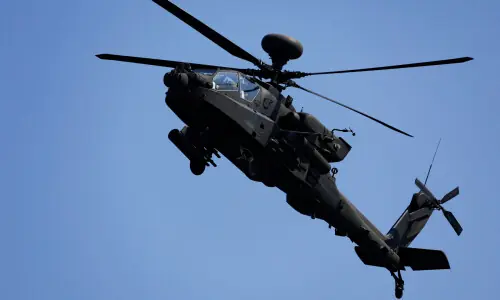
Meanwhile, American commanders are investigating the loss of the latest in a series of helicopters after a US army Blackhawk came down on Wednesday in fields north of the capital after coming under fire from the ground.
“Operation Fardh al-Qanoon” (Imposing Order) has scored some successes.
Murders are down in Baghdad and more than 90,000 US and Iraqi troops have met only token resistance as they fan out through flashpoint districts.
Three suspected Al Qaeda insurgents were killed north of Baghdad in clashes on Thursday and overnight raids in the city netted five “rogue” members of the Mahdi Army militia suspected of kidnapping and murder.
But daily bomb attacks on civilians continue, and the use of chlorine and anti-aircraft tactics has underlined what US commanders say is the insurgents' main strength — an ability to rapidly adapt their strategy.
“One of the things we see as we deal with this is that, as one technique works in one part of the country, we tend to see copycat attacks in other parts of the country,” said US spokesman Lieutenant Colonel Chris Garver.
On Tuesday, a truck carrying chlorine gas exploded in Taji, just north of Baghdad, killing six people on the spot but also poisoning scores more as the toxic gas spread through the area, overcoming women and children.
On Wednesday, the dirty bombers struck again, in the suburbs of Baghdad, in a less successful attack that nevertheless spread panic.
“The material used is poisonous,” said Abdulwahab. “During the explosion it changes into a mist that spreads through the air, causing poisoning in the breathing system, breathing difficulties and acute coughing.
“It's the first time we have seen such poisoning cases,” he said, comparing the injuries to the internal burns suffered by children who drink chlorine-based cleaning products.
Kadhimiya Hospital treated 90 patients poisoned in Tuesday's attack -- seven of whom died -- and 21 more on Wednesday, Abdulwahab said.
The Martyr Mohammed Baqir al-Hakim Hospital in Shula treated 66 cases after the Taji blast, and all survived, said medical official Abu Murtadha.
“They've adapted the car bomb tactic,” Garver said. “It shows some of the maliciousness with which they are adapting those tactics.”
Confidence in the Iraqi forces carrying out the security plan has been rocked by a pair of rape allegations by Sunni women against Shiite police and troops, which has been given unprecedented publicity in the Arab media.
Prime Minister Nuri al-Maliki has furiously denied the first allegation to surface, branding a 20-year-old woman who alleged she was gang-raped by Baghdad police a liar and a criminal, but on Thursday another case came to light.
Four Iraqi soldiers have been charged with raping a woman, said the mayor of Tal Afar in northern Iraq, Brigadier General Najim Abdullah al-Juburi.
He said he received a complaint from a local woman, a mother of 11 children aged in her forties, “a few days ago” and after a brief investigation had referred the troops to the judiciary for prosecution.—AFP