0
0

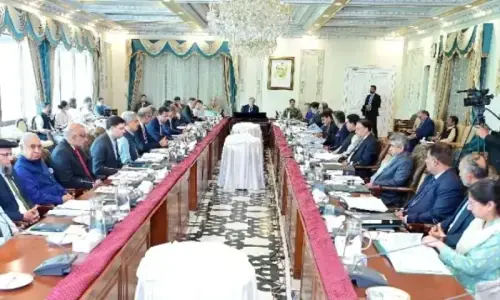
ISLAMABAD, Feb 20: The National Assembly on Tuesday unanimously demanded a joint India-Pakistan inquiry into Sunday night’s firebombing of the Samjhota Express in India that killed 68 people, after the government vowed it would not let anti-peace forces derail a bilateral peace process.
The demand was made in a joint resolution passed after a lengthy debate which saw members from the ruling and opposition parties, including some ministers, blowing hot and cold about India’s handling of the incident, with the government informing the house that 49 bodies had so far been identified – 22 Pakistani passengers and 27 Indians – and 19 remained to be recognised.
Moved by Parliamentary Affairs Minister Sher Afgan Niazi, the resolution called for an impartial investigation into the matter and the formation of a “joint inquiry committee”, echoing similar demands made by several members from both sides, including Railways Minister Shaikh Rashid Ahmad who complained of a lack of cooperation from the Indian authorities.
But Minister of State for Foreign Affairs Khusro Bakhtiar seemed to be taking a softer line on the eve of a meeting of a joint commission of the two countries, saying both governments were “doing their best” in tackling what he called a human tragedy and praised the Indian authorities for a prompt issuance of visas to members of at least 30 families of the victims and facilitating their travel to India.
He blamed the attack on unspecified “anti-peace elements” who, he said, opposed peace between the two countries, and added: “But our leadership is resolved not to let them succeed (in their designs).
Mr Bakhtiar assured the house that Foreign Minister Khurshid Mahmood Kasuri would raise problems relating to the train incident and security of travel between the two countries in the joint commission meeting beginning in New Delhi on Wednesday and the matter would also be discussed between railway and other officials of the two countries later.
“Cooperation from the Indian side is lacking,” the railways minister said at the start of the debate and also accused Indian railway officials of hesitating to talk to their Pakistani counterparts on telephone about the tragedy.
MINISTER’S DIG AT PM: The minister came in for some harsh criticism from several members from both sides of the house for not immediately going to the site of the tragedy in India although he had the Saarc visa as a parliament member to cross the border but he seemed to be passing on the blame to Prime Minister Shaukat Aziz by telling his critics to realise that a minister needed the prime minister’s permission for such a trip.
“If he tells me, then I will certainly go there,” he added, without saying whether he had proposed to the prime minister to allow him to undertake a trip.
The minister rejected allegations from some members that the government had acquiesced to India in pursuing the peace process, saying: “We cannot compromise on national honour.... We are not acquiescing on national issues.”
FAZL’S RETURN: Opposition Leader Maulana Fazlur Rehman proposed the formation of a joint inquiry committee while making his first appearance in the present session after recuperating from an operation for a heart ailment and apparently shrugging off the stigma of a pledge broken by his Muttahida Majlis-i-Amal by not resigning from the National Assembly to protest against a women’s right law passed last November.
He and some other leading members of the alliance, including MMA president Qazi Hussain Ahmad, had not come to the house even after a Jan 13 decision by the alliance’s top body to withdraw the resignation threat over the Protection of Women (Criminal Laws Amendment) Act, which seeks to protect women from the misuse of two 1979 Hudood ordinances about rape.
The Maulana also urged the government to withdraw from the US-led alliance against terrorism if the West failed to review its policies that he said had engulfed the whole world into fire and violence and forced several countries to fight new “wars of liberation”.
He said his alliance supported the peace process with India although it could have reservations about the strategy adopted by President Gen Pervez Musharraf.PPP secretary-general Raja Pervez Ashraf accused the government of keeping the opposition in the dark about the peace process and failing to protect people’s lives and wondered why the railways minister had been unaware of conditions in the Samjhota Express like locking compartments to turn them into virtual cages and that why he had not immediately gone to India to oversee the rescue and relief effort for Pakistani victims.
PML-N member Khawaja Saad Rafiq asked the railways minister to resign from his office because, he said, “his train is derailed” since taking over the ministry.
MQM parliamentary leader Farooq Sattar said it was the first time both the countries were targeted at the same time and that the incident “should strengthen our resolve against terrorism”.
WALKOUT OVER BLOCKED FUNDS: The entire opposition staged a token walkout at the start of the session to protest against what some PPP members, in their privilege motions, called blockage of their development funds of the Tameer-i-Pakistan Programme by the prime minister since they a joined a no-confidence motion against him last year.
Speaker Chaudhry Amir Hussain reserved his ruling after PPP’s Yasmeen Rehman moved the first privilege motion on the issue that was opposed by the parliamentary affairs minister.
PPP’s Abdul Mujeeb Pirzada moved another motion at the fag-end of the proceedings, complaining of a breach of his privilege by the stoppage of funds for his constituency in Sindh. But M. P. Bhandara of the ruling Pakistan Muslim League, who was then presiding over the sitting, asked the member to wait for the speaker’s promised ruling, before adjourning the house until 9am on Wednesday.