0
0

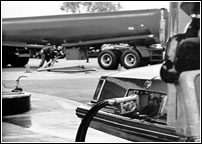 Oil
Oil
OIL prices have fallen in recent days as mild winter weather in top consumer the United States pushed prices through a crucial technical support level. Oil is down nearly 12 per cent since the start of the year.
US crude tumbled $2.21 to an intraday low of $53.88 a barrel on January 9 — down $7.17 since the last day of trade in 2006. Brent crude lost $1.48 to $54.12. Both international benchmarks were at their lowest since June 2005.
Analysts said that the drop in crude prices had come amid a broader decline in commodities — including copper, gold and grains — that had raised speculation that investment funds might be moving their money out of the market.
On January 5, oil had fallen towards $55 a barrel, taking losses to nearly 10 per cent in the week. The drop in US crude by $2.73 on both January 3 & 4 marked the biggest two-day percentage slide since December 2004 and took the market to its lowest settlement since June 15, 2005. Besides mild weather, rising fuel inventories in the US have also pressure prices.
Stocks of distillates, which include heating oil, rose by 2 million barrels last week, a government report showed on January 4. Gasoline stocks rose by 5.6 million barrels, more than expected.
The price slide also raised speculation that a hedge fund may be taking large losses on an oil position, similar to the natural gas bet that sank the multi-billion dollar Amaranth fund in 2006.
Analysts said it was too early to call the end of oil’s bull run that started in 2002 and took U.S. crude to a record high of $78.40 in July 2006.
Officials from the Organisation of the Petroleum Exporting countries, source of more than a third of the world’s oil, were concerned about the price drop but have reacted warily. Opec plans to cut supply by 500,000 barrels per day from February 1, adding to a 1.2 million bpd reduction from November.
Norway’s oil production fell in 2006 from the previous year to a total of 136.7 million standard cubic metres, compared to 148.1 million in 2005.
The Norwegian Petroleum directorate said it expected the 2007 oil output to be somewhat lower than in 2006, at 129 million standard cubic metres. Norway is the world’s third largest oil exporter after Saudi Arabia and Russia.
Gold
GOLD prices have slid to their lowest level in more than two months in the wake of heavy oil price losses and a strengthening US dollar.
The precious metal hit as high as $645.25 per ounce on January 4, as the dollar weakened — but prices then drooped as the US unit staged a strong rebound. As a result, on January 6, gold sank to $602.46 — last seen October 31, 2006.
“The key underlying dynamics of the market remain largely unchanged with the dollar continuing to provide most of the market direction,” noted Barclays Capital analyst Sudakshina Unnikrishnan.
On the London Bullion Market, gold prices fell to $609.50 per ounce at January ‘06 late fixing, from $632 on the morning fixing of the previous week.
Meanwhile silver mirrored gold’s downwards trajectory. The weakening dollar has pushed silver to as low as 12.16 on January 6, reaching the lowest point since October 31, 2006.
Copper
Copper prices have fallen in recent weeks as rising stocks in London Metal Exchange warehouses heightened worries about a slowdown in demand.
Copper saw spectacular losses, hitting a nine-month low on the back of rising stockpiles and weaker demand, while most other base metals also fell.
Copper hit an all-time record of $8,800 on May 11, 2006 owing largely to worries over lower global stocks and soaring demand — especially from China and India. The metal is used primarily in plumbing and the manufacture of electrical cables.
However, copper slid to $5,625 a tonne on January 4, its lowest reading since April 5, 2006. That marked a 36 per cent plunge in value since May.
Some traders are taking the view that prices will sink further if the copper market moves into a production surplus in the face of a global slowdown.
Societe Generale analysts said the copper market, which has witnessed four years of production deficits, would likely switch into surplus in 2008.
On January 5, three-month copper prices fell to $5,751 per tonne on the London Metal Exchange from $6,381 the previous week.
The fall in copper dragged other metals down with the notable exception of aluminum which firmed on support from a reshuffle by the second largest commodity fund.
Cocoa/Coffee
Cocoa prices have risen. On January 3, these rose to as high as $1696, last seen in July 2006. “Fears over possible crop damage in Ivory Coast and Ghana, because of the Harmattan seasonal desert wind, continued to support prices,” said Sucden’s Davies. The seasonal Hurmattan wind is a dry breeze packed with dust which blows across West Africa from the Sahara.
On the LIFFE, London’s futures exchange, the price of cocoa for March delivery increased to £916 per tonne on January 5, from £888 a week earlier.
On the New York Board of Trade (Nybot), the March contract gained to $1,657 per tonne on January 5, from $1,641 the previous week.
Meanwhile, coffee prices see-sawed on fluctuating interest from investment funds. On LIFFE, Robusta quality for March delivery eased to $1,587 per tonne on January 5 from $1,590 a week earlier.
On Nybot, Arabica for March delivery decreased to 120.50 cents per pound on January 5, from 125.65 cents the previous week.