



 0
0

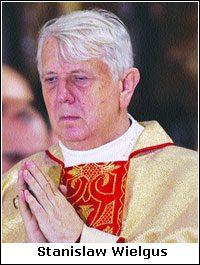 WARSAW, Jan 7: The newly-appointed archbishop of Warsaw resigned on Sunday after admitting he spied for Poland's former communist regime, in a major embarrassment for the Vatican and the powerful Polish Catholic Church.
Archbishop Stanislaw Wielgus read out his resignation, which came at the request of Pope Benedict who appointed him just a month ago, at a special mass in Warsaw Cathedral replacing a formal ceremony that was to have sworn him in.
“In accordance with (Canon law) I submit to your Holiness my resignation as the Metropolitan Archbishop of Warsaw,” said Wielgus, who on Friday backed down from repeated denials that he collaborated with the secret services during the communist era.
Hundreds of faithful gathered in the rain in front of the cathedral cheered in support of Wielgus, yelling “Stay with us”, a chant used by crowds during visits to his homeland by the late Polish-born Pope John Paul.
The Vatican's diplomatic mission in Poland said in a statement that Wielgus was asked to resign.
A spokesman for the Polish episcopate said the legal basis for the resignation was a part of church law requiring a bishop to resign if he is “unable to properly exercise his office (and therefore) is strongly requested to submit his resignation”.A finding last week by a special Polish Church commission that Wielgus had collaborated with communist-era secret police increased pressure on him ahead of his ceremonial installation, which was to have taken place at 11 am (1000 GMT) on Sunday.
Wielgus, 67, was named by the Pope on Dec 6 to succeed the retiring Cardinal Jozef Glemp, a figurehead of the long struggle against communism, in one of the most influential positions in the Polish church hierarchy.
HARASSMENT, SHOUTS AND THREATS: The Vatican's mission said Glemp, who remains the primate of the overwhemingly Catholic country, would temporarily take back the position of Warsaw archbishop.
Glemp told the mass Wielgus should not be judged too harshly for his actions during the communist era as many Poles had been forced to compromise in that period, which began after World War Two and ended in 1989.
“Wielgus was forced by harassment, shouts and threats to become a collaborator,” he added.
The Vatican said the episode was a “moment of great suffering for the Church” but that Wielgus was not the first and probably not the last Polish cleric to be attacked on the basis of documents from the communist era.
Wielgus's admission on Friday that he had damaged the Church when he “denied the facts of this cooperation” with the secret services opened the door for the Pope to remove him from office but he did not resign until the day of the official ceremony.—Reuters




























