0
0

• Says dispute over 12 reserved seats involved constitutional, legal and public rights issues
• Alleges that constitutional amendments in AJK were introduced without proper consultation or political consensus
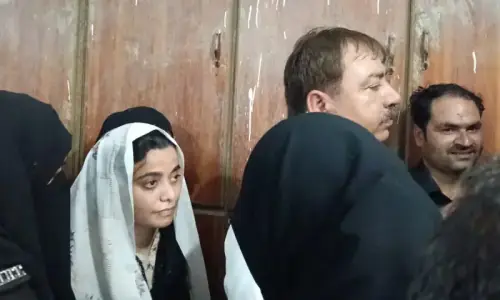
MUZAFFARABAD: Leaders of the Joint Awami Action Committee (JAAC) on Saturday alleged that the ongoing political crisis in Azad Jammu and Kashmir (AJK) stemmed from the failure of the governments in Islamabad and Muzaffarabad to implement written agreements and accused the authorities of distorting facts before the public.
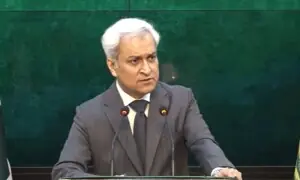
Addressing a press conference at the Central Press Club, JAAC core members Raja Amjad Ali Khan, Shaukat Nawaz Mir, Anjum Zaman Awan and Raja Sohaib warned that if the government failed to implement the agreement and the charter of demands by May 31, the rights movement would go ahead with its already announced programme of a strike on June 9 during which “people would take to the streets in far greater numbers than before.”
They maintained that the issue of the 12 reserved seats was not merely political but also linked to constitutional, legal and public rights. They said educated youth, lawyers, students and people from various walks of life fully understood that representation in any constitutional structure or assembly was directly connected to the social contract between the people and the state.
The JAAC leaders alleged that the government had not only treated the negotiations unseriously but had also violated commitments made during the talks. They said constitutional amendments are not typically introduced abruptly on the floor of an assembly, but are normally the result of detailed consultations and consensus among political parties.
However, they claimed that in AJK even elected representatives appeared to be acting under the directions of a few influential personalities instead of exercising independent decision-making powers.
They said senior leaders of Pakistan’s major political parties, including Qamar Zaman Kaira and Rana Sanaullah, had participated in the negotiations, signed the agreement and assured its implementation, but later reneged on their commitments.
Had the government and political parties been serious, decisions taken by the negotiating committees would have been implemented and public trust would not have been undermined, they added.
Referring to Pakistan-based Kashmiri refugees, the JAAC leaders alleged that people with little practical connection to the state were being granted representation in the AJK Legislative Assembly.
A large number of “fake State Subject certificates” had been issued in the name of refugees and seats created on that basis, they claimed, adding that if these seats were genuinely linked to the Kashmir dispute and United Nations resolutions, the government should clearly identify the relevant resolutions and clauses providing them protection.
“If AJK is regarded as the representative government of the entire erstwhile state of Jammu and Kashmir, why does no representation exist for Gilgit-Baltistan and Indian-occupied Ladakh?” they questioned.
The JAAC leaders stressed that the protest movement was not confined to the issue of the 12 seats alone but also covered state resources, employment, educational rights, refugee policy and the allotment of precious land to influential local figures under the category of “local destitute.”
They demanded a complete investigation into all allotments made under the “local destitute” category since 1947, alleging that 99 per cent of such cases had benefited influential and undeserving individuals while genuine claimants were ignored.
Published in Dawn, May 24th, 2026