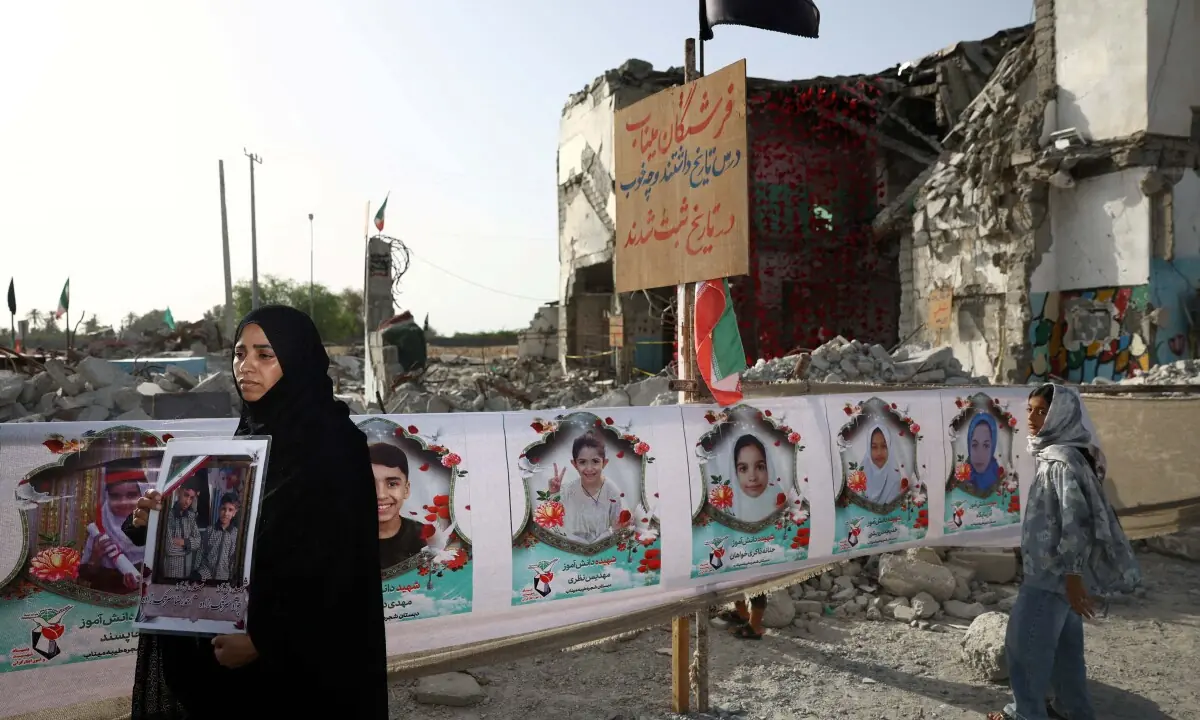
The US and Israel on Feb 28 launched what they described as a “pre-emptive” joint strike against Iranian targets, with Trump announcing start of “major combat operations”
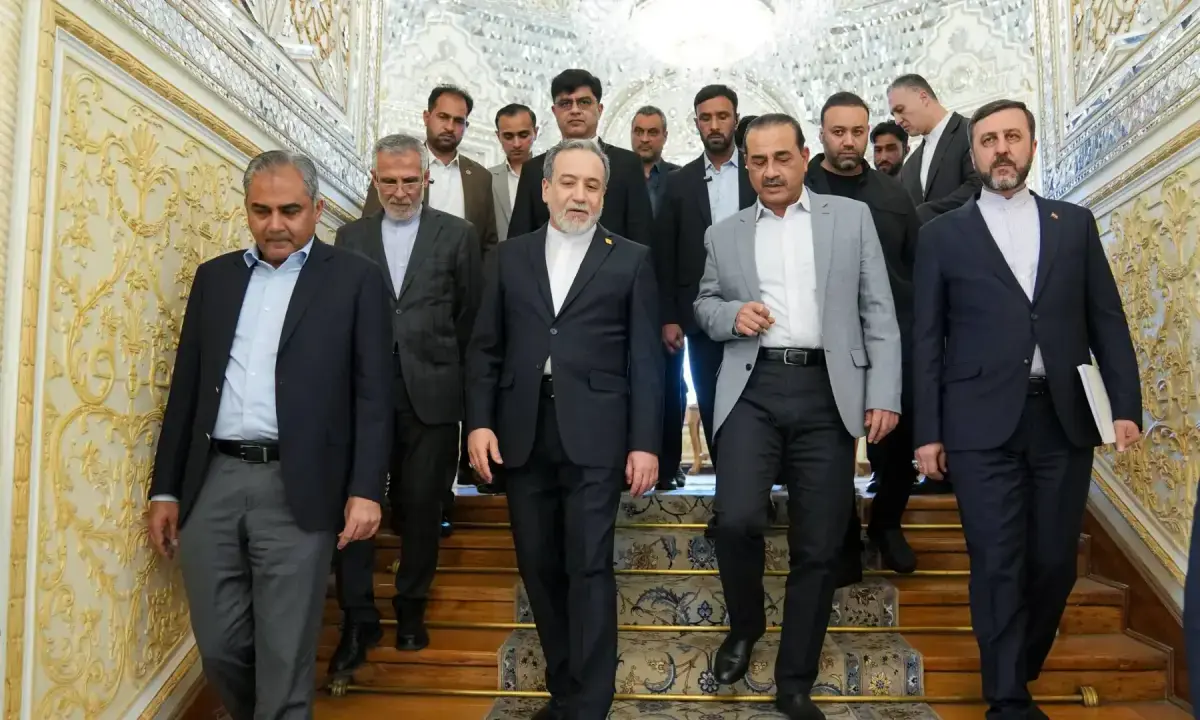
Pakistan hosted the first round of face-to-face talks between the US and Iran in 47 years in April; the talks ended without a breakthrough, but also without a breakdown
EU chief Ursula von der Leyen has welcomed “progress towards an agreement between the US and Iran” to end the Middle East war, as American officials said a deal could be announced soon, AFP reports.
“We need a deal that truly de-escalates the conflict, reopens the Strait of Hormuz and guarantees toll free full freedom of navigation. Iran must not be allowed to develop a nuclear weapon,” the European Commission president posted online.
Saudi Arabia’s foreign minister has issued its statement on Crown Prince Mohammad bin Salman’s phone call with Trump and other regional leaders.
“During the call, the leaders reviewed the latest regional developments, expressing deep appreciation for President Trump’s leadership and his commitment to consultation and coordination with regional leaders,” the statement said.
The leaders also acknowledged “mediation efforts led by” Pakistan and the “endeavours” of Qatar, saying they were aimed at “reaching an agreement to halt escalation and bolster regional security and stability”.
As news of a potential deal between Tehran and Washington emerges, Iran’s semi-official Tasnim news agency reports that a disagreement over two or three clauses persists, according to Al Jazeera.
A source in Iran with knowledge of the deal told Tasnim that if the US continues creating obstacles, there will be “no possibility of finalising the memorandum of understanding”.
At least one person has been killed and two people injured in an Israeli attack on the municipality of Bazouriyeh in the Tyre district of southern Lebanon, Al Jazeera reports, citing the National News Agency (NNA).
Separately, an overnight Israeli air strike targeted a house in the town of Toura, also in the Tyre district, resulting in one death and two injuries, NNA said.
UK PM Keir Starmer has welcomed “the progress towards an agreement between the US and Iran”.
“We need to see an agreement that brings the conflict to an end and reopens the Strait of Hormuz, with unconditional and unrestricted freedom of navigation. It’s vital that Iran must never be allowed to develop a nuclear weapon,” he wrote on X.
Starmer said his government “will continue to do everything we can to protect British people from the impact of this conflict”.
“We will work with our international partners to seize this moment and achieve a long-term diplomatic settlement,” he added.
A senior Iranian source tells Reuters that Tehran has not agreed to hand over its highly enriched uranium stockpile.
The source said Iran’s nuclear issue was not part of the preliminary agreement with the United States.
“The nuclear issue will be addressed in negotiations for a final agreement and are therefore not part of the current deal. There has been no agreement over Iran’s highly enriched uranium stockpile to be shipped out of the country,” said the source.
Tasnim also reported that “Iran has accepted no actions whatsoever in the nuclear domain at this stage”.
“The matter of nuclear negotiations has been deferred until after the potential end of the war and the implementation of certain measures by the United States during this period,” the Iranian outlet added.
A potential MoU between Iran and the United States includes an end of the war on all fronts, with Washington waiving sanctions on Iran oil during negotiations, Iran’s semi-official Tasnim news agency reports.
Iran has not yet accepted any actions on its nuclear programme, Tasnim added, saying the potential agreement allocates a 30-day period for procedures related to the Strait of Hormuz and a 60-day period for nuclear talks.
Iran’s president Masoud Pezeshkian has said that no decision will be made without the permission of Iran’s Supreme Leader, Mojtaba Khamenei, referring to the potential US-Iran deal, Al Jazeera reports.
“Any statement, analysis or position that leads to division in society is, in effect, pouring water on the enemy’s damage,” Pezeshkian was quoted as saying by the Tasnim news agency.
“No decision in the country will be made outside the framework of the Supreme National Security Council and without the permission of the Supreme Leader. The administration of the country requires a single decision and collective obedience,” he added.
A potential deal between Iran and the United States stipulates that the number of ships able to transit the Strait of Hormuz would return to the pre-war level within 30 days, Iran’s semi-official Tasnim news agency reports, according to Reuters.
The naval blockade must be completely lifted within 30 days according to a memorandum of understanding, Tasnim said, adding that part of Iran’s frozen funds must be released in the first phase.
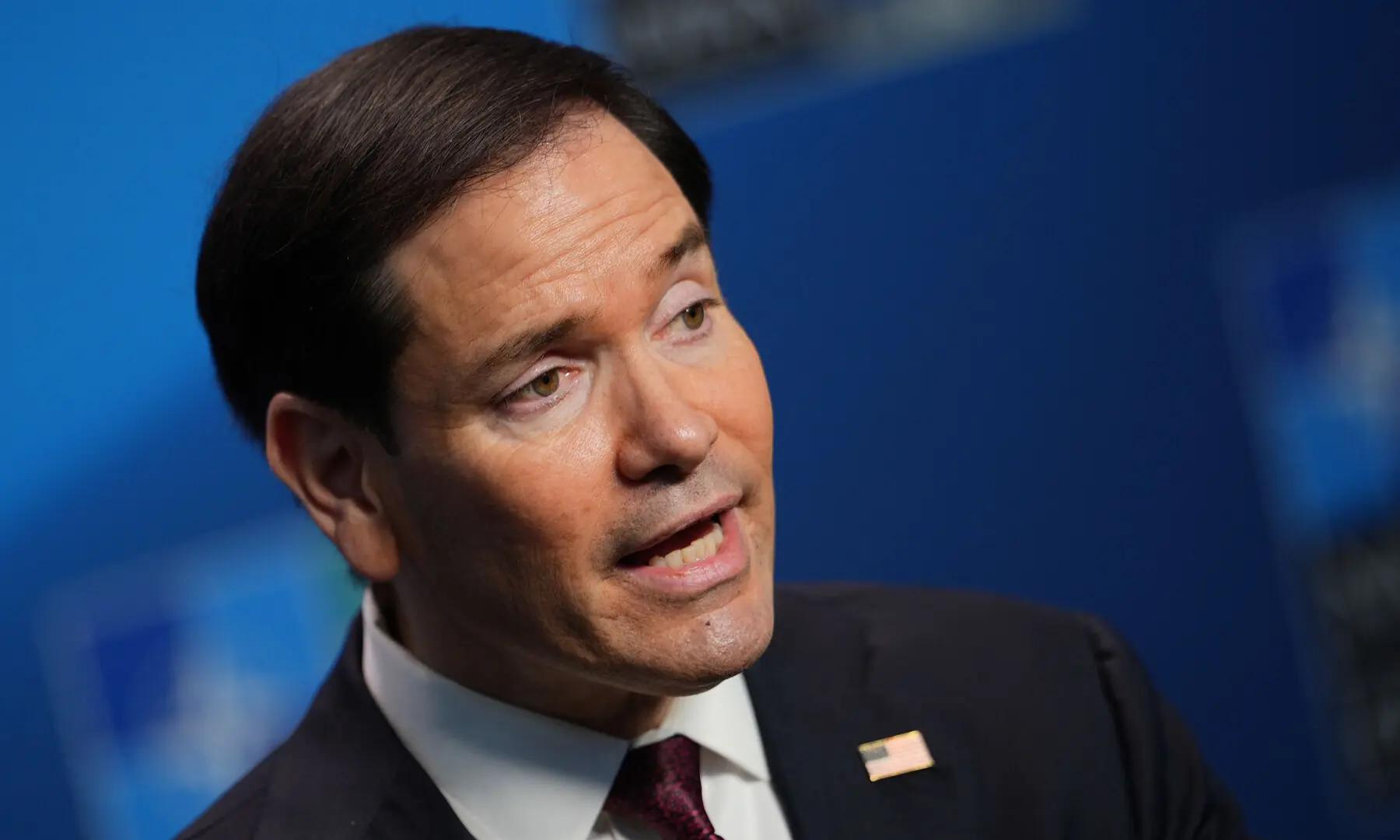
US Secretary of State Marco Rubio has said an announcement was possible later today on a deal with Iran, AFP reports.
“I do think perhaps there is the possibility that in the next few hours the world will get some good news,” Rubio told reporters in New Delhi.
Rubio said the emerging deal would address US concerns on the Strait of Hormuz, which Iran has largely blocked in response to the US-Israeli attack.
The agreement would also start a “process that can ultimately leave us where the president wants us to be, and that is a world that no longer has to fear or worry about an Iranian nuclear weapon”, he added.
United States Secretary of State Marco Rubio speaks with journalists during a meeting of Nato foreign ministers in Helsingborg, Sweden on May 22, 2026. — Pool via AFP
Turkiye is ready to provide every kind of support during implementation of a potential deal with Iran, President Recep Tayyip Erdogan said in his call with US President Donald Trump and regional leaders, according to Al Jazeera.
Erdogan’s office on Sunday cited him as saying during the call that an agreement to secure free passage through the Strait of Hormuz would support stability in the region, providing relief to the global economy.
Iran’s embassy in India has issued a press statement rejecting US Secretary of State Marco Rubio’s remarks on Iran’s nuclear weapons as an attempt to “deflect attention” from the destabilising policies of US.
“Such allegations constitute a clear attempt to distort the realities of the region and to deflect attention from the destabilising policies of the United States and the Zionist regime,” it said on X.
It stated that Iran has “always been prepared to make its energy resources available to all countries”, including India, adding, “What has held the global energy market hostage over recent years has been the unlawful and unjust sanctions imposed by the United States on Iran’s oil exports.”
The embassy added, “Iran once again recalls that, as a committed member of the Treaty on the Non-Proliferation of Nuclear Weapons (NPT), it has consistently declared that its nuclear programme is entirely peaceful and remains under the supervision of the International Atomic Energy Agency (IAEA).”
Iran’s Fars news agency has refuted reports that Israel is excluded from an agreement with the United States, stating that the claim lacks validity.
In a series of posts on X, the agency referred to a claim by The New York Times that Trump had “exempted” Israel from commitments regarding Iran.
It said, “Based on the explicit text of the agreement, if finalised, the United States and its allies commit to not attacking Iran or its allies in any way … this media outlet’s claim that this regime is exempt from any commitments vis-à-vis Iran contradicts the explicit provisions of the finalised agreement and is untrue.”
In his call with US President Donald Trump and other regional leaders, President Recep Tayyip Erdoğan has said Türkiye always favours the “resolution of problems through dialogue and diplomacy”, his office says.
“Stressing that Türkiye stands ready to provide every kind of support during the implementation phase of a potential agreement with Iran, President Erdoğan highlighted Türkiye’s efforts aimed at making peace prevail across the region,” the statement read.
Erdogan “expressed his belief that appropriate solutions could be found over the course of the process to the issues that look contentious within the context of Iran, including the nuclear issue”.
Iran’s President Masoud Pezeshkian says, “Our nation today, just like the people of the undefeated yet brave Khorramshahr who stood for days against the invading army to showcase the power of the Iranian people to the world, remains steadfast.”
Esfandyar Batmanghelidj, a prominent Iran analyst, has described a joint call between several Middle East leaders and Donald Trump as a “historic turning point” in the region’s security thinking, noting it reflected a unified push for an agreement to end the war, Al Jazeera reports.
In a post on X, Batmanghelidj said US presidents have previously pitted regional leaders against one another, often in ways that favoured Israel’s interests, but argued that dynamic is now shifting.
“Crucially, the terms of this initial deal have been defined through mediation and negotiation among the regional powers themselves,” he wrote.
“This reflects a maturation in regional diplomacy that has been years in the making, but which faced its ultimate test in the wake of the Iran war.”
He added: “The question is whether this experience can be consolidated in a new postwar order for the Middle East. If so, the region’s brightest days are certainly ahead.”
Pakistan’s mediation efforts in the Iran-US crisis appear to be entering their most consequential phase yet.
Yet the atmosphere surrounding the talks remains cautious. Iranian officials continue publicly to insist that Tehran will not compromise on what they describe as national rights and sovereign interests.
Pakistan deserves credit for helping preserve diplomatic space at a time when the region seemed dangerously close to another escalation cycle.
The current opening remains fragile. But after weeks dominated by threats, disrupted shipping routes and fears of renewed war, even tentative movement towards a workable understanding offers the region some much-needed reprieve.
Iran has executed one person for charges related to sending information to the US and Israel during the war, the Iranian judiciary’s Mizan news agency reports, according to Reuters.
The individual, identified as Mojtaba Kian, was sending data about Iran’s defence industry to “the enemy”, according to the news agency.
The US and Iran are close to signing a deal involving a 60-day ceasefire extension, during which the Strait of Hormuz would be reopened, Iran would be able to freely sell oil and negotiations would be held on curbing Iran’s nuclear programme, Axios reports, citing a US official.
According to the Axios report, during the 60-day period, the Strait of Hormuz would be open with no tolls and Iran would agree to clear the mines it deployed in the strait to let ships pass freely, Reuters noted.
In exchange, as part of the proposed deal, the US would lift its blockade on Iranian ports and issue some sanctions waivers to allow Iran to sell oil freely, the report added.
The draft agreement also includes commitments from Iran to never pursue nuclear weapons and to negotiate over a suspension of its uranium enrichment program and the removal of its stockpile of highly enriched uranium, the Axios report said.
Lebanon’s civil defence agency has said its regional facility in the southern city of Nabatieh had been destroyed by an Israeli strike, AFP reports.
The Directorate General of Civil Defence said the building had collapsed and a large number of vehicles and equipment had been damaged by a “direct hit in a hostile Israeli strike”.
It added that there were no reports of casualties among its personnel, who had been moved to another location before the incident.
The civil defence agency condemned “this attack on a centre dedicated to humanitarian and relief work”, stressing that it was facing “growing risks and challenges” in carrying out its operations.
Iran’s foreign ministry spokesperson Esmaeil Baghaei has seemingly compared the US-Iran conflict to Persia’s defeat of Rome in a post on social media.
“In the Roman mind, Rome was the undisputed centre of the world. Yet the Iranians shattered that illusion,” he said.
“When Marcus Julius Philippus (Philip the Arab) marched east against Persia … it ended in a peace established on Sasanian terms: the emperor had to come to terms!”
Trump’s claim that the Strait of Hormuz will fully reopen as part of a peace agreement with Tehran is “far from reality”, Iran’s semi-official Fars news agency reports according to Al Jazeera.
“Based on the latest exchanged text, if a possible agreement is reached, the Strait of Hormuz will still be under Iran’s management,” it said.
“Although Iran has agreed to allow the number of passing ships to return to the level before the war, this does not at all mean ‘free passage’ to the pre-war situation.
“The management of the strait, determining the route, time, manner of passage, and issuing permits, will remain exclusively under the control and discretion of the Islamic Republic of Iran. Therefore, Trump’s claim in this regard is incomplete and does not correspond to reality.”
Former CIA director Mike Pompeo has criticised the Iran deal currently taking shape, saying it resembles the earlier Obama-era agreement and taking aim at the negotiators who helped shape the deal, Al Jazeera reports.
In response, Robert Malley, one of the key negotiators of the Obama-era deal, said that Trump’s strategy is not one he would have pursued, but added that he would support it if it ends an “unjustifiable war”.