‘Alexander thought Indus comes down and connects with Nile’


 0
0


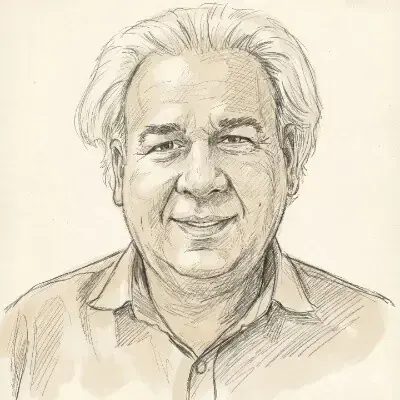
KARACHI: Prof Robin Lane Fox delivered an engaging talk on ‘Alexander at the Indus’ at the Mohatta Palace Museum on Tuesday evening, examining Alexander’s campaign in the subcontinent and the limits of Greek understanding of the region.
Prof Lane Fox, who is one of the most renowned English classicists, began his lecture by saying that there were two Alexanders — the Alexander of history, of whom we know little and the Alexander of world legend, which spread throughout the world 50 or 60 years after his death.
“In 327BC, he invaded down from Afghanistan over the Hindukush down the valley with encouragement from Indians. The first thing is, summer 327BC, that is the first date, a serious date we can give in a sequence in the entire history of the Indian subcontinent because it relates to Greek calculations, which relates to Egyptian calculations.”
He said, “There’s no archaeological evidence that Alexander actually came, but instead we have something invaluable: texts, literary works, written and quoting the histories of people who were definitely with him, his friends from youth at the time, who were looking, for the first time in the world, at the peoples of India/Pakistan, they’d never seen before.”
Historian highlights how Aristotle’s ‘flawed’ geography shaped Macedonian ruler’s misconceptions about limits of the known world
Prof Lane Fox said the one thing we could say about Alexander was that he was lost. “He had no idea where he was. There were two problems. First, he thought that the river Indus comes down and connects with the Nile in Egypt. Why did he think this? Well, he had reasons. He saw lotus flowers. He saw crocodiles and other similarities. Second, he thought he was very near the edge of the world.” The reason was his tutor, Aristotle, for whom Prof Lane Fox has great respect, but his “geography was catastrophic”.
The scholar said Alexander found here an amazing series of peoples, civilisations and languages, as the Greeks had no idea that any of that existed. There were far more settlements than anything in Iran. Indians had thousands of settlements.
Then Prof Lane Fox told the audience that he was going to speak about five items beginning with the letter ‘W’. He started with ‘war’. “Yes, Alexander fought, and if people opposed him, he fought as hard as he could. He won on the battlefield. But if you sent him presents, he would treat you generously, give you back your previous kingdom, and keep the army under his control. There were never revenge killings. But if you opposed him, you were flattened.”
He said historians make one mistake while describing India/Pakistan, as if they were a peaceful country. “They all had armies. When Alexander arrived, they’d been fighting with each other.”
On whether there are descendants of Alexander in Pakistan, he said there was a notion that the Kalash were his descendants. “They were tested, a sample of 100, genetically, and the result published says, no… they are not Greek.”
Prof Lane Fox said the next ‘W’ was ‘women’. “The most famous encounters in India is not with Alexander’s wife, who he finds in Afghanistan, but with another figure, Queen Cleophis. She came to Alexander with her children and her women. She had been left as the ruler of the city of the Assacanis in the Swat valley. She had surrendered to Alexander. He graciously reinstated her as the queen.” Alexander’s companions’ view of the women in the region was that they were beautiful, graceful and modest.
The next ‘W’ was for ‘war elephants’. He told the audience about the fact that the Greeks had not seen elephants and how they were used in battlefield. Alexander studied elephants and started to understand how they behaved.
The fourth ‘W’ was for ‘weather’. The professor said Alexander and his companions had never seen a climate like Pakistan. “Here, near Karachi, Greeks, for the first time, met tides. The last ‘W’, the scholar said, was ‘wealth’. The Greeks were amazed by how rich all the little kingdoms and rulers here were. “They were covered in jewels. I can hardly tell you how amazing this was to Greek men.” He added, “But I want to end with another ‘W’: wise men. India had them, quite separate from Greek philosophy. In Taxila, Alexander encounters all the wise thinkers and hermits… There are many different kinds of wise people.”
He remarked, “There’s a wisdom in India that the Greeks would profit from.”
The event was organised by the Mohatta Palace Museum and the Endowment Fund Trust for Preservation of the Heritage of Sindh in collaboration with Lahore Literary Festival.
Published in Dawn, February 11th, 2026