0
0

PARIS: The World Health Organisation recommended a range of blockbuster weight-loss drugs to treat diabetes and obesity globally for the first time on Friday, calling for cheap generic versions to be made available for people in developing countries.
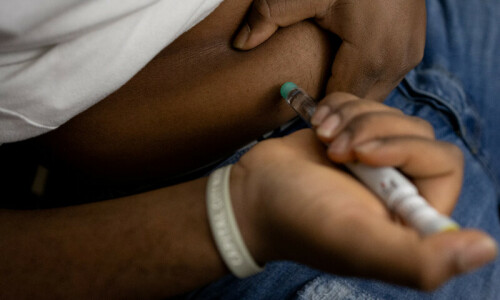
The new generation of appetite-suppressing drugs called GLP-1 agonists — which include the brands Ozempic, Wegovy and Mounjaro — have exploded in popularity due to their ability to help people significantly lose weight.
More than 3.7 million people died from illnesses related to being overweight or obese in 2021 according to WHO figures — more than top infectious killers malaria, tuberculosis and HIV combined.
However, the sky-high prices of GLP-1 drugs, which can cost over $1,000 a month in the United States, have raised concerns they will not be made available in poorer nations where they could save the most lives.
Urges increased access to affordable generic medicines in developing countries
On Friday, the WHO added semaglutide — the active ingredient in Danish pharma giant Novo Nordisk’s Ozempic and Wegovy — and the tirzepatide used in US company Eli Lilly’s Mounjaro to its list of essential medicines for adults worldwide.
To ensure these “life-saving” injectable drugs reach people who need them most, the UN agency said in a statement it encouraged “generic competition to drive down prices”.
Andrew Hill, a pharmacology researcher at Liverpool University, pointed to research showing that generic semaglutide could be mass produced in India for as little as $4 a month.
“What we’re asking is for Novartis and Eli Lilly to do the responsible thing and make their treatments available on a worldwide scale at an affordable, generic price,” he told AFP.
The patent for semaglutide will run out in some countries, including Canada, India and China, next year, which could also result in a surge in generic production.
GLP-1 drugs, which have some side effects including nausea, were originally developed for diabetes, but research has increasingly suggested they could help with a broad range of health problems including addiction.
A study published in the JAMA medical journal this week found that patients with heart problems taking the drugs had more than a 40 per cent lower risk of being hospitalised or dying prematurely.
One in eight people worldwide are now obese, while in 2022 more than 800 million people were living with diabetes, according to the WHO. The WHO also named a range of cancer drugs to its essential medicines list.
Published in Dawn, September 6th, 2025