0
0

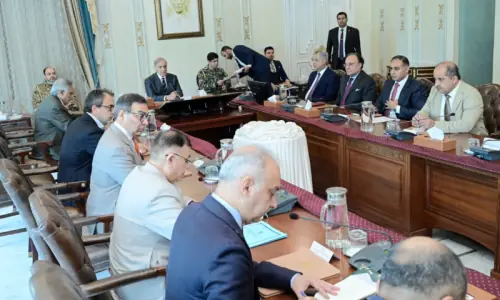
DHAKA, April 20: The Safta Ministerial Council ended its first meeting in Dhaka on Thursday approving a roadmap for tariff reduction proposed by the committee of experts and vowed to integrate trade in services with the regional trade agreement.
But neither the council nor the committee could outline any specific mechanism to address the non-tariff barriers imposed particularly by India, which have long been a deterrent to the expansion of Bangladesh’s exports.
“We have raised the issue of non-tariff barriers very strongly at the talks,” said a high official of the Bangladesh government who attended both the meetings.
“India has not so far addressed the issue significantly other than forming a sub-group to address it and committing technical assistance to upgrade our testing laboratories to minimise the barriers,” he added.
Bangladesh Commerce Minister Altaf Hossain Chowdhury expressed his frustration over the non-tariff barriers while addressing a news conference after the council meeting.
“Until and unless the non-tariff barriers are eliminated, there wouldn’t be any significant benefits for us even if tariff was reduced to zero per cent under the Safta agreement.
On the inclusion of trade in services in the Safta charter, which is meant only for trade in goods, Altaf said: “The services sector has been included in Safta.”
However, meeting sources said the ministerial council had only agreed to conduct a study on the issue, in line with a proposal from the committee of experts. “The council has actually agreed, in principle, to bring the services sector within the purview of the agreement to give a significant thrust to regional trade cooperation,” the government official said.
Earlier on Wednesday, the committee of experts finalised the roadmap after two days of talks. The roadmap stipulated that India, Pakistan and Sri Lanka would lower their customs duty by 40 per cent in 2006 for products originating from Bangladesh, Bhutan, Nepal and the Maldives under the Safta agreement.
The three developing countries in the regional bloc will lower the duty by a further 30 per cent in 2007 before eliminating it in 2008, says a report of the meeting.
The least developed countries on their part will lower the duty by five per cent in 2006, another five per cent in 2007 before phasing it out between December 31, 2008 and December 31, 2015, for products originating from developing countries.