



 0
0

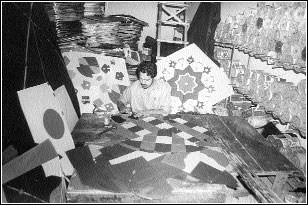 LAHORE, Feb 4: The people of Lahore have quietly started preparing for the Basant festival later on Feb 16-17 despite the uncertain economic conditions and the tensions on our borders with India.
“We still fear aggression from India but we have not forgotten the arrival of spring and Basant,” says a Lahori kite buff buying his stock of string and kites from a shop in Mochi Gate, the biggest wholesale market for the stuff perhaps in the entire country.
Kite flying has been part and parcel of the city’s cultural calendar which continues round the year but gains momentum in winter and reaches its zenith on Basant. Lahoris who consider the sport as their speciality indulge in it — economic recession or not.
And the love of Basant has withstood bans and criticism from religious circles who consider it a non-Muslim festival. The normal kite flying from rooftops and during matches in many parks and open places in the ever expanding metropolis becomes feverish on Basant, attracting visitors from all over the country and abroad.
Basant has, in fact, assumed an international status over the years, drawing diplomats from Islamabad and other cities in the country and foreign nationals and Pakistani expatriates around the world to enjoy the ambience of the festival.
The occasion is being observed at official level for a year or two because of the special interest shown by the Lahori bureaucrat, Kamran Lashari, who now is the provincial information secretary.
Official patronage to the festival was at its height last year when the world’s top businessmen and diplomats in other countries came here to enjoy the event. Many havelis in the Walled City were reserved for the guests and even President Gen Pervez Musharraf spent the day in Lahore.
The owners of the previously neglected and dilapidated houses in Gowalmandi’s food street became rich overnight as many multi-national companies battled to rent their rooftops for the occasion. The highest bidders won the day.
Senior army officers and foreign officials controlling drug peddling in Pakistan witnessed the event at the newly constructed multi-storey parking plaza in Rang Mahal.
Parties were held in bungalows by the rich and multi-national companies on the rooftops of various plazas around the city plus five-star hotels.
The good thing the presence of so many VIPs brought was the total restriction on firing in the air which had been marring the otherwise peaceful event in Lahore for the past many years.
Stray bullets fired in jubilation after cutting rivals’ kites instead of the traditional shouts of “bo kata” have claimed the lives of many innocent people during the last decade. But last year, such incidents were rare.
This time the momentum is slow but the preparations are there. Traders in strings and kites have already decorated their shops and filled them with the stuff, waiting for their clientele which has been rather thin so far.
The main wholesale market is inside Mochi Gate where people have invested millions of rupees in the trade. There are shops in Lohari Gate, Bhati Gate, and Mori Gate but many stores have been set up everywhere in the sprawling city.
String and kite makers are working overtime on roadsides and in small factories in places like Shahdara, Murdike, Baghbanpura, Ichhra and Shadbagh. Kite making has become a sort of cottage industry involving even women and children the year round.
Muhammad Ishaq, a kite seller in Mochi Gate, says not many people now prefer to get their string prepared from several of the addas in Lahore. “Today people buy readymade things and most people would start buying their strings and kites near Basant,” he says.
Despite this trend, there are still those who prefer to get their strings and kites prepared from proud ustads accepting every new job on their own terms and conditions. And this is done much before Basant. Once the string is prepared, it is dried under sun for days by womenfolk, who fancy the job.
At present the master string makers are Haji Billa of Kot Abdul Maalik, Khalifa Muneer of Mori Gate, Chhota Nannha, Khalifa Zaman and Feeja of Bhati Gate, Ustad Poal of Anarkali’s Aabkari Road, and Khalifa Ikram of Taxali Gate.
Old maestros, many of them are no more with us, included Mori Gate’s Ustad Channan Din, Khalifa Islam Din and Siraj Din, and Shah Alam’s Ustad Abdur Rahman.
The expert kite makers today are Yakki Gate’s Fayyaz Pheonianwala and M Khaliq, Heera Mandi’s Ashraf Piddi, Ghaziabad’s Chhota Bhola, Sanda’s Nadeem Mithu, Gulshan-i-Ravi’s Ashfaq Crystal, Chooney Mandi’s Hafiz Nawaz and Ichhra’s Nannha Sain.
The old giants were Lohari Mandi’s Ustad Natha and Bhaa Majid Takanwala, Chohatta Mufti Baqar’s Afzal Khan, Altaf Khan and Ustad Nikka, Shah Alam’s Ustad Siddique Butt and Ustad Abdur Rahman and Mori Gate’s Ustad Allah Din.
Current kite flying experts include Haji Khalil (Shadman), Wajid Shah (Ram Gali), Baoo Shan Ali (Sheranwala), Mian Wahidi (Shah Jamal), Ustad Naseer alias Sheroo (Mochi Gate) and Pervez Butt Bakerywala (Lawrence Road).
The old grand masters were Ustad Natha (Lohari Mandi), Ustad Bodi and Maulvi Rafique (Masjid Wazir Khan), Ustad Jhanda and Ustad Abdur Rahman (Shah Alam), Siraj Pehalwan (Mori Gate), Khalifa Islam Din (Sanda), and Khalifa Zahooruddin and Mehr Kala (Qila Lachhman Singh).
Many people are as unfamiliar with these names as they are with various kinds of kites. They are: Gudda, guddi, pari, Lucknow cut gudda, pattial gudda and pari, salaidar gudda and pari Sham Kalyan (the huge gudda flown normally in the end), patang, teera, salara, dobaz, kupp, shistroo and golair.
MATERIAS: Till about two decades ago raw material for kites and string used to be imported. The paper used to come from Germany and Sweden, bamboo from Bangladesh and thread from England. Later, Indian thread took over the market because of its fine quality and low prices.
Soon people forgot the decades old and trusted brands of string like 60 and 70 Scott, 12 and 8 Chain, 36, 24 and 100 J&P Colts and 50 Horse because of their cheap replacement by Indian stuff like 5 Bear and Panda, and 7 Panda.
Now Pakistani string holds sway because of its even lower rates, strength and fine quality, making the country self-reliant.
The German and Swedish paper has also been replaced by the low-cost Pakistani paper but it is not of good quality and unlike in the past, kites soon lose their strength and shape. Those who want quality kites made of foreign paper have to pay higher than the normal market rates.
The traditional pinna has now become a thing of the past. It has been replaced by charkhi which is easier to handle. In the past it required expertise to hold pinna for a master kite flier as a slight mistake would disturb him. Changing peeri (line of the string on pinna) required dexterity and speed.
Failing to change the direction of the pinna in time would result in a disruption of the flow of the string. And this would lead to an exchange of hot words between the kite flier and the pinna holder.
Winding the string around a pinna also required special talent but it was less laborious than handling a charkhi. Now a device has been invented to make it easy to rewind string around a charkhi but it still requires a lot of work.
The government has started taking the measures to prevent firing in the air and kite flying with metal wires and tandi which often disrupts power supply in the city. The sale of chemical strings which are made of nylon has also been banned.
But the banned items are being sold to young people under the table. “These are being sold like heroin and porno video cassettes. You can’t stop them but at least there is a check on their sale,” says Haji Mahmood, a string seller of Mori Gate.
The market rates for patang range from Rs15 to Rs35 but those made by experts sell for Rs25 to Rs70. The prices of the ordinary pari or gudda range between Rs5 and Rs25 but those made by experts fetch between Rs10 and Rs50. The prices of large-sized guddas and patangs range from Rs50 to Rs1,500.




























