



 0
0

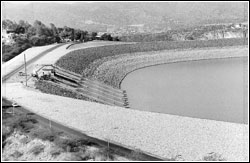 AFTER lobbying for 2-3 months for water reservoirs, President General Pervez Musharraf announced the construction of Basha and Munda dams in February 2006, adding that Kalabagh, Akhori and Kuram Tangi dams would be constructed by 2016.
The announcement did not end the dam controversy and Sindhi nationalist leaders held marathon demonstrations in Hyderabad and in Larkana. Now people of Northern Areas are raising their voice over Basha dam also.
Under the Universal Declaration of Human Rights-1948, human rights are recognized without any discrimination. As such, policies that deny the rights of some to serve special interests of others, can not be tenable. Thus any policy or law adopted must be based on respect for the rights and entitlements of all.
In 1986, the United Nations’ General Assembly adopted the declaration on the Right to Development: It implies that:
* Development is a comprehensive process aiming at the constant improvement of the entire population; it affects economics, civic, social, cultural and political rights.
* National development policies aiming at the constant improvement of the well-being of the entire population should be formulated on the basis of their active, free and meaningful benefits resulting there from.
* The right of peoples to exercise full and complete sovereignty over all their natural wealth and resources.
In 1992, the UN conference on Environment and Development adopted Rio Declaration on Environment and Development which implied that:
* Human beings are at the centre of concerns for sustainable development. They are entitled to a healthy and productive life in harmony with nature.
* The right to development must be met in an equitable way that considers future generations as well a present participants in development.
According to International Commission on Large Dam (ICOLD) a large dam is one whose height above foundation is 15 meters (50ft) or more or if its height is between 5-15 meters (16ft to 50ft) but has a reservoir volume of more than three million cubic meters (0.0024 million acre feet). There are more than 45,000 large dams around the world.
The large dam controversy is not Pakistan-specific but has spread all over the world after 1970 when ill-effects of large dams on society and environment apart from their benefits have come to limelight.
In order to overcome these controversies, the World Bank and IUCN along with several other agencies funded a study to review the situation and chalk out a framework of actions so that future controversies during construction could be avoided.
After studying the situation for a period of two years, a report has been prepared named as, “Dams and Development- a new framework for decision-making.” The report recommends a two-stage strategy to overcome future controversies. In the first stage, assessment and options for meeting these needs are suggested. In the second, planning implementation and operation strategy is suggested.
The report suggests that the quantum of electricity and water needed for a year be assessed first. Having determined that, the need remains to find out what other options are available to meet this shortage. Reservoirs are one of the several options.
Since large dam construction lead to controversies, it is better to try other non-controversial options. These can be of three types viz. new supply option, improving the existing supply system and effective management of water and electricity use.
Water options: New supply options can be the construction of small dams on tributaries, diversion, detention or retention dams on hill torrents, rejuvenation of depleting aquifers, tapping underground sweet water through installation of tube-wells or skimming wells, rain water harvesting, and recycling drainage water.
Improvement of the supply system can be carried out through watershed management, controlling sedimentation in reservoirs, controlling evaporations from reservoir pond, lining of canals and water courses and proper maintenance of irrigation system.
For effective management of water use, possibilities are farm application efficiency, change in cropping pattern and crop varieties, micro irrigation method, and change in crop cultivation practices.
Electricity Options: New supply options can be hydropower coal, oil, natural gas, nuclear, biomass, wind, solar, geothermal and ocean. There is a big scope of hydropower generation on run-of-river project where there is no storage. These can be at Bunji, Thakot, Dasu etc on river Indus. There are big reservoirs of coal in Thar in Sindh which can be exploited. Natural Gas can be used for new power houses.
Regarding supply side efficiency, attempt should be to reduce line losses in generation, transmission and distribution. These, at present, are 40 per cent but can be reduced to 15 per cent and can obviate the need of new supply.
Regarding effective use of electricity, there is great scope of developing low consumption efficient devices such as bulbs, rods, irons, fridges and air conditions. Also limiting business hours up to 5:00 pm can reduce consumption substantially. Electricity efficient building can be designed.
If water and electricity needs can be met through these options, there is no need to go for construction of large dams. However, if the construction of large dams become inevitable, a proper procedure should be followed.
The main controversies are about site and benefit sharing. There are two groups in this context, beneficiaries and affectees. The beneficiaries are the government, politicians, lending agencies, construction industry, contractors, big landlords and big factory owners. The affectees are, farmers, landowners, household owners, herders and fishermen of lower delta and the reservoir areas.
Large dams are built for development and as per requirement of human rights, people affected should at least be as well off as they would have been in absences of such a dam. They need to be compensated, helped in housing relocation and restoration of incomes and livelihoods. This can only be achieved if these affectees are associated in planning, implementation and operation of a dam and proper safeguards have been provided to them.
Project planning: This covers detailed planning and design and scheme should be technically, financially and economically sound. All dam affectees be associated throughout this process. There should be negotiated settlement with them.
The tendering construction contract should be conditional upon negotiated agreements for benefits sharing mechanism and for mitigation, compensation, development and compliance mechanism in addition to technical requirements.
Project implementation: Compliance with relevant time bound commitments such as benefit-sharing and mitigation measures is required before commissioning of the project.
Project operation: Any changes in operating conditions should be based on participatory review of project performance and impacts.
According to the World Commission on Dams, if the above procedure is followed, the future water and power needs can be met and future controversies can be avoided. Simply announcing the construction of dam without looking into problems of affectees and their solution will not help achieve development goals.





























