0
0

 THE intellectual property rights are legally enforceable — a limited monopoly granted by the state to an innovator. They specify a time period during which others may not copy the idea, allowing the innovator to commercialize it, and earn investment on research and development.
The intellectual property rights’ two characteristics lend it legal protection. These are high development and low production costs. If it costs more to develop a new drug, yet, once it is developed it becomes fairly cheap to manufacture then.
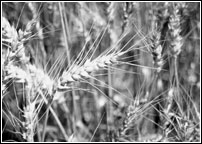
In agriculture, the quality of seed counts a lot. Seed quality, availability and farmers’ access play a fundamental role. The farmer’s right to seed access is being threatened by Trade Related Aspects of Intellectual Property Rights (TRIPS).
Farmers usually sow their own seeds which they share, exchange and purchase once in three to four years. Seed is a low cost input. More than 90 per cent wheat seed is the farmers with maize, rice and pulses enjoying the same situation.
The cultivator’s indigenous variety not only ensures biodiversity but also livelihood security. The genetic diversity enables them to select varieties that are best adapted to the changing environment, economic and social pressures.
A research study was conducted in villages of district Attock which shows that about 95 per cent of small farmers use their own seed in case of wheat which is also exchanged.
In case of maize, over 90 per cent of seed is farmers’, in pulses the percentage is over 98 per cent, and in vegetables it is about 40 per cent. The main hindrance in the accessibility to market seed is their high price.
The private sector is a major seed supplier. The estimated supply of wheat seed is 85-90 per cent; rice 85-90 per cent; maize over 90 per cent; pulses over 99 per cent; cotton over 45 per cent; and vegetables 33 per cent.
Only 10 per cent seed is supplied by the formal sector. High prices seem to have restricted the small farmers to reap the benefit of hybrids.
Globally, about 1.4 billion farmers depend on saved seeds. They save a portion of their produce as seed for planting in the next season. They freely exchange seeds within their communities and provide basis for selective breeding to encourage positive traits.
The varieties produced and conserved by the subsistence farmers are designed to cope with the local pest problems and weather conditions to provide at least a minimum harvest even in the most difficult of times. Pakistan is now a signatory to the World Trade Organization. In the Trips, the main areas of interest in agriculture include plant varieties, the genetically-modified organisms, plants, animals and micro-organisms.
Trips agreement is an effort to provide an environment for multinational corporations to enhance the monopolistic control in world seed market because patents reduce the access. It also makes seeds expensive for small farmers due to the royalty payments and increased commercialization.
Once the seed is planted, companies can insist that farmers purchase new seeds every year, and castigate them for saving seed. This meets halfway the farmers’ right to save, grow and sell seeds.
One such example of monopolistic control is of maize seed which the multinational companies sell. The monopoly not only provides a chance to the MNCs to make profit, but also has serious repercussions on food security.
Seeds are power. Whosoever controls the seeds also reins the lives of those who sow it. This is worrying the farmers as because of Trips, the power to control seeds is slipping out of the farmer’s hands which will affect the economy.
For example, cotton is a cash crop, accounting for more than 60 per cent of the total foreign exchange earnings annually. Cotton seed market, if captured by a foreign company would effectively give the MNC control over the economy.
Moreover, these multinational corporations introduce genetically modified seeds which require increased use of agro-chemicals, having harmful impacts on health. A recent study by the Newcastle University of the UK has concluded that the GM food genes were found in human gut. It is believed that eating such food could encourage gut bacteria to develop antibiotic resistance.
This new research suggests that this can happen, even after just one meal proving that those consuming the GM foods may encounter serious health problems.
Traditional variety of seeds not only ensure the livelihood security of poor farmers but also has played a vital role in ensuring that biodiversity is maintained. These varieties and the knowledge have been developed over centuries jointly by the community as a whole and are not subject to individual ownership.
Farmer’s right to seed is being threatened by the Trips Agreement. The IPR protection of plants and seeds transfers the control over, and access to, the resources that secure the right to food from farmers to private hands. It is feared that Trips will impact on the ability of farmers to obtain new varieties to adapt to local conditions and demands.
If these laws and practices are imposed on developing countries like Pakistan, it will be a disaster for the weak farmers who rely on farm-saved seeds and enter the market to purchase seed once after three/four years. The situation will lead towards food insecurity.
Small farmers and landless rural communities are the most vulnerable groups as both suffer from net food deficits. Both groups purchase a substantial part of their food requirements at market prices. As their income is limited and seasonal, quite often these families find themselves in a very serious food shortage situation.