



 0
0

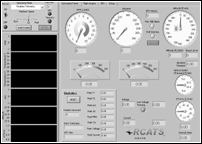 CONCEIVED five years back as source of incontrovertible empirical evidence to counter water distribution controversies and complaints by provinces, the telemetry system seems to have become a source of greater controversy as it has been reportedly abandoned because of ‘inefficient performance’. The possibility that the system may have been a casualty to inefficient management and manipulations of vested interest is, however, not to be ruled out.
It took decision makers nearly three years to have the system installed and get it functioning. Much of that period was spent on ensuring that the system worked effectively. Faults were reportedly detected and the engineering firm that had supplied the system was asked to remove them. At the end of the day, the firm maintained that there was nothing wrong with the system except maintenance. IRSA, the body responsible for operation and maintenance of the system rejected the firm’s position.
There has been an atmosphere of distrust between provinces, specifically Punjab and Sindh about the distribution of share of irrigation water for the past few years, to be specific, since the time water shortages hit the country. Sindh contended that Punjab was appropriating its share while Punjab denied the allegation. There was no way of determining the correct position as distribution was managed manually.
A computerized system was regarded as the only reliable solution of the issue and telemetry system was agreed upon by the authorities. This was a positive development and also the need of the hour because Pakistan had to make a transition from a pre- historic manual system to state of the art contemporary monitoring of water distribution.
Costing a reported Rs320 million, the telemetry system was installed at 24 sites in the country and covered the entire irrigation spectrum. It had the potential to free the country of controversial monitoring that could be manipulated by partisan managers. The manual system certainly created room for controversies and distrust and it was hoped that computerized management would allay misgivings of stakeholders and remove their suspicions.
But the system could not be made operational for about two years because of differences and disagreements between various water related organizations of the federal and provincial governments. While there were professional objections to the system and its shortcomings were identified by experts, the possibility that there may have been more to fault finding in it than expert opinion remains in view of pressure of vested interest elements.
One cannot escape harbouring suspicions because if certain elements in provinces fail to agree to the construction of water reservoirs which are undeniably urgently needed by the country because of continuously diminishing water resources, hurdles could also be created against successful implementation of the telemetry system.
Faults in the system were reported for two years after its installation and IRSA and WAPDA experts along with representatives of the engineering firm attended to them. While representatives of the government insisted that quality engineering works had not been delivered, the firm supplying the equipment insisted that maintenance of the system was inefficient.
There was apparently no meeting point between them and eventually the federal Minister of Water and Power placed the firm on notice to either remove faults within a period of three weeks or ‘face legal action for supplying defective mechanism’. That period has ended and reports inform that the system is being discarded in its present form. The effort for computerization of monitoring of water distribution has, consequently, to start all over again.
While the official expert’s objections and identification of faults must be authentic and based on professional know how, it has to be conceded that maintenance of equipment is not one of the strong points of any government organization. One does not have to go far for evidence of this contention. Privatization of taken over industries provides ample proof of inefficiency in the public sector.
Many an excellently functioning organizations have been destroyed by public sector handling. This happened mainly because the management was not professional and maintenance needs were not adequately met. In this case too, the allocation of a reported annual amount of merely Rs25 million for maintenance operation expenses suggests that due importance was not accorded to this important aspect of running of the system.
The need for equitable and trusted distribution of resources cannot be over emphasized. In the case of water, this is all the more important because it is one of the basic needs of the farming community that forms the bulk of the population of Pakistan. Water is becoming increasingly scarce and farmers are understandably concerned. Every government in the last about decade and a half has tried to create consensus for building reservoirs but all of them failed.
Political governments did not have sufficient time in office to persuade opponents of dams to agree to their construction while Pakistan’s six years under General Pervez Musharraf have seen the government pledge that reservoirs would be built but have not been seen the start of any project.
This is understandable because the government is functioning under multiple internal and international pressures but water and time are fast running out. While the telemetry system would not have added to the quantity of water in the country, it would have helped to create some satisfaction in stakeholders that they were receiving their rightful share of this vital resource.
Reports in May this year had informed that three special teams of technical staff and engineers were constituted by IRSA to ensure smooth functioning of the system. The teams were to cover Punjab, Islamabad and NWFP and Sindh and Balochistan regions.
Chairman IRSA was quoted as saying that IRSA had adopted special measures to streamline the telemetry system and that the engineering firm that had supplied the equipment had given warranty of the system till 2006 and it was bound to remove any fault in the system in order to ensure accurate results.
The probability of technical faults, according to him, was very low as most installations were smoothly functioning. The official news agency APP report quoting him also stated that ‘out of 24 total sites only few points had developed faults since the system was made operative’. The position changed so much by early August that the firm had to be put on ultimatum and later it came to discarding the system.
This is a most unfortunate development because it implies that distrust between stakeholders, provinces to be exact, would presumably persist because reliability of the manual system for monitoring releases remains suspect and water shortage continues to stalk the country. While IRSA can initiate legal proceedings against the firm, this would not help stakeholders.





























