



 0
0

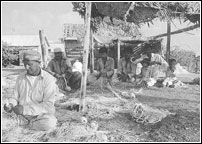 SINDH is the second largest province of Pakistan with a strong agriculture base provided by the mighty Indus and the world’s largest irrigation network. And historically, agricultural commodities including fishing and live-stock have been the key items in Sindh’s trade with neighbouring countries.
Prior to 1947, the Muslim majority in the province did farming while the Hindus dominated the urban markets and trade. The Hindus constituted a strong commercial community.
But with the partition of the sub-continent, the entire scenario changed as the majority of Hindu businessmen migrated to India bringing initial entrepreneurship to a grinding halt. A great opportunity of emerging entrepreneurship and industrialization was missed with the migration of wealthy Hindus.
When Pakistan was born, Sindh had a very weak or almost no industrial base. There was one cement factory in Karachi and one in Rohri besides some cotton ginning units and some service industries. The initial years of independence saw large scale migration from and to India and the successive governments had to face the gigantic task of the resettlement of the migrants.
Soon afterwards, the new state began its task of national reconstruction. In the period (between 1950 and 1961), industrialization was initiated. By 1955, according to a ministry of Commerce report published in 1956, there were 1433 units in Sindh, a majority of which were in urban areas. But the rural industrialization was sill not in sight.
During the First Five Year Plan (1955-60), some key steps were taken to encourage industrialization of the province. These included setting up industrial estates between 1947 and 1952- SITE Karachi (1947), SITE Hyderabad (1950), SITE Tando Adam (1952). But still, the significance of rural industrialization was not fully grasped so far.
The period of the real industrial boom was between 1962 and 1970 when scores of new industrial units were established. More industrial estates including SITE Kotri (1962) SITE Sukkur (1963) SIE Sukkur (1963-64) were set up. It was in this period in which the importance of small scale urban as well as rural industries was recognized and the Small Industrial Estate (SIE) Larkana was established.
However, the industrialization process slowed down when late Zulfikar Ali Bhutto’s government resorted to nationalization. However, his government did set up the mega public sector industries in the province, Pakistan Steel Mills being one of his key achievements.
The nationalization process was stopped with the imposition of martial law. Zia government’s policy of ‘no more nationalization’ encouraged the private investment in industry in Sindh. By the end of 1990, there were 3556 industrial units in Sindh, out of which 2437 were in Karachi, 560 in Hyderabad, 380 in Sukkur and 179 units in Larkana.
The process of rural industrialization was also encouraged during 1978-90 by setting up new industrial estates in North Karachi (1983) and Nooriabad Industrial Estate (1983), while a large number of small scale industrial estates were created to boost small scale rural and urban industrialization. These small scale industrial estates included SIE Dadu (1982-83), SIE Shikarpur (1982-85), SIE Khandkot (1984-85), SIE Hyderabad (1985-86) SIE Mirpurkhas (1985-86), SIE Badin (1985-86), SIE Sanghar (1985-86), SIE Nawabshah (1985-86) and SIE Thatta (1986-87).
A package of incentives was offered to investors for establishing industrial units in these industrial estates. Some of those incentives included tax holiday, accelerated depreciation, and exemption from excise duty etc. Besides, rules and procedures for establishing industrial units were simplified.
However, from 1990 onwards, industrialization in Sindh again suffered. The closure of a large number of big industrial units also put a break on whatever little achievements that were made in the rural areas. There are many causes of such sudden break to the industrialization process. The deterioration in the law and order situation which started during Zia’s Martial Law reached its peak during 90s as the rural areas were almost taken over by the dacoits while the urban centres were hit by the ethnic violence coupled with gangs of kidnappers for ransom.
This was coupled with successive federal government’s decisions to give incentives for industrialization of other provinces at the cost of de-industrialization in Sindh. For example, the provincial governments of Punjab and NWFP set up large industrial estates in Chunian Punjab and Gadoon in NWFP. These industrial estates received liberal concessions from the provincial as well as the federal governments.
Interestingly, at the same time, the incentives given to the industries at Nooriabad were withdrawn. The financial institutions also continued their discriminatory treatment of the industries in Sindh on different pretexts including law and order problem and political power game.
All these factors greatly contributed towards the increase in the number of sick industries. A large number of industries were closed down in almost all the industrial estates in the province. The industrial estates of Kotri, Nooriabad, Hyderabad and Karachi were the worst suffers.
Although some new industrial estates were set up by the government in Sindh including SIE Tando Adam (1991-92) SIE Gumbat (1991-92) and SIE Rohri (1991-92),the process of industrialization remained almost derailed. Since 1995 and onwards, there has been a sharp decline in setting up of industries and marked increase in the number of sick units.
The number of sick industries escalated from 186 in 1981-82 to 247 in 1997. This number has further increased in the recent years and presently, industrial activities especially in the rural areas of Sindh are not making any headway.
As discussed, there were many reasons for the slow-down including the law and order situation and the step-motherly attitude of the federal government. The central government not only withdrew tax holiday in March 1998 and custom duty exemption from Nooriabad in 1988-89, it gave more liberal fiscal concessions to industrial estates of Punjab and NWFP at the same time, which resulted in the flight of industries to those areas.
Although the Rural Industrial Development Incentives Scheme (RIDIS) was initiated, no investor was ready to invest in rural areas.
Similarly, the process of the collection of octroi tax by almost all the district authorities also remained one of the key hurdles in industrialization. Interestingly, since many years this menace was faced only by the agriculture and industrial trade of Sindh, as there was no octroi tax system in other provinces. It was the last government of Mian Nawaz Sharif which brought octroi tax to an end, bringing relief to the agriculture producers and industrialists from multiple district level taxes. Similarly, lack of consistent policies also retarded industrial investment.
Other hurdles included the deterioration in the road network and the unreliability of the railways. The ideal manner for development of industrial estates is their proximity to the transport network. However, scant attention was paid to laying a web of an efficient communication system throughout the province. This has deterred the entrepreneurs from setting up industries in the various industrial regions in the province. Since last many years, there has not been any industrialization and no new industrial zone has been created in the province after Nooriabad industrial area.
The last PPP government announced the establishment of industrial zone in Nawabshah. Land was chosen for the industrial area and some work of infrastructure development was carried out. However, as soon as the PPP government was removed, the entire plan was abandoned. Now that project has virtually been shelved.
The fact of matter is that there is great potential of rural industrialization in the province. Various areas of Sindh are the baskets of agriculture produce. For example, Larkana is famous for its rice crop, Khairpur for its dates, Mirpurkhas and Hyderabad for mangoes, Thatta and Badin for tomatoes, bananas etc. Similarly, central Sindh districts are famous for cotton-growing and the coastal districts of Badin and Thatta produce good crops of sugarcane. Even the arid zones of Sindh ( Thar, Kachho and Kohistan) are famous for their live-stock.
In view of such a level of diversified production, there is a great scope of agro-based industries including wheat-grinding, bread-making, biscuits-making, rice-milling, dal-milling, oil-expelling, fruits and vegetables dehydration, date processing, tomato ketchup, salt and spices grinding, poultry feed etc.
As Sindh has cotton growing belt, there are more possibilities of textile-based industries including cotton yarn sizing, grey cloth woven by power loom, heavy fabric – canvas , hosiery T-shirts and vests, terry towels and fabric, cotton yarn bleaching and dyeing, cotton fabric scouring and bleaching, cotton fabric dyeing, sewing thread, cotton bags making, wool scouring and baling.
Similarly, Sindh offers an opportunity of rural industrialization in fish and shrimp related production. To reduce unemployment, official policies should be geared towards rural industrialization, for which the following suggestions, are put forward:
Suggestions
* Reintroduction of Rural Industrial Development Incentives Scheme in Sindh, originally announced in 1990 and under which the limits were defined for providing tax and duties concession for industrial estates set up in various zones. * Different agricultural production baskets of Sindh should be declared special rural industrial zones and should be provided significant concessions for five years, in import duty on machinery and spare parts, rebate on sales tax at import stage, import license fee, exemption from payment of income tax, property tax, professional tax, and capital gains tax, loans at reduced rates etc. * A comprehensive infrastructure development package should be initiated in rural Sindh. * Land for rural industrialization should be provided free of cost or at cheap rates on the receiving guarantees from them of providing jobs to the local people. * Sindh government should announce a composite and integrated industrial policy of its own, encompassing all segments of industrialization, including tax/labour levies, water, power and gas and other industry-related issues. * The government should promote traditional handicrafts of Sindh. For example, Hala could be picked for the manufacture of traditional blue tiles and pottery, wooden furniture and Ajrak with the help of new designs, bank credit and marketing. The government should provide expertise to artisans of Sindh to improve their technologies and the standard of their products for value addition and exports.





























