0
0

LAHORE, Aug 27: Pakistan wanted the settlement of stand off between Iran and the United States on the nuclear issue through peaceful means, Prime Minister Shaukat Aziz told a news conference.
Commenting on ties with neighbouring countries on Saturday, he said: “We want the EU initiative to succeed. We don’t support a military action (against Iran). We want a solution of the problem, maintaining peace in the region.”
Policy of disallowing India the transit facility for exports to a third country would remain in place unless “the core issue of Kashmir” was resolved, he said.
“We’ll have to move in tandem with the core issue of Jammu and Kashmir,” he said answering a question at a news conference.
He said a lasting peace in the region would not be possible without the resolution of the dispute. Leaders of the two countries, he said, would be meeting during the weeks and months ahead to discuss various issues.
“Pakistan is a peace-loving country, having no aggressive designs against anyone. We want the outstanding issues settled for the progress and prosperity of the region.”
In reply to a question about the joint Indo-Russia military exercises along the Rajasthan border with the main objective of pre-empting terrorist activities from a ‘third country’, the prime minister said Pakistan was capable of defending its frontiers and it would not compromise its sovereignty.
No country would ever be allowed to take any action in Pakistan, the premier said.
As for extremism, the premier said, it was not good for any society and Islam also opposed it.
He reiterated Pakistan’s stand on the need for reforming the United Nations, but made it clear that Islamabad was opposed to increasing the number of permanent members of the UN Security Council.
He said representation of non-permanent members should be enhanced, and many other members of the world body, including China, supported this point of view.
The prime minister saw improvement in Pakistan’s relations with neighbouring Afghanistan, and said bilateral trade had already exceeded one billion dollars. Pakistan, he reminded, had also deployed about 80,000 troops on its western border to ensure that nobody disrupted the parliamentary elections to be held in the war-ravaged country.
Mr Aziz said he was very pleased with the production of the cruise missile through indigenous means, saying that the missile and the nuclear programme guaranteed peace in the region.
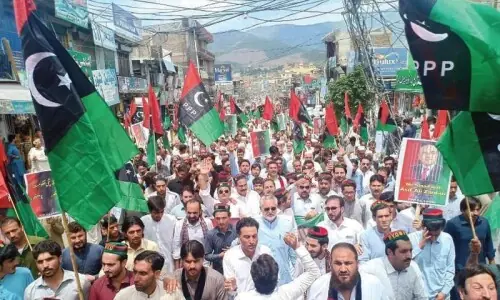
About the alleged irregularities in the local elections, the prime minister said those having complaints were free to move the courts. He said if election symbols of various candidates were missing from the ballot papers, it might be a human error, not an institutionalized effort to keep anyone out of the electoral process. Still, he said, the matter was being investigated.
He said a permanent chief election commissioner would be appointed, but did not say when.
The premier said elections for nazims, due next month, would be transparent and free, and the electors had the right to decide who should lead them.
He said moderates had won the local elections and forces of extremism and negativism had been defeated. The election results showed people’s trust in the local government system.
Referring to the performance of the ruling coalition in Sindh, rural areas in particular, the prime minister said Pir Pagara had done well by the ruling party.
He said those who had lost the election should concede defeat for the sake of a tension-free post-poll atmosphere.
The prime minister ruled out the possibility of a general election before 2007.
Mr Aziz, who was finance minister before being elected as prime minister a year ago, claimed that the economy was improving and poverty was being alleviated.
He said it was not possible for the government to purchase petrol at $67 a barrel and sell it at half price to give relief to end users.
He enumerated various indicators to establish that the economy was doing well and people were getting jobs.