



 0
0

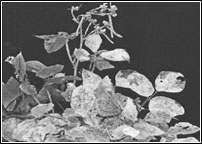 MOONG bean yellow mosaic virus (MYMV) is the most destructive viral disease of moong bean or green gram and mash or black gram in tropical and subtropical Asia, including Pakistan.
This virus is also known as ‘yellow mosaic’ and cause disease in pigeon pea or arhar or red gram, moth and soybean. Sustained and high temperatures following infection increase the severity of the disease. The yield loss in naturally infected susceptible cultivars varies with time of infection. According to the reports, losses may occur up to 100 per cent under severe conditions.
The pulses are called “poor man’s meat” due to their protein value (contains 20-28 per cent protein). Pulses are also known as short duration crops. All pulses require very little amount of water, hence are termed as dry crops.
Another advantage in the cultivation of pulses is that, all pulses play an important role in crop rotation, due to help in maintaining soil fertility, through atmospheric nitrogen fixing bacteria. The moong bean (Vigna radiata), mash (Vigna moongo) and pigeon pea (Cajanus cajan) are very important drought resistant major Kharif pulse crops which do not require much irrigation due to short duration and drought tolerance.
However, 3-4 irrigations are sufficient for getting good yield. Flowering and seed development stages are very critical. Moth (Phaseolus aconitifolives) is also important drought tolerant crop, cultivated as rain fed for fodder. Irrigated crop requires 2-4 irrigations. Soybean (Glycine max) is used in ghee and industrial purposes contain 18-22 per cent oil, requires 5-7 irrigations from sowing to maturity. Irrigation at pod filling stage is very necessary, drought at this stage will reduce yield drastically.
The cultivation of drought resistant pulse crops and judicious use of irrigation water is today’s need. The area under cultivation of these crops is increasing season by season, for obtaining optimum crop production and to support the national economy.
Keeping in view, a brief account of the most important, very destructive disease MYMV is being discussed for readers (including agriculture research and extension workers, students and teachers) as well as for the benefit of growers. The discussion includes the symptoms, transmission and preventive measures against disease.
Symptoms: Early-infected plants have more severe symptoms than late infected. Chlorosis, stunting and reduced branching contribute to yield loss. The earlier symptoms of MYMV in susceptible cultivars appear on young leaves as yellow spots. The leaves emerging from apex show irregular bright yellow patches interspersed with green areas.
The yellow patches coalesce to form larger patches that develop into a yellow mottle and there is complete yellowing of leaves in severe cases. Infected plants remain stunted, retarded with reduced leaf size. Flowers and pods production is severely reduced and maturity is also delayed in diseased plants.
Transmission: MYMV is transmitted by whitefly (Bemesia tabaci) under field conditions but not through sap, seed or soil. According to reports, whitefly is very efficient in acquiring and inoculating the virus within 10-15 minutes, by infesting leaves of certain hosts. Their are12-15 overlapping generations of whitefly in a year, but is most effective during May to September.
Prevention: Cultivation of disease resistant or tolerant varieties is alone safe, economical and most easy way against diseases; the disease can also be controlled by eradication (collection and burning) of diseased plants, but it may also be kept in mind that controlling white fly population is compulsory; irrigation water and fertilizers must be applied as per requirement of the crop with normal methods and proper dose that can minimize the white fly population and disease intensity; when white fly come up to economic threshold level (ETL) and there is no beneficial insects or natural enemies of white flies in or around crop surroundings, white fly controlling insecticides could be used after consultation with experts.





























