



 0
0

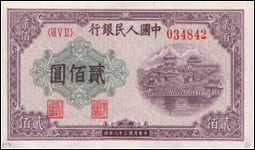 CHINA re-valued its yuan to 8.11 per dollar from the decade-long rate of 8.277 on July 21, 2005 The US Treasury Secretary John W. Snow immediately welcomed the decision as, ‘good news for China and good news for the global economy’. The move was viewed by the US Treasury as the beginning of a process of adjustment.
An immediate reaction was the fear that the prices, the US customers paid for items of daily use and imported from China, may become costlier. It was also anticipated that the revaluation will help lower the US trade and budget deficits which were presently being considered as a threat to the global financial stability. At the same time, it was felt that the job of a US factory worker may have become more secure as American products are likely to become more competitive.
What does the revaluation decision really mean? Having abandoned the yuan’s decade-old peg to the dollar, the People’s Bank of China (PBOC) will now manage a floating exchange rate based on a basket of currencies. The basket might comprise the dollar, euro, yen and the currencies of China’s dozen or so leading trading partners. Since it is a managed float, Chinese authorities will be able to prevent the volatility in fluctuations of the exchange rate.
What has prompted China to take the decision to revalue its currency? China is reported to have taken the decision in response to international demand. It was being pressed hard by the US to revalue its currency. The move may be aimed at silencing US criticism of China’s monetary policy, particularly because China is facing the threat of restrictions on its textile exports to the US.
However a more flexible yuan is also in China’s own interest. First, it could help ease the speculative flow of investment in China’s money markets and real estates that had been a problem for the Chinese authorities in recent months and years. The revaluation may help in addressing this problem.
Second, the POBC had of late been under pressure, as it had to recycle all the speculative money together with hard currency earnings from exports back into yuan. To defend the fixed currency peg between the yuan and the dollar, the central bank had to buy foreign currency in exchange for yuan. When there was too much yuan in circulation in the system, the PBOC had to withdraw the extra money through the process of sterilization by issuing notes and bonds.
If the action fails to mop up the excess money, the situation results in inflation or leads to imprudent lending by the banks. The managed float may take care of this problem provided that the new arrangement is handled correctly. Many analysts are also of the view that the management float will also China in dealing with the boom-and-bust cycles in a more effective manner.
Effects of yuan’s revaluation: The 2.1 per cent revaluation of yuan is seen as modest which will not make much of a dent in China’s surging export earnings. The country’s trade surplus, a modest $30 billion in recent past, is expected to go up fourfold to around $120 billion in 2005. China’s trade surplus with the US may touch $200 billion in 2005, up from $160 billion of last year.
With growing trade surplus with the US, China is unlikely to engage itself in a destabilizing sell-off of its US treasury holdings. Similarly, it is also unlikely that China will bring about any major change in the components of its $700 billion or so foreign exchange reserves, 70 per cent of which are reported to be in dollars. China itself needs global financial stability for its economic development and it would not like to take any such action that could trigger upheavals and lead to instability.
A few of the analysts fear that with its stronger currency, China will now be able to import larger quantities of crude with the same amount of money which may lead to further rise in the international crude prices. Others argue that it is demand supply that sets the price.
Following yuan’s revaluation, the dollar had fallen against both- —euro and yen. It dropped from around 112 yen to less than 110 yen at one stage and from $119-120 to a euro to $120-121 against euro. However, after a couple of days, the dollar returned to its previous level vis-à-vis both euro and yen. The currency market had ignored the marginal depreciation of dollar resulting from yuan’s revaluation and was now focusing on the fundamentals of the US economy such as the US economic growth and its higher interest rate.
Effect on Pakistan: Reports published in the national press had suggested that Pakistan may now be able to improve its trade balance with China which has so far remained in favour of that country. Time could only tell how much our exports to China will increase as a result of yuan’s recent revaluation against dollar. However, to bring about any significant improvement, Pakistan will have to cut production costs, improve quality and undertake aggressive salesmanship.
Pakistan must continue to maintain its exchange rate stability. It may be necessary at this point that all possible efforts are made to contain inflationary trend quickly and improve its balance of payment (BOP) position that witnessed deterioration last year. If these twin problems remains unresolved, the exchange rate stability may be threatened.





























