0
0

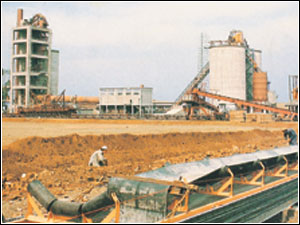 FOR 25 long years, the share of industry has remained stuck at 18 per cent of the gross domestic product. Official statistics show that the share of the manufacturing sector in the national economic pie has been constant at 18 per cent even when the sector’s growth was as low as 1.5 per cent in 1999 - 2000 or 0.1 per cent in 1996-97 or a high 13.4 per cent last year.
Mr Jehangir Tarin, minister for industries and production is surprised by this fact. And he wants to raise the share of industry in the GDP to 24 per cent, almost equal to the other constant factor-the share of agriculture. In fact, if he raises the share of industry in the GDP to 24 per cent the share of agriculture and the service sector may go down.
The minister has yet to come up with a bright new idea, says South Korea which started its industrialization along with Pakistan has achieved a 40 per cent share for its industry in the GDP, while Malaysia which started its industrialization after Pakistan has achieved a 30 per cent share in its GDP.
The Planning Commission which has come up with the medium term development framework has suggested a 20.5 per cent share for industry in the GDP, but the minister does not find that exciting or challenging. So he has come with the 24 per cent target, which he thinks is realizable following the current tempo of rising industrial investment and development, particularly in the fast expanding textile sector.
The best way to target industrial growth is to invest far more from the current 16 to 17 per cent (real and not official figure) of the GDP to 25 per cent, inclusive of direct foreign investment, which should eventually be at least five per cent of the GNP. But Jehangir Tarin’s prime solution is to raise the number of technical personnel trained each year from the current 200,000 to one million. But they have to be quality technical personnel and not mere certificate holders from substandard institutions. And once they begin at the bottom of the ladder in a corporate enterprise they should be able to move up according to merit and re-trained, if need be.
Judging by the current trend a good deal of progress is being made in the industrial sector. According to Prime Minister Shaukat Aziz industrial growth this year is 15.4 per cent. Although according to official documents industrial growth this year in the large-scale sector is 12.6 per cent. The textile sector has recorded a growth of 24.5 per cent.
It has been said that during the last two years a total of $4 billion have been invested in the textile industry but no firm figures are available. Now the Planning Commission has asked the new Textile Ministry to come up with specific details of the investment made. And the ministry has asked the textile associations to provide the data.
The country is facing a trade deficit of $6.5 billion this year, which is a record but the governor of the State Bank of Pakistan Dr Ishrat Hussain is not perturbed as 42 per cent of the augmented imports were machinery compared to the 22 per cent investment growth achieved last year.
He says that out of the private sector bank credit of Rs350 billion this year or Rs700 billion during the last two years, the manufacturing sector consumed 54 per cent and the small and medium industries 24 per cent. Consumer credit was only 10 per cent, he says.
Industrialists and senior business executives have been complaining that they have to pay 40 kinds of taxes to the federal provincial and local governments. The physical task of making such varied payments is exhausting apart from the financial burden.
Infrastructure is underdeveloped for fast industrialisation and early commencement of enterprises. Power and gas supply is far from adequate and so is the water supply. Industrial land prices in Sindh are high. Foreign investors too are discouraged by that. Sindh has not set up new industrial estates while land prices in the old estates are too high. Punjab which has been attracting investors for long has set up the new Sundar Industrial Estate and a value-added estate at Faisalabad. Compared to that the plots available at Port Qasim are too expensive and the administration is said to be not as helpful as in the Punjab.
Stamp duty for transfer of last to the buyers of industrial plots is also heavy and is an additional burden on the investor. Investors have been pleading for the exemption of machinery from import duty and other levies. This is a legitimate request if we want rapid industrialization. The government agrees to that in principle, but is too slow to act effectively.
Anyhow, we have been told that most of the central excise duties are to done away with. Shaukat Aziz promised to do that when he became finance minister five years ago; but he has not done that yet. Now we are told that in the next budget all CED will go except four. Let us wait and see.
Smuggling is a major disincentive to large scale investment. So is large scale import by under-invoicing such goods which they sell cheaper than locally manufactured goods with imported raw materials. Such malpractices have to be fought resolutely over a long period of time.
Cheap and abundant credit at low rates of interest was an incentive to large scale investment. But that is changing, with the interest rates rising in the name of fighting inflation which is in the double digit now. Costlier credit will be disincentive to investment.
It is better for the government to do away with rebates than collect import duties and other taxes on industrial raw materials, and then refund them, often to persons who did not make any export. If the rebate is replaced with do duty on industrial raw materials that will be a healthy development.
India says it will have a ‘free trade agreement’ (FTA) with Pakistan within two years. The Pakistan government is not so sure. Anyway, the industry in Pakistan and the economy as a whole have to be prepared for such challenges a few years from now. Other Saarc members too are keen on that. And our FTA with Sri Lanka is to come into effect from June 12 when we will provide duty-free access to 206 items from that island state. More FTAs would follow, beginning with Malaysia this year. We are going to be part of a larger ball game than we have been. And we have to develop the economy to meet far larger challenges. And our industry has to be prepared for that in a systematic manner. It has to be provided the electric power and gas it needs and its infrastructural needs have to be met adequately and quickly.
The success in achieving 8.3 per cent economic growth this year should not obscure the need for a great many things more which remains to be done, particularly creating large capacities all round to meet our enlarged export needs and larger domestic consumption. As the economy expands, consumption at home too will rise, and our production should be enough to meet both external and domestic needs.