



 0
0

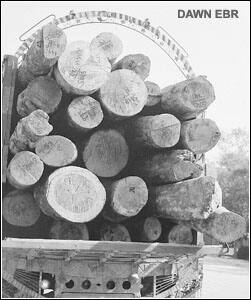 SHISHAM or Dalbergia Sissio is an important source of fuel and timber wood. Its timber is used in furniture, agricultural implements and in building material. The tree has the value for restoring, reclaiming and rejuvenating the denuded and disturbed soils. Plantation of Shisham trees on canal embankments saves water by curtailing seepage and evaporation losses. Consequently, supply of fresh water for drinking, industrial and agricultural purpose increases. Water erosion of embankments of canals and watercourses is also contained.
Shisham trees are planted on farms of moderate climate. It reduces erosion, increases soil fertility, protects vegetables from frost, provides shade to livestock under extreme weather and increases the crop yield. Almost all farms contain a number of such trees.
Shisham has a great potential for agro-forestry that the government wants to promote for increasing tree cover in the country. Irrigated forests such as Changa Manga comprise of shisham trees pre-dominantly which are managed and protected by the foresters for obtaining quality timber.
However, its decline has been a problem for the last 15 to 20 years. The mysterious disease that has caused a rapid decline of Shisham trees has stunned the forest departments, research institutes and experts. It has got the importance of national calamity within a short span. The problem has exceeded the limits of viable control measures and has turned into a worst type of epidemic because its cause could not be ascertained in the beginning.
So far, forest departments and bio scientists have failed in identifying its real cause and recommendations for control. The research conducted was basically non-productive that exhausted massive funds allocated for identifying the cause. Millions were spent on research but the disease continued destroying the trees. This failure could be attributed to non-functional pathological laboratories and the unavailability of or ill-equipped experts to undertake such projects.
From research results at the Mycology and Plant Pathology Departments of Punjab University, it was found that Shisham’s decline has become a progressive epidemic. Presently, it is facing two kinds of diseases, die-back and fusarial wilt. The former is caused by a pathogen called Fusarium solani that slowly kills the trees, while the latter is fatal causing mortality to Shisham trees every year, especially in the fall. The cause of fusarial wilt has neither been established in Pakistan nor anywhere else. The combined attack kills the trees rapidly causing great damages. The tree is killed within three to four weeks, rightly called the quick decline.
Forest nurseries are considered the main players in spreading the disease as the saplings raised and transplanted by foresters carry infections from nursery beds. It is important to be careful in the selection of Shisham varieties. Two species used in plantation are found highly susceptible to dieback and wilt diseases. Dead and dying trees also spread the disease as these promote aggressiveness of pathogen, multiplication of termite species that feed on dead roots of a tree.
To stop further damage, it is essential to adopt integrated management approach that includes precautionary, cultural and chemical measures. Well-organized campaign against the decline to create awareness among foresters is an important component of this approach.
The dieback could be controlled partially and in young trees through the application of Benomyl in time. Application on trees between six to 10 years old gives better response as compared to older trees. To get better response and to avoid the disease, foresters should apply the chemical at an early tree developmental stage.
Varieties that are susceptible to diseases should be banned and raising and propagation of resistant varieties should be encouraged. So far, two Shisham varieties have been found resistant to these diseases.
It has been concluded that intercropping with resistant varieties not only breaks the pathogencity but also stops the spread of pathogens. Older and dying trees should be uprooted. Replacement of termite susceptible varieties with resistant ones is also important.
Result-oriented research programme to identify the causes and pathological problems should be undertaken, and molecular and genetic studies be enhanced to combat such calamities. To establish the cause and cure of the diseases, it is important to hire the services of relevant experts and well-equipped pathological laboratories should be established for carrying out systemic research work.





























