

Kuwait votes as opposition ends boycott


 0
0
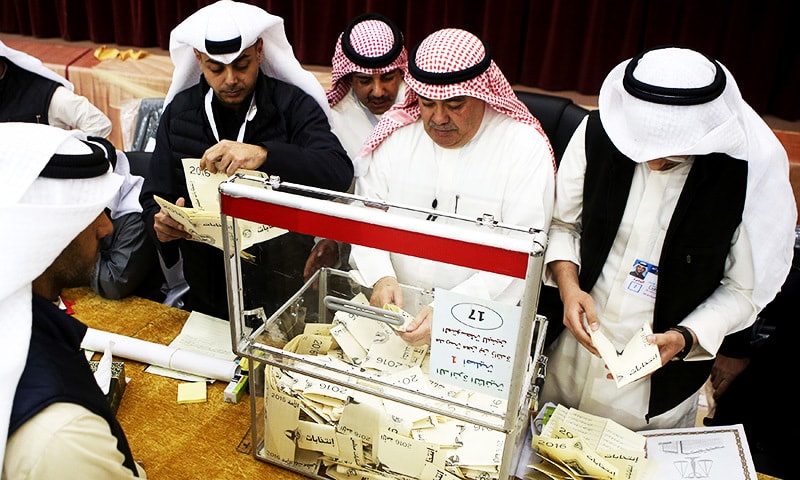

KUWAIT CITY: Kuwaitis went to the polls on Saturday for the first election contested by the opposition in nearly four years amid fresh disputes over cuts in subsidies due to falling oil revenues.
Turnout was high at many of the 100 polling stations with some centres reporting 70 per cent of eligible voters had cast their ballots with two hours to go, according to state-run Kuwait Television.
While Kuwait’s two previous elections yielded poor turnout due to opposition boycotts, voters said they were encouraged by seeing candidates running this time around.
“Their return is needed to strike a political balance in the country. They are more capable of monitoring the government actions,” retired voter Ibrahim Al-Tulaihi said at a polling station south of Kuwait City.
“A wise opposition is needed because we don’t want more political disputes,” Jarrah Mohammad, a government employee, said after casting his ballot.
Unusually for the oil-rich Gulf Arab states, Kuwait has an elected parliament with powers to hold ministers to account, even though senior members of the ruling Al Sabah family hold all top cabinet posts.
The set-up has led to repeated standoffs between lawmakers and the ruling family and this is the seventh general election in a decade.
The election comes against a backdrop of discontent among Kuwaiti citizens over mounting cutbacks in the cradle-to-grave welfare system they have long enjoyed as a slump in world oil prices hits government revenues.
The emir dissolved the last parliament after MPs called for ministers to be grilled over the cuts to state subsidies.
Islamist opposition candidate Hamad al-Matar, a former MP, said he expects the opposition to win a good number of seats in the 50-member parliament to prevent the government from raising charges.
“There will be no charges on citizens because we have no problem with finances. We have a problem with government management and corruption,” Matar said.
Published in Dawn, November 27th, 2016




























