0
0

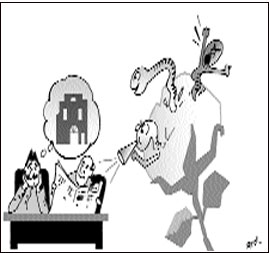 Pakistan, the world’s fourth largest cotton producer, ranks first in export of cotton and cotton-based products by fetching over 60 per cent foreign exchange.
This big basket of eggs has been gravely endangered this season. This is an indication that cotton scientists, extension workers and growers had followed a fair weather technology. Whereas, hot dry weather suppresses all insects with the exception of whitefly, but what should be done in a rainy season to manage the rapidly multiplying bollworms and other insects.
Speculations regarding crop shortfall are rife from the beginning which have driven the phutti and lint prices to exceptionally high levels. Though, the international prices too are up, but far less than our national rates.
The ministry of food, agriculture and livestock and the federal committee on agriculture (FCA) have reduced the production estimares merely by half a million bales from 10.5 million to 10 million bales to satisfy the general public. On the contrary some people believe that the crop condition is miserably poor over the large tracts apart from a few good pockets. The yield losses are more pronounced in Punjab than in Sindh, where the crop was inundated by standing rain water rather than Sundis. During the past decade, the author kept expressing apprehensions in meetings that due consideration was not being given to insect control.
The scientists, especially entomologists and extension workers demanded varieties resistant to ‘cotton leaf curl virus’ (CLCV) for the control of insects which failed. Thus, in the quest to hybridize the varieties resistant to the CLCV, cotton breeders ignored all the parameters of inherent insect tolerance (multi adversity resistance or MAR), resultantly produced varieties bearing dark denser foliage. In addition, the insect control measures have led to the present situation of the economy.
The pesticides use rose rapidly from 665 tons in 1980 to about 70,000 tons in 2002, valuing Rs10 billion. The average use of pesticides comes to 22kg per hectare — an exceptionally high figure. This calls for serious thinking as to what would happen in future with the same pace of increase in its use, though it remained useless and unproductive in controlling the insects. Many developed countries have curtailed the use of inorganic fertilizer also, as these too, are considered perilous for mankind.
Now the government has constituted a committee to look into the ineffectiveness of pesticides. The scientists and planners ought to learn from the experience of other countries. They should adopt measures to overcome the insect peril by reducing the use of pesticides, if not eliminating it altogether.
The twin menace of Lashkari and American sundis are real perpetrator of cotton failure as frequent rains during the growing season led to unprecedented reproduction of both the insects. It is a known fact that the American bollworm (Helicoverpa armigera) has developed resistance to all kinds of pesticides except at the egg stage. Under such circumstances chemicals provide partial relief.
The armyworm or Lashkari sundi (Sopdoptrea littora) appeared for the first time on Deltapine varieties in Dipalpur in 70s from where it spread to other parts of the country but remained under control except in certain pockets. Both these insects and whitefly are capable of thriving on other crops in the absence of cotton. The larvae of both sundis grow to a maximum of 1 1/2 inch in length. Ordinarily, it is difficult to differentiate between both worms.
Cotton growing technology and future strategy:
* Use fertilizers less, so as to make the plant less attractive to insects.
* Carry out topping of plants after 90-100 days from sowing so that there is no new foliage to attract insects like the whitefly, American and Armyworm moths to lay eggs. This system is practised in some cotton growing countries to overcome the menace.
* Tailor high-density plant population technology like many cotton producing countries, thereby considerably reduce the lifespan of crop to 120-130 days instead of 200 or more days and to have desired boll number per unit area in limited period. This practice shall undoubtedly help in reducing significantly the cost of production.
* After the harvest, carry out deep ploughing of fields so that hibernating larvae and insects are exposed to sun or picking by birds followed by heavy drenching.
* Remove alternate host plants.
* The armyworm female lay hundreds of eggs in a mass or a pouch, which can be spotted from a distance, if overlooked a large number of larvae will start eating the same leaf after hatching. Afterwards they shift to other leaves on the same plant or in the same periphery. Properly trained unemployed womenfolk in rural areas can very well do the job of collection. These larvae may be destroyed later on. Such labour may be paid wages accordingly.
Since long this practice is being gainfully implemented in Egypt. At the same time this labour can also be trained to find and pick larvae of all the bollworms. This suggestion appears to be strange but practicable. It will help the unemployed rural people instead of fattening a few pesticides companies. It may be pointed out that the effectiveness of chemicals is very limited in early stages, then why waste money and sustain damages. That’s what happened this year.
* The use of pesticides pollutes environment and creates hazard for living beings, as well. The cotton so picked shall fetch much higher price in international market. Afterwards we can easily switch over to organic cotton. Such organic cotton shall sell like a hot cake internationally.
* It may be mentioned that sugar cane pests are being effectively controlled by Trichogramma in the country. This predator is being reared in laboratories in many cotton growing countries to control bollworms. It can also help to control cotton insects in Pakistan.
* The sterile moths of bollworms are released in California in hot spot areas to suppress the wild population without resorting to chemical sprays.
* There are many cotton growing countries that through their strong commitment have eliminated pesticides.
* Whitefly is another pest which usually becomes great nuisance during hot seasons and occasionally goes out of control despite repeated sprays with sophisticated costly chemicals. At that stage nature comes in to rescue through multiplication of Chrysopa or Lace wings, but then it is too late. There are a number of other predators found in nature that can be used in controlling the sucking insects.
* If the sucking insects go beyond control then the emulsion of detergent and cooking oil can successfully be used to control them. This solution gives as good control as any costly insecticide provided sprayed on target sucking insect.
* There exists a lot of controversy regarding the benefit of introducing Bt (Bacillus theirngiensis) gene cotton and other crops all over the world. There are many citations in literature finding larvae feeding on the GM varieties being equally hazardous to the environment.
* From breeding point of view okra and super leaf varieties are covering large tracts in Australia because they are less vulnerable to insects. Other than this, smaller leaf size requires lesser moisture. We may also breed such varieties to replace normal leaf without losing the yield and quality.