28
28

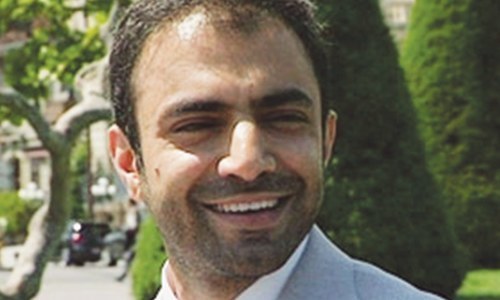
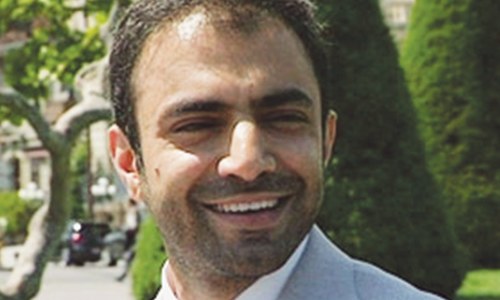
QUETTA: Nawab Brahamdagh Bugti, President of the Baloch Republican Party (BRP), has invited various parties, including the outlawed Baloch pro-independence groups, and their leaders for negotiations to sort out their differences.
In a statement received here from Geneva on Sunday, he said unity was the only way to guarantee resolution of issues.
Mr Bugti suggested that the meeting of the parties and leaders should be held in Switzerland, but could also be held in any other European country where BRP delegates would participate and he would talk through video link because he lacked documents required to travel outside Switzerland.
Also read: Brahamdagh met Dr Malik Baloch, discussed Balochistan issue: BBC report
“I request all Baloch leaders to put their differences and other matters aside and gather in Switzerland within a month to sort out all differences.”
He said there could be differences on many issues but they could be resolved by the majority. If any party or leader does not accept the majority’s decision, the Baloch nation will decide who is responsible for disunity in ‘our ranks’.
“After achieving national unity, the BRP will accept the majority’s decision on all issues, including negotiations with the state,” he said, adding that ‘state atrocities’ could be defeated only through unity.
Balochistan government officials have remained in contact with separatist leaders in recent months and even the chief minister has met Mr Bugti, raising hopes for a possible reconciliation.
“I request all pro-independence parties and leaders, including the BNM, BRSO, BSO-A, Nawabzada Hairbyar Marri, Nawab Mehran Marri, Sardar Bakhtiyar Domki and Mir Javed Mengal, to play their role for national unity, despite all the differences, for the sake of the Baloch nation and the sacrifices of martyrs.”
He said the BRP was a political and a democratic organisation which believed in peaceful struggle.
“The BRP has been trying to resolve the Balochistan issue through political and peaceful means, but the Pakistani establishment and its security forces have always tried to suppress the Baloch movement at gunpoint,” he said.
About recent reports regarding negotiations with the state, he said every movement had to come to the negotiating table at some point to achieve its goals and the BRP possessed the authority to represent the cause of the Baloch through peaceful, political means.
“[Chief Minister] Dr Malik Baloch previously made several requests for a meeting but they were rejected because he has no authority to take any decision on the contentious matters and he himself conceded in recent meetings that his role was only that of a messenger.”
Referring to his meeting with the chief minister held in Switzerland, he said he had made it clear to the state’s representatives that negotiations were not possible as long as the atrocities in Balochistan continued.
Mr Bugti said it was not the first time that the state had sought negotiations or the Baloch leaders had held meetings with the government’s representatives.
“Before this, Nawabzada Hairbyar held meetings with interior minister Rehman Malik during the PPP’s government and Dr Allah Nazar had also been in contact with the current CM,” he said.
He said the BRP respected the decision of those leaders to contact the state authorities and in spite of being unaware of their agenda, had not criticised the moves with the hope that the Baloch national interest would be the priority in those communications.
Recounting events surrounding the formation of the Baloch National Front and the BRP quitting it later, as well as meetings for unity held in Geneva last year, he said “criticising each other about past mistakes would only worsen the situation”.
Mr Bugti said the main reason behind frustrations among the Baloch was not the state atrocities but the disunity among their leaders.
“Suppose Balochistan gets independence (which is very difficult if this crisis continues); then how would these leaders and parties lead the nation while fighting each other, as various international players will try to dominate the newborn state or its policies for their interests.
“A glimpse of such a horrible scene has been witnessed recently as a result of a conflict between two organisations.”
It is only possible through national unity to obtain maximum international support and recognition, he added.
Published in Dawn, November 16th, 2015