0
0
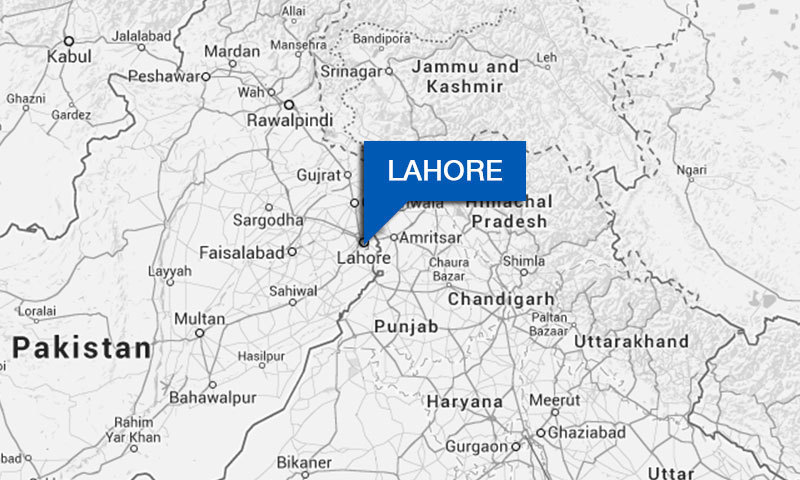

LAHORE: The Supreme Court has allowed widening of Canal Road in two sectors – from Dharampura to Harbanspura and from Doctor’s Hospital to Thokar Niaz Beg -- to ease traffic congestion.
Giving a go-ahead to the Punjab government for the Canal Road widening project, a three-judge bench dismissed a contempt of court petition filed by the Lahore Bachao Tehreek (LBT) and accepted petition of the government wherein it sought permission to fell trees and acquire greenbelts for the project.
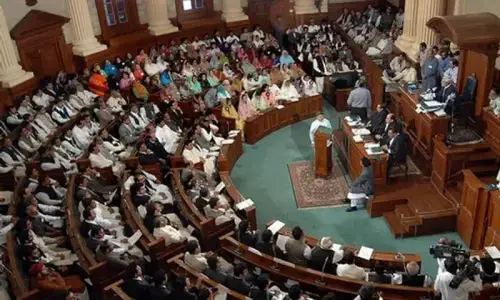
The bench headed by Justice Mian Saqib Nisar announced the decision at Lahore registry on Wednesday.
The project includes construction of a 1.3km long underpass at Chaubucha Interchange in the sector falling between Dharampura and Harbanspura to bring it in alignment with the rest of Canal Road and for easy merger of traffic coming out of the underpass.
LBT’s contempt plea fails to convince bench
Whereas, the second limb of the project is addition of a third lane in the sector falling between Doctor’s Hospital and Thokar Niaz Beg because of the acute difficulty faced in the merging of traffic from an already widened three-lane sector up to Doctor’s Hospital onto a narrower two-lane sector from there onwards.
The LBT opposed the application of the government saying the canal area throughout had been declared “Heritage Park” pursuant to The Lahore Canal Heritage Park Act 2013. Imrana Tiwana represented the organisation.
It pleaded that it was impermissible for the government to, in any way, widen the road, to encroach upon the greenbelts or cut trees, as there was a strict prohibition to that effect in the said law. It also argued that the extension/widening of the road was no solution to the traffic problem rather the government should come up with alternate means to overcome the traffic congestion in the area.
It further submitted that there was no justification for widening of the road. The LBT stated that Canal Park was a “Public Trust” and could not be encroached upon only for the benefit of eight per cent of the population of Lahore which had vehicle ownership and fundamental right to life of the public at large cannot be compromised by cutting of age-old trees (that are now part of the park) as the same will have serious ecological impact.
The LBT also submitted that as the government authorities in disobedience/breach of the SC judgment passed in 2011 had already cut certain trees, they were guilty of violating the judgment, therefore, criminal action be initiated against them.
Advocate Khwaja Haris defended the project on behalf of the government. The counsel submitted that the proposed project was neither violative of the provisions of the Lahore Canal Heritage Park Act 2013 nor the doctrine of public trust. He said though the greenbelt on both sides of the canal was a public trust, the same would be used for a public purpose and in the instant case easing traffic congestion for the benefit of the public serves such a purpose.
The counsel told the court that for each tree felled, the government would plant 10.
In its judgment, the bench observed that there was minimum environmental intrusion and the Heritage Park was duly protected. And addition of a third lane would significantly benefit the people of Lahore by enabling smooth flow of traffic in this stretch.
It said the court found no merit in the allegation that the project infringed upon the protections accorded to the Heritage Park through the Act and found that the government was fully compliant with the mandate of the Act.
“The canal bank road has attained considerable importance and most of the time it has been noticed that the traffic congestion has been experienced not only by the people who have to bring their children to the main city for education, rather as the main hospitals are also in the main city, ambulances also cannot pass through when there is a congestion at the places where the road is narrowed,” the bench said.
The bench said it was a matter of public knowledge that in the city of Lahore, a number of trees had been planted in different parts and on account of such, the environment had improved. Therefore, it ruled that the cutting of trees would in no way be a hazard to the environment but to disallow such widening in fact would cause great trouble and inconvenience to the public at large.
“There is no reason as to why the government should not be allowed to execute the work and to correct the crooked part of the road which in fact has become a traffic hazard,” the bench concluded.
Published in Dawn, August 6th, 2015
On a mobile phone? Get the Dawn Mobile App: Apple Store | Google Play