0
0

ISLAMABAD, Sept 25: Pakistan and the United States have entered into an agreement for the surrender and transfer of each other’s nationals and military personnel for any purpose without recourse to any court of law.
The agreement which is being kept a secret was signed on July 21, 2003 in Washington by Pakistan’s ambassador to the US Ashraf Jehangir Qazi and US Assistant Secretary of State Christina B. Rocca, a senior government official told Dawn.
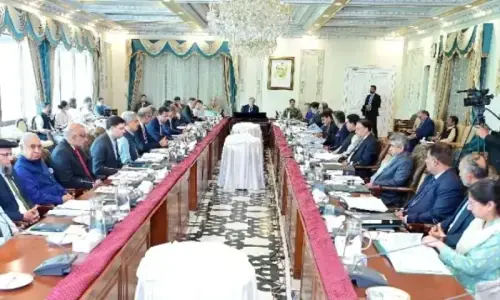
The federal cabinet on Wednesday formally approved the agreement for ratification during Prime Minister Mir Zafarullah Khan Jamali’s visit to the US early next week through formal exchange of notes. No official announcement was made about the signing of the agreement or its approval by the cabinet.
The agreement also enables the two governments to get out of the purview of Rome Statute of the International Criminal Court (ICC), and binds each other not to surrender or otherwise transfer each other’s nationals to the ICC, or any other tribunal not established by the UN Security Council.
The US authorities have been facing problems in transferring Pakistani nationals to the United States for investigation and prosecution as the Pakistan government could not surrender even a single person owing to the intervention of the local courts.
Under the agreement, persons who could be extradited without any recourse to the local courts of law, include current or former government officials, employees and contractors, or military personnel or other nationals.
The agreement will remain in force until one year after the date on which one government notified the other of its intent to terminate this agreement. The provisions of the agreement shall continue to apply with respect to any act occurring, or any allegation arising, before the effective date of termination.
The cabinet was informed that the decision to sign the bilateral agreement with the US was political. “Our strategic concerns and reliance on the US suggested that it was advantageous to conclude the agreement rather than face potential adverse effects by not doing so,” the cabinet was informed.
The fact that five countries in the neighbourhood namely India, Afghanistan, Sri Lanka, Nepal and the Maldives had already signed such bilateral agreements with the US was also kept in mind in the execution of the agreement.
The agreement says: “Considering that the parties have each expressed their intention to, where appropriate, investigate and prosecute war crimes, crimes against humanity, and genocide alleged to have been committed by their respective officials, employees, military personnel and nationals, hereby agree that persons of a party present in the territory of the other shall not, without the express consent of the other party, (a) be surrendered or transferred by any means to any tribunal for any purpose, unless such tribunal has been established by the UNSC or (b) be surrendered or transferred by any means to any other entity or third country, or expelled to a third country, for the purpose of surrender to or transfer to any international tribunal, unless such tribunal has been established by the UNSC”.
When the United States extradites, surrenders, or otherwise transfers a person of Pakistan to a third country, the United States will not agree to the surrender or transfer of that person by any entity or third country to any international tribunal, unless such tribunal has been established by the UNSC, without the express consent of the government of the Islamic Republic of Pakistan. Same would apply on Pakistan if it extradites or surrenders a person of the United States.