3
3

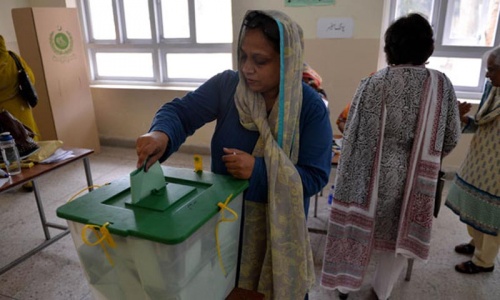
ISLAMABAD: Presenting a detailed analysis report on general elections 2013, the Free and Fair Election Network (Fafen) on Friday termed the increasing voters turnout an encouraging trend for strengthening democracy in the country.
Chairman board of trusties of Fafen, Zaheer Khatak along with Sarwar Bari, Sahabzada Saood and other members of the board, highlighted that overall voter turnout in May 11 polls in 266 constituencies was recorded as 54.7 per cent, a substantial increase as compare to the previous elections of 2008.
Zaheer Khatak said that the urban constituencies registered a substantial increase in turnout by 17 per cent followed by majority urban and predominantly urban constituencies seeing an increase of 13.2 pc and 12.8 pc respectively.
The predominantly rural constituencies witnessed an increase of 10.9 per cent while majority rural constituencies showed an increase of 10.6 pc.
He said the general elections 2013 had the most female candidates (161) compared to 75 and 61 female candidates contested in 2008 and 2002 elections respectively.
The Fafen recommended the steps to improve the participation of women voters in general elections.
It also recommended the Election Commission of Pakistan (ECP) to remove discrepancies in voter registration, finalisation of polling schemes and consolidation of result for making electoral process more effective.
Khatak said that these steps would enhance the citizen's trust in democratic process and can lead to efficient governance in the country.
Giving reference of 1.5 million rejected votes in the May 11 polls, the Fafen stressed on steps for avoiding number of rejected votes.
The Fafen has put forth these recommendations on the basis of findings compiled in its first detailed report titled “National Assembly Election Result Analysis” based on data gathered through citizen's observation of General Elections 2013 and ECP official documents.
Parallel Vote Tabulation (PVT) turnout, voting patterns and an in-depth analysis performance of political parties, are the key features of the report which analyzes the results of 266 out of 272 National Assembly constituencies.