0
0

A matter of principle
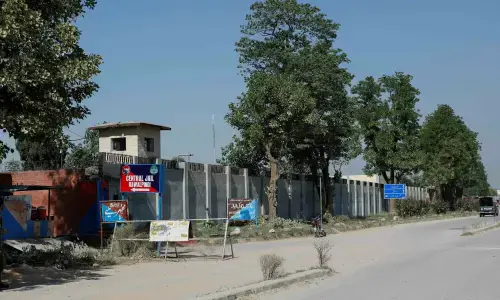
SYED Yusuf Raza Gilani’s resignation as central vice-chairman of the People’s Party is a rare example in Pakistan of a leader quitting a party office on a matter of principle. He condemned his nephew’s decision to join the PPP “forward bloc” and said he had to hang his head in shame for the conduct of Asad Murtaza Gilani, who won a Punjab provincial assembly seat on a PPP ticket. The senior Gilani accepted his responsibility for getting Asad a PPP ticket. However, once elected, Asad chose to cross the line — which is not a violation of the rules yet because the relevant clause forbidding floor-crossing has been held in abeyance by the generals. A technical violation it may not be, but most certainly, morally speaking, Asad Gilani is guilty of gross opportunism. He won because of the votes he received from those who supported PPP policies. By ditching the party on whose ticket he won and by moving over to the other side for possible lucrative gains, Asad has betrayed the trust of his voters — as have all others who have left their parties after October 10. In his letter from his prison cell to party chief Benazir Bhutto, Yusuf Raza Gilani has pledged his loyalty to the PPPP and condemned not only his nephew but “all other party members ... who have chosen to align themselves with the present regime for personal gains.”
Our politicians are not very famous for upholding principles, especially when it comes to seeing the difference between party and government. As history shows, prime ministers have chosen to remain party chiefs instead of letting others run their parties. This has had disastrous effects not only on parties and governments but also on the country itself. Invariably, whenever a prime minister was also the party chief, he or she considered party interests synonymous with state interests. As party chiefs, they have also tended to punish members who dared differ with their policies. This is in contrast to the tradition in established parliamentary democracies, where it is the party that controls the government. The cabinet is as much responsible to the party as it is to parliament. This makes the prime minister and cabinet members behave and conform to party policies and programmes.
At present there is trouble between Prime Minister Zafrullah Khan Jamali and PML(Q) chief Mian Azhar over the former’s decision to nominate Saleem Saifullah Khan as party secretary-general. This has angered Mian Azhar, who feels bypassed. Besides, it is the party’s general council that has the right to elect the secretary-general. Mr Jamali, of course, has done the right thing by quitting the office of party secretary-general. But, by appointing Saifullah in his place, he has violated the party’s constitution. The PML(Q) is hardly the kind of party that can be cited as a model of political propriety. Its very origin and epithet — “king’s party” — serve to remind one of what future this motley crowd of turncoats and opportunists has as a party. Nevertheless, it is the largest party in the National Assembly, and for that reason it can at least begin by conforming to the fundamental principles of parliamentary democracy.
Disruption in Loralai
WHAT was feared has started happening. First, it was the NWFP and Balochistan chief ministers taking hasty steps on sensitive issues such as the weekly holiday and banning things already prohibited for decades. And now the ripple effect is taking place. Over the Eid holidays, a festival and a circus in Loralai, organized with the consent of the district nazim and the local administration, was attacked by activists of a religious party. The attackers were led by the local MPA elected on a Muttahida Majlis-i-Amal ticket and several other MMA leaders. The event was held to celebrate Eid and was attended by a large number of children. The legislator and his group swooped on the festival to prevent the people from indulging in what they said were “un-Islamic activities”. They even took away several items from the circus, including motorcycles.
The police have registered a case but it remains to be seen whether any arrests will be made given that the MMA is a coalition partner in the Balochistan government. It has to be said that the events of the recent past are not very encouraging as far as the conduct of the new provincial government is concerned. Two former ministers belonging to a component party of the MMA and detained by the National Accountability Bureau for alleged involvement in criminal activities were released as were hundreds of religious party activists. Such steps can only embolden those who believe that they are the keepers of everyone’s morality and have the right to shove their own interpretation of faith down everyone else’s throats. In fact, right after they ransacked the mela, the same MPA and his zealots addressed a public meeting in Loralai warning the local administration that such things will not be tolerated. More fireworks like this can be expected on the coming New Year’s eve. The MMA should realize that it is living up entirely to the expectations of its critics. It is trying to abridge the individual’s freedom of action and restricting social and cultural expression while leaving aside badly needed reforms affecting the daily lives of the people.
Infant mortality
THE high rate of infant deaths caused by neonatal tetanus in Pakistan underscores the weaknesses in the child health delivery system. The deputy director of the National Institute of Child Health Care, making a comparison between Pakistan and other states which have overcome the problem, said that deaths caused by neonatal tetanus had declined by 50 per cent between 1990-2000, but still 377,000 deaths occurred globally every year. Of this, Pakistan’s share is 22,000, which is alarming. This is a far cry from the target set by the world summit for children according to which Pakistan should have eliminated tetanus by 1995. However, it is among the 27 countries which account for 90 per cent of the incidence of the remaining neonatal tetanus.
Infections like diarrhoea, acute respiratory disorders, sepsis, low birth weight and asphyxia cause almost two-thirds of around 270,000 neonatal deaths annually in the country. Together with tetanus, they represent potentially lethal problems for neonates. What is tragic is that these deaths are largely preventable by low-cost and low-tech interventions well within the ambit of the existing health system. Reports show that only 52 per cent of all pregnant women in Pakistan are receiving anti-tetanus immunization. Even in big cities like Karachi every month 100 children die of the disease. Under-one-year tetanus immunization is only 59 per cent. Certain other practices are also believed to contribute to tetanus mortality like unhygienic cord cutting and cord care. Girls have developed tetanus after the traditional ear piercing practice. Some of them have even died because of it, indicating the ignorance of the parents. A survey found that most women did not recognize the danger of common infant conditions and no particular attempt is made to monitor the new born’s temperature. Breast feeding, while prevalent, is generally not sustained during the first crucial month. By increasing the knowledge for improving survival and health of the new-born and access to means of prevention, we can check the high infant mortality rate on this score.