


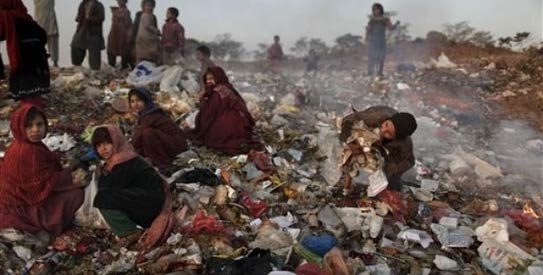
KARACHI, Jan 29: Frequent travels, past displacement and current repatriation of millions of Afghans have put the Afghan population at risk of infection with novel, possibly drug-resistant strains of human immunodeficiency virus (HIV) and treatment for such infections may prove challenging for the development of effective vaccines and antiretroviral therapies, a recent study shows.
The study, Patterns of HIV infection among native and refugee Afghans, was aimed at characterising and comparing the HIV epidemics prevailing among the Afghan refugees in Pakistan and the native Afghans in Kabul.
It was conducted by the Department of Biological and Biomedical Sciences, Aga Khan University (AKU); Department of Microbiology, Dow University of Health Sciences, and Nursing and Midwifery, Aga Khan University Programme, Kabul. It was published in a research journal, AIDS.
According to the study, transmigration of infected populations may result in transmission of new HIV-1 variants into the host population. Besides, intermixing of the pre-existing and newly transmitted HIV variant may give rise to novel circulating recombinant forms and subtypes.
“The intermixing of diverse HIV variants among Afghans may give rise to seeding of infections with rare HIV strains, which may pose a serious challenge for the treatment and control of infection,” the research says.
Referring to previous researchers, the study states that a six per cent prevalence of HIV among Afghan refugees in Pakistan has been observed with drug use being a common high-risk behaviour.
Samples for the research in Pakistan were obtained from patients attending antenatal clinics and free health camps organised by the Infection Control Society in Karachi. After initial screening of 556 samples, 29 HIV positive samples from the Afghan refugees in Pakistan and 11 from natives in Kabul were included in the study.
Use of inhaled and injected drugs, having multiple sex partners, homosexuality, contact with sex workers and travel abroad were reported as the high-risk behaviours among Afghan refugees.
The study also reveals associations between the study population of Afghan natives and refugees and identifies high-risk groups in Pakistan and Iran — another country where Afghan refugees are settled in large numbers.
Concentrated epidemics The latest study is part of a series of research efforts on the prevalence of serious communicable diseases among the Afghan refugees in Pakistan.
Earlier, the AKU, the DUHS with the University of Karachi collaborated to produce a study, Concentrated epidemics of HIV, hepatitis B and hepatitis C among Afghan refugees. It was published in Journal of Infection in 2010.
The study found a high presence of HIV, hepatitis B and C viruses in Afghan refugees as compared to the general population in Pakistan.
Blood samples were collected from 556 people, including 34.7 per cent aged between 20 and 29 years. About 73.7 per cent of the sample comprised men. Eleven people were found to be HIV-positive, 164 were infected with hepatitis C and 30 with hepatitis B. Twenty people were found to be co-infected with hepatitis C and HIV, 19 had hepatitis C and hepatitis B whereas two individuals carried all three viruses.
Major risk factors associated with these infections were drug abuse, transmigration and unsafe sexual behaviour.
Citing another study comparing the risk behaviours of Afghans and Pakistanis, the report states that Afghans are more likely than Pakistanis to have injected drugs, used opiate, as their first illicit drug, report needle-sharing, or have a drug user in their family.
“Compared to the Pakistanis, Afghans have been reported to have lower awareness of HIV/AIDS. We observed a high prevalence of HIV (5.93pc); very participants, however, admitted to having multiple sex partners or contact with sex workers,” the study states.
A statistical analysis reveals a strong correlation between travel to Afghanistan and infections with all three viruses, says the study, adding that previously Pakistanis, who had travelled abroad and overseas contract workers, especially in the UAE countries, had been identified as a potential source of concentrated HIV epidemics in Pakistan.
Measures required Another study carried out by the AKU in collaboration with the DUHS recommended a number of measures to control infections among displaced Afghans.
The study, Communicable disease among displaced Afghans: refugee without shelter, published in a research journal, Nature Microbiology, in 2009, stated that although refugees were afflicted by diseases to which non-refugee population was also exposed, the concentration of the refugees, their compromised health and healthcare standards, their low awareness of health-related issues and their vulnerable status meant that refugee populations were reservoirs of infectious disease.
“Screening of communicable diseases and the provision of clean water, sanitation and health care will help to detect, prevent and cure infectious disease. It is equally important to improve the level of literacy and awareness in the refugee communities, with special attention towards women.”
The study found that hasty repatriation protocols, which were negligent of the infection and carrier burden among repatriates, would expose the Afghan population to the risk of communicable diseases, jeopardising the lives of both returning and resident Afghans.













































Dear visitor, the comments section is undergoing an overhaul and will return soon.