We are free to choose peace

We are free to choose peace

I was planning to devote this column to Memogate and Ambassador Husain Haqqani’s resignation, then I woke up one morning to learn that the topic had been rendered quaint by a Nato cross-border attack killing two dozen Pakistani soldiers and bringing the already fragile (not to say ostensible or notional) alliance between Pakistan and the United States very close to the breaking point. Then I realised that the two topics are aspects of a larger one, indeed of the twin elephants in both societies’ living rooms: the damage done when a military establishment becomes too powerful and unaccountable.

The only time I’ve ever met Husain Haqqani was at a seminar at Harvard University in 2006, organised by the journalist and activist Beena Sarwar. He wasn’t yet Ambassador to the US; Musharraf was still president. Most of the discussion was, I felt, preaching to the converted among elite-class Pakistani liberals about how the military was the problem and the solution was democracy in the form of elections and civilian rule. I’m not Pakistani, but I was an invited panelist at the seminar, so I took the liberty of challenging that consensus. Recall, I said, the sorry tit-for-tat excuse for democracy that Benazir Bhutto and Nawaz Sharif and their undemocratic parties inflicted on the country throughout the 1990s. That rivalry’s personal vindictiveness and pettiness, I asserted, did a lot of damage to the credibility of civilian leadership. Was it really clear that civilian rule was preferable to military rule under Musharraf?

For my pains I was, as I remember it, ganged up on by Husain Haqqani, the stern and formidable historian Ayesha Jalal, and Ayesha Siddiqa, whose book Military Inc. was about to be published. Haqqani in particular accused me of being “merely anecdotal,” meaning that the foibles of civilian politicians were incidental, whereas the military was a problem institutionally and structurally.

I still believe that my point was well taken, because there’s much that elected leaders can and should do to claim political space and assert their own authority, even – especially – if they’re being besieged or undermined by the military. If you’re elected to lead, you must accept the responsibility to do just that, and you must demonstrate courage and personal character in disdaining consequences to yourself when necessary. And I’m a reporter; merely anecdotal is what I do. But Haqqani was all too right – wasn’t he?

I’m aware that conspiracy theories have been flying about the notorious memo’s provenance. Like most conspiracy theories, they’re beside the point. It doesn’t matter whether Haqqani wrote the memo himself or was framed by the ISI; the result is the same. And the question to ask is Lenin’s: Who benefits?

A.J.P. Taylor (among many others) was right to point out that the armed forces are a fundamental institution of any state. But if the state is going to serve the interests of anyone else, the armed forces must be subject – and obedient – to civilian authority. This is what the authors of the US constitution understood in the 18th century, when they made the president the commander-in-chief of the armed forces. And it’s what President Truman understood when he fired the insubordinate General Douglas MacArthur in 1951, even though MacArthur was more popular with the American public at the time than Truman himself.

But Americans should be anything but self-congratulatory about such things. President Eisenhower, himself a retired general, was not only prescient but brave and patriotic when he took the occasion of his leaving office in 1961 to warn, in a rightly famous nationally televised speech, that a “military-industrial complex” (he coined the phrase) was poised to dominate America’s public life and economy. Half a century later America is hip-deep in the muck of Afghanistan, and – in addition to the death and destruction in Afghanistan itself and in Pakistan – the only Americans who are benefiting are the military itself and the shareholders of the companies that supply the war effort with everything from “contractors” (mercenaries) to drones to cheeseburgers for the troops. Military Inc., indeed.

Which brings us to the cross-border attack. Maybe Nato mistakenly or aggressively attacked over the border; maybe Pakistani troops fired first. Who knows? The New York Times has published a de rigueur, pro forma editorial urging an inquiry. Whatever the truth, it doesn’t matter, because the only people who gain from such an incident are the people who gain from war, and that’s not you or me. It’s also not the soldiers on all sides who are being killed. If I were Pakistani I would be furious, as I know many Pakistanis are, at the contempt for sovereignty that the attack shows. At the same time, we know that the Pakistani establishment is duplicitous. So where does that leave you and me? Does it help anyone if I claim your establishment is more duplicitous than mine, and vice versa?

Our two countries have arrived at a depressing and discouraging pass, both in relation to each other and internally. The exigencies of “defense,” which is a euphemism for war, have brought us here. As individuals, we feel (because we are) largely powerless to affect the course of events. As human communities there’s more we can do, as the Occupy Wall Street movement has been showing in America, and as the lawyers’ movement showed in Pakistan.

We’re in this together – and by “we” I mean Americans and Pakistanis. We’re not on opposing sides; we’re on the same side, against the warmongers of both states. And we are free to choose both our actions and our attitudes. As an American, Ken Williams, commented just this week on my Facebook page: “We can live with generosity and trust OR greed and fear. Each choice has outcomes.”


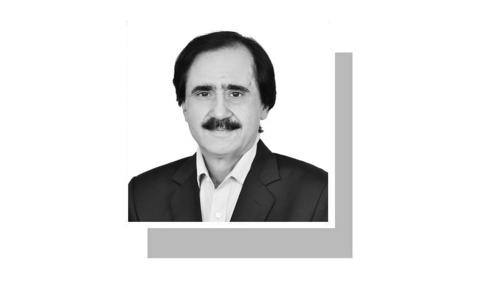
Ethan Casey is the author of Alive and Well in Pakistan and Overtaken By Events: A Pakistan Road Trip. He can be reached at www.facebook.com/ethancaseyfans and www.ethancasey.com

The views expressed by this blogger and in the following reader comments do not necessarily reflect the views and policies of the Dawn Media Group.

Share
Print This Post Print This Post Email This Post Email This Post

22 Responses to " We are free to choose peace "

  1. azhar awan says:

    I am stunned to observe “we”. I wounder if west had learned any thing from Iraq war. How many oversites and unthinkable situations. US really took over 100000 military men to purge a few Arab. This very large and equipped army is trained to get control Pakistan nukes when Pakistan nation will outbrust under systematic and inch by inch infringing the Pakistan territory. This memogate is a scandal. Why President would not have made a visiting US senators.

  2. saad says:

    Indeed, we have similar interests of achieving development and pursuit of hapiness for our peoples. In fact, there’s more similarities in our outlooks than either of us have elaborated upon. The writers voice of sanity is appreciated and peace is desired for both peoples, not to mention the Afghans, who have lost 2 whole generations to conflict and have to start off from ground zero.

  3. Khalid says:

    To be a non Pakistani you have written the words of our hearts. Very Well written.

  4. Shah says:

    Ethan, your definition of “Pakistan Government being Duplicitous” is probably based on the the idea that when the Govt does not toe your line 100% or if strategically your goals and Pakistani goals are not the same then you label them as playing a double game.
    I think even though you are trying to portray yourself as a unbiased political commentators, it is obvious that you the one “playing a double game” by saying one thing for pakistani public consumption and doing back door diplomacy to keep doing collateral damage to pakistan’s people and economy totally at our expense.
    Sorry to say that in the works of Pak’s FM “Enough is Enough”, if you are truly a peace loving person then read some history and find out how this militancy mess get created and who created it. Was it there before 2001 …. “NO”
    What happens when you put your hands in a bee hive …. they do not kiss you right for invading their world !!

  5. sja says:

    We’re in this together – and by “we” I mean Americans and Pakistanis. Coincidently, some one decade ago, I had a American Italian Friend who poked a joke after a major event then, and I said the same thing to him, wait we in togather and on the ground realities. Now we have other enemies and we are fighting them for such long time, that you feel annoyed and like a big brother and younger brother you take on each other. This is what it looks out of nothing and for nothing you do sometimes to fight it out if you cannot win a big one take on the smaller one in frustration. I happen to hear Mr. Hussain Haqqani at a gathering and he spoke but the way he spoke did not show the depth of a person at such an important position — and what followed to this as you say the Memogate, we should not just jump to sound equiavalent to American Water gate, that tumbled down Nixon Presidency, we have a tendency to make a hill of a mole to label this folly as Memogate– nobody is going anywhere except Mr Haqqani must be regretfully at home – saving and enjoying from future embrassment of his position in a major capital at DC. There no gate to go anywhere actually it is Memo–end that ended the career of this person who was with two prime ministers before and the current President. Who can tell over enthusiastic people even like Imran Khan, watch, think, and then move because there are cracks in which you can stumble too fast if you do not pay heed to your actions and words. And like the title of this blog it should be We are free to choose but there is nothing actually free.

  6. Ethan you said correctly ”We are free to choose Peace” but in reality Both nations are bound against the Politics ruining their personal and Social lives..

  7. Assad says:

    Great opinion Ethan! Appreciate your comments here. You are one of a few who are trying to build bridges.

  8. Taking a side against “war mongers” is joining into the war. How is calling for democracy any different than a hungry man calling for food? Someone has to grow the food and someone has to grow the democracy. Neither will happen without the farm and the school. I am not speaking of factory farms and factory schools. I am speaking of self sufficient grass roots farms and village schools. Little World Community Organization, lwco.org.

  9. Dear Ethan. I think,we are not on the same side.

  10. raja aziz says:

    A thoughtful piece with good insight on Pakistan’s political creed. The point on ‘who benefits’ i well taken. As far Hussain Haqqani, a turn-coat par excellence, the less said the better. It would be interesting to watch his next somersault in opprtunism in coming days and weeks.

  11. Yawar Shah says:

    Ethan is right, the good people of Pakistan and America have suffered as the Military Inc. in both countries is all powerful. One is amazed at the lack of leadership in both countries, all the pain and suffering can be averted just by honest and sincere leadership. The people of Pakistan and America want peace and friendship, they should use the power of their vote wisely next time for a better world.
  12. Finally, we have a jehadi sympathizer in America who isn’t a Muslim. So now Pakistan can legitimately say that support for jehadis comes, not just from Pakistan, but from America as well.

  13. R.Kannan says:

    Eathan has written a meandering piece with no common thread. While, as usual, he finds everything wrong with the US and everything perfect with the Pakistani military, he needs to ponder if the purpose of peace is being served by the Pakistani army’s close relationship with the Taliban & Haqqani network.

    • I seem to notice Mr. Casey referring to the Pak military in the first graf as “a military establishment [that has] [become] too powerful and unaccountable.” That’s perfect?

  14. Bashir says:

    ‘Haqqani in particular accused me of being “merely anecdotal”.’ I agree.

  15. Dear Ethan… I don’t know how many comments you may get, for or against your article. But I want you to know that I agree, we’re on the same side. And there are many of us, even though we may not be heard as often as the war-mongers.

  16. Robert says:

    I am not Pakistani but married to one so have been around here for 13 years, my first encounter with Pakistan was a peaceful experience UNTIL THE AMERICANS MOVED NEXT DOOR AND ALL HELL BROKE LOOSE IN THE REGION…. and whether the Americans like it or not their quest for world domination will meet dissent … and they will have a price to pay in terms of loss of life of their young soldiers but judging by their performances over the last 50 years one wonders if they care about that

  17. Raoul says:

    While Ethan’s comments on the Mohmand incident are bang on, he does seem to share the arrogance of the anarchist in stating that in the conference he was critical of the democracy and democratic leaders of pakistan and that he stood up for the idea that under military rule (Mush) pakistan was maybe better off.

    This is a clear republican line (as in republican – continental ideology- of the army as the key national institution of authority, not the GOP of USA) of thought and unfortunately he seems to believe will of the people is not important and the Authority is right. Such a gratuitous view will only cloud the fact that a weak democracy is HARMING not helping pakistan, and as many as possible should support it.

    Democracies are, by nature, raucous, full of nay saying and arguments, and take time to deliberate and compromise to consensus. This ard fought, sometimes compromised consensus over time, builds a truer nation responding to will of people.

    I thought people from the land of the st of liberty knew better. Well, Ethan is plain wrong I say.

  18. El Khan says:

    I liked your post.
    People in both countries are upset with the pro-war and anti-welfare policies of their governments.
    And if the governments don’t stop, then it will only lead to chaos — both at home and abroad.

  19. “maybe Pakistani troops fired first”?? I dont think a security check post that is 2 KM inside the PAK Afghan border and that does not have any anti aircraft arsenal can bring down a helli ?

    • Rao says:

      How do you know that the Check-Post is 2 Kms inside in Pakistan. Is it an press release from the Pak-army? But remember, automatic fire can be unleased at much greater distance and also mortars. Dreadful mistakes do happen during the time of tension and war. What is important is to have an impartial inquiry and decide what went wrong!

  20. Well written,but to make it more convincig he should dilated on Nawaz Sherif’s impatience to grab power by any means &Zardaries’ insistinence to stay in power.

Advertisement